
Comprehensive Inspection Procedures: Ensuring Florida Compliance
American construction projects in Florida face some of the most rigorous inspection requirements nationwide, with regulatory nuances that trip up even experienced pros. Every missed detail or overlooked documentation step can mean costly delays or increased liability for both contractors and developers. By mastering comprehensive inspection procedures, Florida project leaders can confidently guide their teams through every stage, reduce risk, and stay ahead of evolving standards in today’s demanding market.
Table of Contents
- What Defines Comprehensive Inspection Procedures
- Key Inspection Types For Florida Projects
- Step-By-Step Inspection Workflow Explained
- Legal Regulations And Florida-Specific Codes
- Managing Responsibilities And Avoiding Liabilities
- Common Issues That Delay Project Approval
Key Takeaways
| Point | Details |
|---|---|
| Comprehensive Inspection Procedures | These procedures provide a systematic framework for evaluating compliance and quality in construction, addressing regulatory adherence and risk identification. |
| Specialized Inspection Types | Florida construction projects require targeted inspections to ensure safety and compliance with unique environmental challenges, including hurricane and flood resilience. |
| Rigorous Regulatory Framework | The Florida Building Code establishes stringent requirements that mandate thorough inspections and procedural compliance to ensure public safety and structural integrity. |
| Proactive Management Strategies | Identify potential project delays by anticipating documentation challenges and maintaining open communication with officials to streamline the approval process. |
What Defines Comprehensive Inspection Procedures
Comprehensive inspection procedures represent a systematic framework for evaluating quality, compliance, and operational standards across complex environments like construction and engineering projects. These procedures go beyond simple checklist assessments, involving multiple layers of detailed evaluation designed to ensure regulatory adherence and identify potential risks or improvements.
At their core, comprehensive inspection procedures include several critical components: pre-inspection documentation review, structured on-site evaluation, detailed reporting, and corrective action planning. Such procedures typically encompass multiple inspection types tailored to specific project requirements, including full compliance reviews, progress assessments, and purpose-oriented examinations.
The key characteristics that define comprehensive inspection procedures include objective assessment methodologies, transparent reporting mechanisms, and a robust quality assurance framework. These procedures must cover critical domains such as organizational governance, safety protocols, resource management, policy compliance, and performance outcomes. By integrating systematic inspection frameworks, engineers and project managers can establish a holistic approach to quality control that minimizes potential risks and ensures regulatory alignment.
Pro tip: Develop a standardized inspection checklist that incorporates both regulatory requirements and project-specific nuances to enhance the comprehensiveness of your evaluation process.
Key Inspection Types for Florida Projects
Florida construction and engineering projects require multiple specialized inspection types to ensure comprehensive regulatory compliance and safety standards. These inspection categories are designed to address the unique environmental and structural challenges specific to the state’s diverse building environments, ranging from coastal developments to urban infrastructure projects.
The primary inspection types for Florida projects include critical construction inspections such as structural integrity assessments, electrical systems evaluations, mechanical and plumbing reviews, and foundation stability checks. Each inspection type serves a distinct purpose: structural inspections verify load-bearing capacities and material integrity, electrical inspections ensure proper wiring and safety protocols, and mechanical reviews confirm equipment and system functionality.
Additionally, Florida projects demand specialized inspections related to hurricane and flood resilience, given the state’s unique geographical challenges. These include wind mitigation inspections, flood zone assessments, coastal construction control line inspections, and environmental impact evaluations. Engineering inspection frameworks in Florida are particularly rigorous, requiring detailed documentation, precise measurement standards, and comprehensive risk assessment protocols that go beyond standard national building codes.
The following table summarizes how major Florida inspection types address specific project risks:
| Inspection Type | Key Focus Area | Risk Addressed |
|---|---|---|
| Structural Integrity | Load-bearing components | Prevents collapse and failures |
| Electrical Systems | Wiring and installations | Reduces fire and shock hazards |
| Mechanical & Plumbing | System functionality | Prevents leaks and breakdowns |
| Foundation Stability | Soil and support reviews | Avoids settling and shifting |
| Wind Mitigation | Storm resistance features | Reduces hurricane wind damages |
| Flood Zone Assessment | Flood risk and elevation | Minimizes water intrusion risks |
| Environmental Impact | Environmental compliance | Protects ecosystems and resources |
Pro tip: Develop a comprehensive digital checklist for each inspection type that includes state-specific Florida building code requirements to streamline your documentation process and ensure regulatory compliance.
Step-By-Step Inspection Workflow Explained
A comprehensive inspection workflow in Florida requires a meticulously structured approach that addresses the state’s complex regulatory requirements and unique environmental challenges. Building inspection procedures follow a strategic sequence designed to ensure thorough evaluation and compliance with local and state standards.

The typical inspection workflow encompasses several critical stages. First, project documentation review involves examining all relevant permits, architectural plans, engineering specifications, and historical site data. Next, pre-inspection preparation includes scheduling, assembling required measurement tools, safety equipment, and comprehensive checklists tailored to specific project types. The on-site inspection phase then involves systematic visual assessments, precision measurements, structural integrity tests, and detailed documentation of any potential issues or non-compliance elements.
Florida’s rigorous inspection protocols demand a comprehensive post-inspection process that goes beyond simple reporting. After completing on-site evaluations, inspectors compile detailed reports highlighting findings, potential risks, recommended corrections, and compliance status. These reports must adhere to strict state guidelines, providing clear, actionable insights for contractors, developers, and regulatory bodies. Successful building inspection strategies require meticulous attention to detail, understanding of local building codes, and a proactive approach to identifying and addressing potential structural or safety concerns.
Pro tip: Create a digital tracking system that logs each inspection stage, documents real-time findings, and automatically cross-references requirements with current Florida building codes to streamline your workflow.
Legal Regulations and Florida-Specific Codes
Florida’s building regulatory landscape is characterized by complex and comprehensive legal frameworks designed to ensure public safety, structural integrity, and environmental resilience. Florida Building Commission regulations represent a sophisticated system of codes and standards that go far beyond typical construction guidelines, reflecting the state’s unique environmental challenges and commitment to advanced building practices.
The Florida Building Code (FBC), currently in its 8th Edition, serves as the primary regulatory document governing construction standards across the state. This comprehensive code establishes minimum requirements for structural design, fire safety, energy conservation, and hurricane resilience. Local jurisdictions retain the authority to implement more stringent amendments, allowing for tailored regulatory approaches that address specific regional challenges. Key aspects of these regulations include detailed specifications for wind load requirements, flood zone construction standards, and mandatory structural integrity inspections that reflect Florida’s vulnerable geographical position.
Under Florida Statutes Chapter 468, building code administrators and inspectors are legally mandated to enforce rigorous compliance protocols. These professionals must conduct thorough examinations of construction plans, permits, and on-site implementations, ensuring that every project meets or exceeds state-mandated safety and performance standards. The statute explicitly defines the scope of their responsibilities, emphasizing their critical role in protecting public welfare through meticulous code enforcement and comprehensive project evaluation.
Here’s a quick reference comparing Florida Building Code (FBC) requirements to common local jurisdiction amendments:
| Aspect | Florida Building Code (FBC) | Local Jurisdiction Amendments |
|---|---|---|
| Wind Load Standards | Uniform statewide requirements | Stricter in coastal regions |
| Flood Zone Regulations | State-specified minimums | Additional drainage provisions |
| Inspection Frequency | State minimums | More frequent in high-risk areas |
| Permit Documentation | Standard submission forms | Custom checklists, extra details |
Pro tip: Maintain a constantly updated digital reference library of current Florida Building Code versions and local municipal amendments to ensure real-time compliance with the most recent regulatory requirements.
Managing Responsibilities and Avoiding Liabilities
Navigating the complex landscape of building code administration requires a strategic approach to managing professional responsibilities and mitigating potential legal risks. Building code administrators play a critical role in protecting public safety by ensuring rigorous compliance with established regulatory standards through meticulous oversight and independent evaluation.
The legal framework governing building inspections in Florida mandates comprehensive documentation and unbiased professional conduct. Inspectors must conduct thorough reviews at each construction phase, meticulously documenting findings, potential code violations, and recommended corrective actions. This systematic approach serves two primary purposes: maintaining structural integrity and creating a defensible record that protects both the professional and the public from potential liability. Key documentation strategies include creating detailed inspection reports, maintaining clear communication channels with contractors, and implementing transparent decision-making processes that can withstand potential legal scrutiny.
Florida Building Code Administrators are expected to maintain the highest standards of professional ethics and technical competence. This involves staying current with evolving building codes, understanding complex regulatory requirements, and consistently applying objective evaluation criteria. Liability management requires a proactive approach that includes continuous professional education, maintaining current licensing credentials, carrying appropriate professional insurance, and developing robust internal protocols for handling potential compliance issues.
Pro tip: Implement a comprehensive digital documentation system that automatically timestamps, archives, and cross-references inspection findings to create an irrefutable audit trail that protects against potential legal challenges.
Common Issues That Delay Project Approval
Project approvals in Florida’s complex regulatory environment are frequently delayed by a range of technical and procedural challenges that demand proactive management and meticulous attention to detail. Inspection delays often stem from systemic issues that can significantly impede construction timelines and increase project costs.
Documentation and compliance represent the most common bottlenecks in project approvals. Typical problems include incomplete permit applications, inadequate architectural plans, insufficient structural drawings, and inconsistent code interpretations. Specific technical issues such as non-compliant wind load calculations, improper hurricane reinforcement details, and electrical system design deficiencies can trigger immediate project suspensions. Contractors must anticipate potential review challenges by ensuring comprehensive documentation that precisely addresses Florida’s stringent building requirements, particularly in hurricane-prone regions with elevated construction standards.
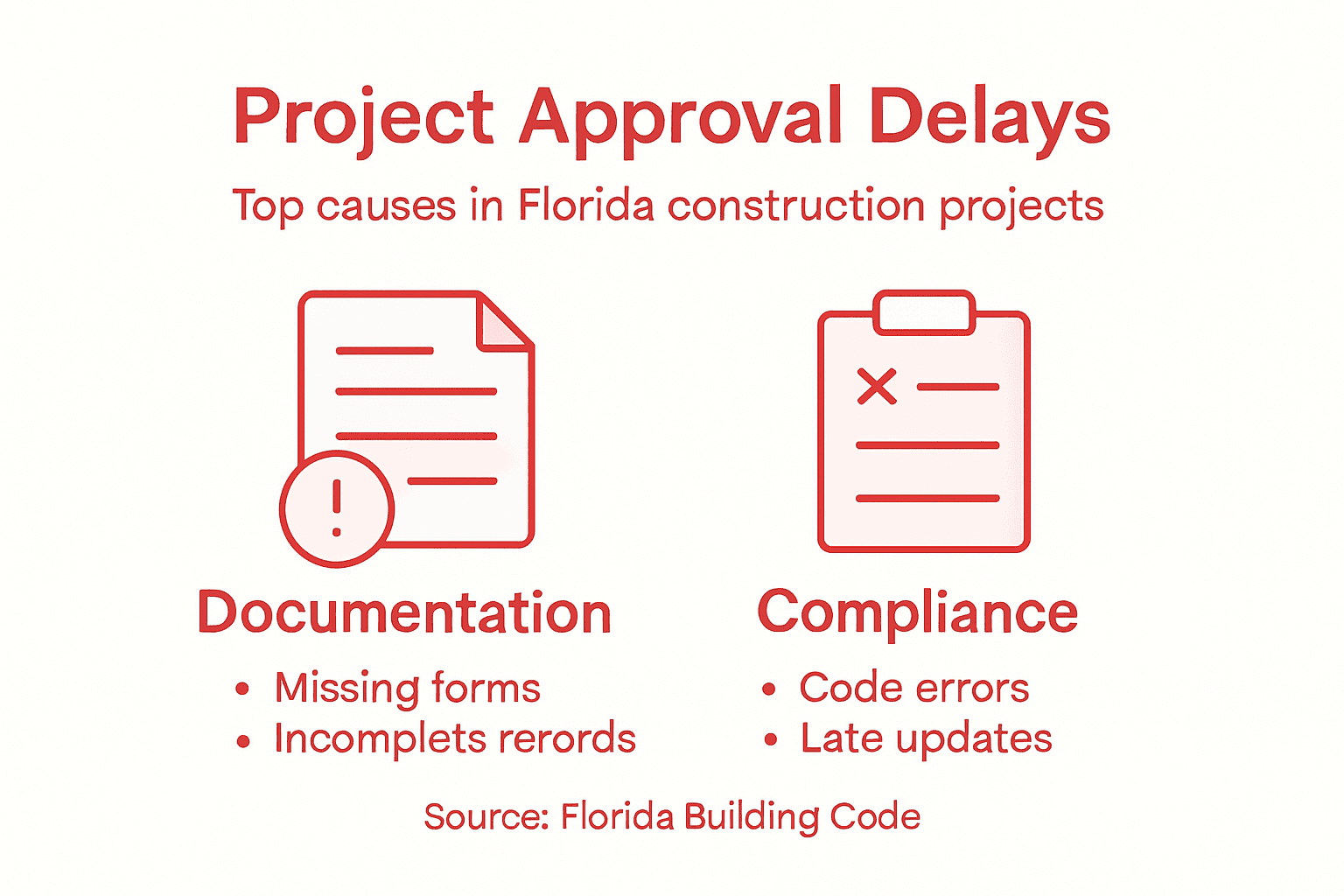
Regulatory enforcement mechanisms in Florida are designed to maintain rigorous quality control, which means even minor technical oversights can result in significant project delays. Common issues triggering extended review periods include unpermitted work modifications, incomplete corrective action plans, inconsistent material specifications, and failure to incorporate local jurisdictional amendments to the Florida Building Code. Successful project managers develop proactive strategies that involve early consultation with building officials, thorough pre-submission plan reviews, and maintaining open communication channels throughout the approval process.
Pro tip: Conduct a comprehensive internal review of all documentation using a standardized checklist that cross-references Florida Building Code requirements before official submission to minimize potential approval delays.
Ensure Flawless Florida Project Compliance with Expert Inspection Services
Florida’s demanding inspection procedures require precision and deep understanding of regulatory nuances such as the Florida Building Code, wind mitigation, and flood zone assessments. If you struggle with managing multiple inspection types or worry about delays caused by incomplete documentation and compliance gaps, you are not alone. The article highlights how thorough, systematic inspection workflows and meticulous documentation help prevent costly project setbacks and legal risks.
At Florida Licensed Engineers, we specialize in engineering services tailored to Florida’s stringent building codes. Our comprehensive offerings include architectural, structural, mechanical, electrical, and plumbing inspections alongside civil engineering expertise in drainage, grading, and flood mitigation. We streamline your process with detailed blueprint development, permitting expedite services, and forensic investigations that ensure clear and actionable reports. Our team stays ahead of local amendments and statewide regulations, guiding your project safely through each compliance hurdle.
Explore our specialized services to transform complex requirements into manageable steps. Leverage our experience shared in the TLE Archives – Texas Licensed Engineers | Residential & Commercial for insights on inspection strategies and standards that resonate beyond borders.
Don’t risk costly delays or liability. Contact Florida Licensed Engineers today for expert support on your next project. Act now to secure streamlined inspections and full compliance with Florida’s comprehensive building codes.
Frequently Asked Questions
What are comprehensive inspection procedures?
Comprehensive inspection procedures are systematic frameworks used to evaluate quality, compliance, and operational standards across complex environments, including construction projects. They include multiple layers of detailed evaluation to ensure regulatory adherence and identify potential risks or improvements.
What are the key components of a comprehensive inspection procedure?
The key components include pre-inspection documentation reviews, structured on-site evaluations, detailed reporting, and corrective action planning, tailored to specific project requirements.
How do Florida-specific inspection types differ from standard inspections?
Florida-specific inspections address unique environmental and structural challenges, like hurricane and flood resilience, requiring additional evaluations such as wind mitigation inspections and flood zone assessments that go beyond standard national building codes.
What can delay project approvals in Florida?
Common delays can arise from incomplete permit applications, inadequate architectural plans, and non-compliant technical aspects. Regulatory enforcement mechanisms can also trigger project suspensions for minor oversight, emphasizing the importance of thorough documentation and communication.
Recommended
- What Is Commercial Inspection? Key Risks and Benefits – FloridaLicensedEngineers.com
- Complete Guide to Inspections for Commercial Projects – FloridaLicensedEngineers.com
- Step-by-Step Guide to Commercial Inspections Success – FloridaLicensedEngineers.com
- How to Pass Building Inspection: A Step-by-Step Guide – FloridaLicensedEngineers.com
- Risk Assessment: Everything You Need to Know – Rental Income Insurance
