
Role of Engineers in Permitting – Streamlining Florida Projects
Project delays and unexpected costs can quickly threaten even the most promising Florida developments when engineering permits are misunderstood or mishandled. This topic matters because every city from Jacksonville to Miami sets its own robust standards and protocols, making legal compliance a make-or-break factor for contractors and architects. Get clarity on critical permitting fundamentals, uncover common misconceptions, and find practical strategies to safeguard your residential or commercial project from setbacks.
Table of Contents
- Permitting Fundamentals and Common Misconceptions
- Key Permit Types for Florida Projects
- Approval Process and Engineering Requirements
- Legal Responsibilities and Compliance Standards
- Risks, Liabilities, and Cost Implications
- Mistakes to Avoid When Submitting Permits
Key Takeaways
| Point | Details |
|---|---|
| Understanding Permits is Essential | Permits ensure compliance with safety standards and zoning regulations, and are critical for smooth construction projects in Florida. |
| Common Misconceptions Can Lead to Delays | Assuming permits can be expedited or bypassed can result in significant project setbacks and legal issues. |
| Consulting Engineers is Crucial | Involving licensed Florida engineers early helps identify potential permitting challenges and streamline the approval process. |
| Avoid Common Submission Errors | Thorough attention to documentation and local regulations is vital to prevent permit rejections and project delays. |
Permitting Fundamentals and Common Misconceptions
Navigating Florida’s engineering permitting landscape requires understanding key fundamentals that often confuse project managers and contractors. Permits are not just bureaucratic hurdles but critical legal safeguards ensuring construction meets safety standards, zoning requirements, and structural integrity guidelines. Residential permitting processes involve multiple layers of review and documentation that demand meticulous attention to detail.
Contractors frequently misunderstand permit requirements, believing they can bypass official channels or expedite approvals through informal networks. This misconception can lead to significant project delays, potential legal penalties, and mandatory reconstruction. Each municipality in Florida maintains unique permitting protocols, meaning what works in Miami might be completely unacceptable in Jacksonville or Orlando. Engineers play a crucial role in translating these complex local regulations into actionable project plans, bridging the gap between regulatory requirements and practical construction strategies.
Common permitting misconceptions include assumptions about automatic approvals, minimal documentation requirements, and universal applicability of previous project permits. In reality, every project demands specific engineering assessments, detailed blueprints, and comprehensive safety evaluations. Structural engineers meticulously review building plans, ensuring they meet Florida’s stringent building codes, which are designed to withstand challenging environmental conditions like hurricane-force winds and potential flooding.
Pro Tip: Always consult a licensed Florida engineer early in your project planning to identify potential permitting challenges and streamline your approval process.
Key Permit Types for Florida Projects
Florida construction projects require a complex array of permits that vary significantly based on project scope, location, and specific construction activities. Construction permit processes involve multiple specialized categories designed to ensure safety, compliance, and structural integrity across different project types. Understanding these permit classifications is crucial for contractors, engineers, and property owners seeking smooth project implementation.
The primary permit types in Florida typically include new construction permits, renovation permits, electrical permits, plumbing permits, mechanical (HVAC) permits, and demolition permits. Engineering project workflows play a critical role in determining which specific permits are required for each unique project. New construction permits demand the most comprehensive documentation, including detailed site plans, architectural drawings, structural calculations, and comprehensive engineering assessments that demonstrate compliance with local building codes and zoning regulations.
Municipal building departments in Florida maintain stringent review processes for each permit category, requiring sealed drawings from licensed professionals, precise engineering calculations, and thorough documentation of proposed construction methods. Electrical, plumbing, and mechanical permits each require specialized technical reviews to ensure they meet state and local safety standards. These permits are not interchangeable, and contractors must obtain specific approvals for each distinct aspect of their construction project to maintain legal compliance and ensure public safety.
Pro Tip: Consult with a licensed Florida engineer before submitting permit applications to identify all necessary permit types and streamline your approval process.
Here’s an overview of the main construction permit types and their documentation requirements in Florida:
| Permit Type | Key Documentation Needed | Typical Review Focus |
|---|---|---|
| New Construction | Site plans, engineering reports | Safety, zoning, code |
| Renovation | Updated blueprints, impact study | Structural integrity |
| Electrical | Wiring diagram, load calculations | Circuit safety |
| Plumbing | Pipe layout, water flow analysis | Leak/cross-contamination |
| Mechanical (HVAC) | Ductwork schematics, specs | Ventilation, efficiency |
| Demolition | Safety plans, hazardous surveys | Containment, disposal |
Approval Process and Engineering Requirements
The Florida construction permit approval process involves intricate steps that demand precise engineering documentation and strategic planning. Construction permit processes require comprehensive technical reviews that go far beyond simple paperwork submission. Engineers must meticulously prepare detailed site plans, architectural drawings, and structural calculations that demonstrate complete compliance with local building codes, zoning regulations, and environmental protection standards.
Engineering requirements in Florida are particularly rigorous, mandating that all technical documents be sealed by licensed professionals who can validate the technical integrity of proposed construction projects. This typically involves preparing multiple sets of sealed drawings that showcase structural calculations, material specifications, load-bearing analyses, and comprehensive environmental impact assessments. Residential engineering requirements emphasize the need for precise documentation that accounts for Florida’s unique environmental challenges, including hurricane wind resistance, flood zone considerations, and soil stability assessments.

Local municipal building departments conduct thorough multi-stage reviews of submitted permit applications, examining everything from zoning compliance to structural safety. Engineers must anticipate potential questions and provide preemptive documentation that addresses potential concerns. This often involves coordinating with multiple municipal departments, conducting site inspections, and making real-time adjustments to project plans to meet specific local regulatory requirements. Successful navigation of this process requires not just technical expertise, but also strategic communication and a deep understanding of local regulatory landscapes.
Pro Tip: Develop a comprehensive checklist of required engineering documents before initiating the permit application to minimize potential delays and streamline the approval process.
Legal Responsibilities and Compliance Standards
Engineers practicing in Florida face a complex landscape of legal responsibilities that extend far beyond traditional design work. Engineering laws and rules mandate strict adherence to statutory requirements outlined in Florida Statutes Chapters 455 and 471, which comprehensively define professional conduct, ethical standards, and public safety obligations. These regulations require engineers to maintain the highest levels of professional integrity, ensuring that every technical document, design, and recommendation prioritizes public welfare and structural safety.
The legal compliance framework for Florida engineers involves multiple layers of accountability, including professional licensing requirements, ongoing continuing education, and rigorous documentation standards. Project compliance standards require engineers to navigate intricate regulatory landscapes that encompass state building codes, environmental regulations, zoning ordinances, and federal labor laws. Potential consequences of non-compliance are significant, ranging from professional disciplinary actions and financial penalties to potential legal liability for project failures or safety incidents.
Maintaining legal compliance demands a proactive approach that goes beyond minimal regulatory requirements. Engineers must continuously update their knowledge of evolving building codes, environmental regulations, and safety standards. This involves not just technical expertise, but also a comprehensive understanding of local municipal regulations, state-level requirements, and potential federal guidelines that might impact construction and engineering projects. Successful navigation of these complex legal frameworks requires meticulous documentation, transparent communication, and a commitment to professional excellence that prioritizes public safety and regulatory adherence.
Pro Tip: Develop a comprehensive compliance tracking system that monitors regulatory changes and ensures your engineering practices remain current with the latest legal requirements.
Risks, Liabilities, and Cost Implications
Engineering projects in Florida involve complex risk landscapes that demand comprehensive understanding of potential financial and legal exposures. Professional engineers must carefully navigate multiple layers of potential liability, which can emerge from design errors, safety oversights, code non-compliance, and unintended project consequences. Engineering project workflows often require substantial risk mitigation strategies to protect both professional reputation and financial stability.
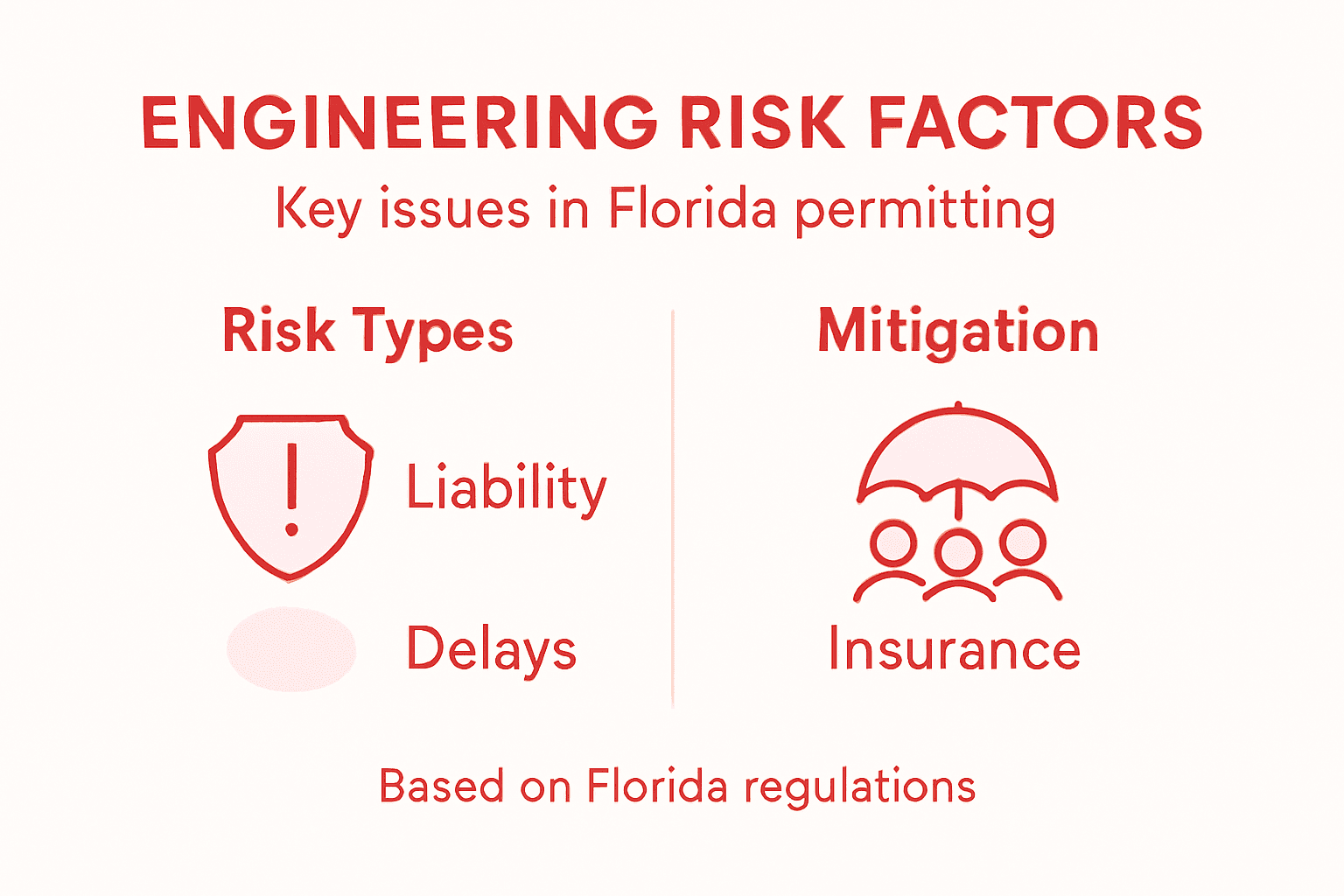
The financial implications of engineering risks extend beyond immediate project costs, potentially involving long-term legal challenges, professional sanctions, and significant monetary penalties. Liability can manifest through multiple channels, including professional negligence claims, structural failures, environmental damage, and non-compliance with local building codes. Engineers must maintain robust professional liability insurance, implement rigorous quality control processes, and develop comprehensive documentation practices that demonstrate due diligence and professional standard adherence.
Risk management in Florida engineering projects requires a multifaceted approach that combines proactive planning, continuous professional education, and strategic documentation. This involves conducting thorough site assessments, performing detailed structural analyses, anticipating potential environmental challenges, and maintaining transparent communication with clients and regulatory bodies. Cost implications can be substantial, with potential expenses ranging from project redesigns and legal defense to professional reputation restoration and potential license suspension.
Pro Tip: Invest in comprehensive professional liability insurance and develop a detailed risk management protocol that anticipates potential project challenges before they become costly legal or financial problems.
Mistakes to Avoid When Submitting Permits
Submitting permits in Florida requires precision and attention to detail that can overwhelm even experienced professionals. Building inspection guidelines emphasize the critical importance of avoiding common submission errors that can derail entire project timelines. The most frequent mistakes include incomplete documentation, incorrect form submissions, missing professional seals, and failing to provide comprehensive technical drawings that demonstrate full compliance with local building codes.
Engineers and contractors often underestimate the complexity of municipal permit requirements, which vary significantly across different Florida jurisdictions. Submission errors can result in immediate application rejection, causing substantial project delays and additional financial burdens. Critical mistakes include submitting outdated documentation, neglecting to include required site surveys, omitting critical structural calculations, and failing to address specific local zoning regulations that impact project approval. Each municipality maintains unique requirements, making a one-size-fits-all approach dangerous and potentially costly.
Technical documentation represents the most common area of permit submission failure. Construction documentation essentials highlight the need for comprehensive, precise, and professionally sealed documents that provide complete project transparency. Successful permit submissions require meticulously prepared architectural drawings, detailed structural calculations, environmental impact assessments, and precise site plans that demonstrate full compliance with Florida’s stringent building codes and safety regulations.
Pro Tip: Create a comprehensive permit submission checklist that includes all required documents, professional seals, and jurisdiction-specific requirements to minimize potential rejection and project delays.
To help avoid costly permit mistakes, compare these common errors and their potential impacts:
| Mistake Made | Example Consequence | Prevention Strategy |
|---|---|---|
| Missing documentation | Permit rejection, delay | Use thorough submission checklist |
| Outdated forms | Reapplication, added costs | Confirm latest jurisdiction forms |
| Absent professional seal | Legal liability, review failure | Always seal final documents |
| Ignored local regulations | Mandatory redesign, penalties | Research each municipality’s rules |
Simplify Your Florida Permitting Process With Expert Engineering Support
The article highlights the challenges many face when navigating Florida’s complex permitting requirements, including the need for precise documentation, compliance with local codes, and thorough engineering assessments. Common pain points are delays, permit rejections, and the risk of costly redesigns due to missed details or misunderstandings. Our services specialize in addressing these exact issues by delivering expertly prepared architectural, structural, mechanical, electrical, and plumbing plans tailored to your project’s unique needs.
Explore how our comprehensive approach in residential and commercial projects can save you time and reduce stress by streamlining your permitting workflow. Whether you need detailed blueprints, inspections, or civil engineering expertise such as drainage and flood mitigation, our licensed engineers provide all the technical support necessary for smooth approvals. Visit https://floridalicensedengineers.com and gain access to trusted engineering solutions. Take advantage of resources like our Uncategorized Archives – Maryland Licensed Engineers to understand regulatory nuances and ensure your project stays compliant. Don’t risk costly mistakes that delay your success. Contact us today and get your Florida project moving forward with confidence.
Frequently Asked Questions
What are the key roles of engineers in the permitting process?
Engineers play a vital role in the permitting process by preparing detailed technical documents, ensuring compliance with local building codes, and providing comprehensive assessments that address safety and structural integrity. They bridge the gap between regulatory requirements and practical construction strategies, facilitating smoother project approvals.
How can I streamline the permitting process for my construction project?
Consulting with a licensed engineer early in your project planning can help identify potential permitting challenges, ensuring that all necessary documentation is prepared and submitted correctly. Developing a comprehensive checklist of required engineering documents can also minimize delays and improve the overall approval process.
What types of documentation do engineers need to submit for permits?
Engineers typically need to submit sealed architectural drawings, structural calculations, site plans, and additional assessments that demonstrate compliance with local regulations. Each type of permit may require different documentation, so it’s essential to understand the specific requirements for your project.
What are common mistakes to avoid when submitting permit applications?
Common mistakes include incomplete documentation, submitting outdated forms, missing professional seals, and failing to address local zoning regulations. Using a comprehensive submission checklist can help minimize these errors and avoid project delays.
Recommended
- Engineering Project Workflow: Florida Compliance and Success – FloridaLicensedEngineers.com
- Residential Permitting: Why Homeowners Must Comply – FloridaLicensedEngineers.com
- 7 Essential Civil Engineering Tips for Florida Developers – FloridaLicensedEngineers.com
- 7 Essential Civil Engineering Tips for 2025 Success – FloridaLicensedEngineers.com
