
Residential vs Commercial Plans: Compliance and Impact
Every Florida real estate developer knows that turning great design into reality starts with the right engineering plans. The stakes rise when balancing comfort, functionality, and growing compliance demands in both residential and commercial projects. This guide breaks down the key distinctions between residential and commercial plans, spotlighting what matters most when tackling permitting and regulatory hurdles in the Florida construction market.
Table of Contents
- Defining Residential And Commercial Plans
- Major Distinctions In Project Scope
- Permitting And Regulatory Requirements
- Engineering Disciplines And Plan Content
- Project Risks, Costs, And Common Pitfalls
Key Takeaways
| Point | Details |
|---|---|
| Residential and Commercial Plans Differ | Residential plans focus on personal comfort and smaller structures, while commercial plans emphasize functionality and larger business operations. |
| Regulatory Complexity | Commercial projects involve more stringent regulatory requirements and complex permitting processes compared to residential projects. |
| Risk Management Variances | Residential projects face manageable risks, whereas commercial projects encounter substantial risks due to higher financial investments and complex stakeholder engagement. |
| Multidisciplinary Collaboration | Successful project outcomes in both sectors require collaboration among multiple engineering disciplines for comprehensive planning and execution. |
Defining Residential and Commercial Plans
Engineering plans serve as critical blueprints that define the structural and functional requirements for different types of buildings. Residential plans and commercial plans represent two distinct categories of architectural documentation, each with unique characteristics and compliance standards. While they share fundamental engineering principles, their objectives and implementation strategies differ significantly.
Residential plans primarily focus on creating comfortable, personalized living spaces tailored to individual homeowners’ needs. Residential building plans emphasize privacy, aesthetic appeal, and human-scale functionality. These plans typically cover smaller structures like single-family homes, apartments, and multi-unit residential complexes. They prioritize elements such as room layout, natural lighting, energy efficiency, and personal comfort zones.
Commercial plans, in contrast, are designed to support business operations and industrial requirements. These comprehensive documents prioritize functionality, scalability, and adherence to complex regulatory frameworks. Commercial engineering plans encompass a broader range of building types including office spaces, retail centers, warehouses, and industrial facilities. They must account for advanced mechanical systems, specialized infrastructure, accessibility standards, and potential future adaptations of the space.
Key differences between residential and commercial plans include scale, complexity, regulatory requirements, and design philosophy. Residential plans are more intimate and personal, while commercial plans demand a more strategic, flexible approach that can accommodate diverse business needs and potential future transformations.
Here’s a quick comparison of residential and commercial engineering projects:
| Aspect | Residential Projects | Commercial Projects |
|---|---|---|
| Building Scale | Small to medium | Large and complex |
| Key Focus | Comfort and personalization | Functionality and scalability |
| Main Stakeholders | Homeowners, small teams | Multiple investors, contractors, agencies |
| Regulatory Intensity | Local codes, simpler permits | Multi-level, strict standards |
| Plan Complexity | Simpler layouts | Advanced, multidisciplinary integration |
| Typical Risks | Budget overruns, delays | Compliance, large cost fluctuations |
Pro tip: Always consult a licensed engineer who specializes in your specific project type to ensure precise plan development and regulatory compliance.
Major Distinctions in Project Scope
Residential and commercial construction projects fundamentally differ in their approach, complexity, and operational requirements. Construction project types demonstrate significant variations in scale, design philosophy, and regulatory compliance that profoundly impact engineering planning and execution.
In residential projects, the primary focus remains on creating personal living spaces that balance aesthetic appeal, comfort, and individual homeowner preferences. These projects typically involve smaller structures like single-family homes and multi-unit residential complexes. The design considerations prioritize human-scale elements such as natural lighting, energy efficiency, privacy, and emotional connection to living spaces. Residential engineering plans tend to be more straightforward, with fewer complex mechanical systems and more emphasis on personal customization.
Commercial projects, by contrast, present a dramatically different landscape of engineering challenges. Commercial construction challenges encompass a broader spectrum of building types including office spaces, retail centers, warehouses, and industrial facilities. These projects demand intricate infrastructure planning, advanced mechanical systems, specialized accessibility standards, and robust compliance with multiple regulatory frameworks. The scale and complexity require comprehensive engineering strategies that can accommodate future business adaptations and technological integrations.
Key distinctions in project scope extend beyond physical design to include stakeholder management, financial investment, and long-term functionality. While residential projects often involve direct communication with individual homeowners, commercial projects typically engage multiple contractors, investors, and regulatory bodies, creating a more complex collaborative environment.
Pro tip: Always develop a comprehensive project scope document that clearly delineates specific requirements, stakeholder expectations, and potential adaptability for your particular construction type.
Permitting and Regulatory Requirements
Navigating the complex landscape of permitting and regulatory requirements represents a critical challenge for both residential and commercial engineering projects. Residential permitting demands meticulous attention to local, state, and federal guidelines that govern construction and development processes.
Residential projects typically involve a more streamlined permitting process, focusing on ensuring structural safety, zoning compliance, and adherence to local building codes. Homeowners and developers must obtain specific permits for various construction activities, including new construction, renovations, electrical work, plumbing modifications, and structural changes. These permits serve as official documentation that the proposed project meets established safety standards and municipal regulations.
Commercial projects present a significantly more complex regulatory landscape. Beyond standard building permits, commercial developments must navigate intricate requirements related to accessibility standards, environmental impact assessments, specialized safety regulations, and industry-specific compliance mandates. These projects often require multiple layers of approval from different governmental agencies, including local building departments, fire marshals, environmental protection offices, and specialized regulatory bodies depending on the project’s nature and location.
The permitting process involves comprehensive documentation, including detailed architectural plans, engineering drawings, environmental impact studies, and comprehensive safety assessments. Each jurisdiction maintains unique requirements, making it essential for developers to work closely with licensed engineers and local regulatory authorities to ensure full compliance and minimize potential legal or financial complications.
Pro tip: Engage a licensed professional engineer early in your project planning to help navigate complex permitting requirements and streamline the approval process.
Engineering Disciplines and Plan Content
Architectural engineering represents a complex integration of multiple technical disciplines that transform conceptual designs into functional, safe, and efficient building plans. These multidisciplinary approaches differ significantly between residential and commercial projects, requiring specialized expertise and comprehensive planning strategies.
Residential engineering plans typically involve a more focused set of disciplines, concentrating on creating comfortable, safe living environments. The primary engineering disciplines for residential projects include structural engineering, which ensures building stability and load-bearing capacity, mechanical engineering for home comfort systems, electrical engineering for power distribution, and plumbing engineering for water and waste management. These plans prioritize individual comfort, energy efficiency, and personal living requirements while maintaining strict adherence to local building codes and safety standards.
Commercial engineering plans demand a more sophisticated and comprehensive approach, integrating multiple advanced engineering disciplines. These projects require extensive input from structural, mechanical, electrical, plumbing (MEP), environmental, and specialized systems engineers. Commercial plans must account for complex infrastructure needs, including advanced HVAC systems, large-scale electrical networks, sophisticated fire suppression technologies, accessibility features, and intricate safety mechanisms. The engineering disciplines must collaborate closely to create integrated solutions that meet stringent regulatory requirements and support diverse business operational needs.
Each engineering discipline contributes unique expertise to the planning process. Structural engineers focus on load-bearing capabilities and material integrity, mechanical engineers design complex climate control and ventilation systems, electrical engineers develop power and communication infrastructures, and environmental engineers ensure sustainable and energy-efficient design strategies. This collaborative approach ensures that both residential and commercial plans not only meet current requirements but also anticipate future technological and functional demands.
Pro tip: Engage engineers from multiple disciplines early in the project planning phase to identify potential integration challenges and optimize overall design efficiency.
The table below summarizes common engineering disciplines involved in each plan type:
| Discipline | Residential Projects | Commercial Projects |
|---|---|---|
| Structural Engineering | Home stability, basic load calculations | Large spans, higher load requirements |
| Mechanical Engineering | Simple HVAC, home comfort | Complex HVAC, industrial systems |
| Electrical Engineering | Standard power, basic wiring | Extensive networks, backup power |
| Environmental Eng. | Energy efficiency, passive design | Sustainability, regulatory assessments |
Project Risks, Costs, and Common Pitfalls
Construction projects inherently involve complex risk management challenges that vary dramatically between residential and commercial developments. Construction project risks demand strategic approaches to mitigate potential financial and operational complications across different project types.
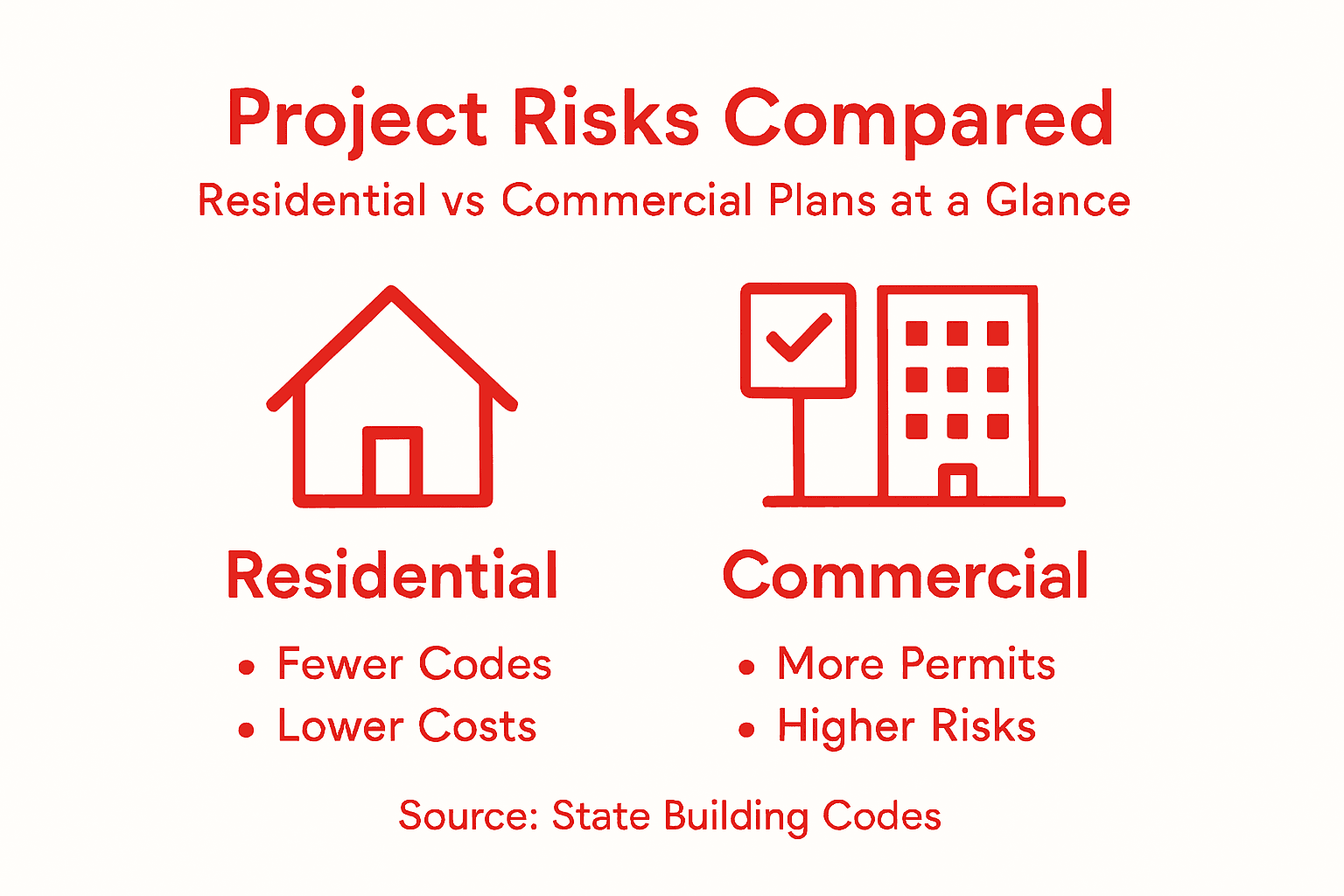
Residential projects typically encounter more manageable risks, including budget constraints, client expectation management, and weather-related delays. These projects usually involve smaller teams, more straightforward communication channels, and relatively predictable scope. Common residential pitfalls include underestimating renovation complexity, unexpected structural issues, material price fluctuations, and miscommunication between homeowners and contractors. Budget overruns in residential projects can range from 10% to 25%, often resulting from inadequate initial planning or unforeseen site conditions.
Commercial projects present substantially more complex risk landscapes. These developments involve intricate stakeholder networks, stringent regulatory compliance requirements, and significantly higher financial investments. Critical risk areas include extended project timelines, sophisticated mechanical system integrations, complex safety protocol implementations, and coordinating diverse professional teams. Commercial construction risks can potentially escalate project costs by 30% to 50%, with potential delays stretching months beyond initial projections. Regulatory compliance challenges, environmental assessments, and intricate permitting processes further compound these risks.
Successful risk management requires proactive strategies tailored to each project’s unique characteristics. This involves comprehensive initial assessments, detailed contingency planning, robust communication protocols, and maintaining flexibility throughout the construction process. Engaging specialized engineering professionals who understand project-specific nuances can significantly mitigate potential complications and reduce overall financial exposure.
Pro tip: Develop a comprehensive risk management plan that includes detailed financial buffers, clear communication protocols, and periodic independent project assessments.
Simplify Your Residential and Commercial Engineering Challenges Today
Navigating the complex differences between residential and commercial plans requires expert guidance to manage compliance, regulatory demands, and project scope effectively. Whether you face intricate permitting requirements or need detailed architectural, structural, mechanical, electrical, or plumbing plans, understanding key concepts like load calculations, regulatory intensity, and project risks can feel overwhelming. We recognize the unique challenges you face whether you are focusing on personalized residential comfort or scalable commercial functionality.
Partner with Florida Licensed Engineers to access tailored engineering services that cover inspections, blueprints, and permitting expediting for both residential and commercial projects. Benefit from our comprehensive expertise, including civil engineering solutions such as drainage, grading, site plans, and flood mitigation services with no rise and elevation certificates. Don’t let complexities stall your project. Act now to ensure your next project meets compliance flawlessly and avoids costly delays. Visit us today at Florida Licensed Engineers to get started and secure your project’s success.
Frequently Asked Questions
What are the key differences between residential and commercial engineering plans?
Residential plans focus on smaller living spaces, emphasizing personal comfort and aesthetics, while commercial plans prioritize functionality, scalability, and compliance with complex regulatory frameworks.
How does the permitting process differ for residential and commercial projects?
Residential projects typically have a more straightforward permitting process focused on zoning compliance and safety standards, while commercial projects must navigate intricate regulations such as accessibility standards and environmental assessments.
What types of engineering disciplines are involved in residential versus commercial plans?
Residential projects generally involve fewer disciplines like structural, mechanical, and electrical engineering, while commercial projects require a broader range of expertise, including environmental and systems engineering to accommodate complex infrastructure needs.
What common risks are associated with residential and commercial construction projects?
Residential projects face risks like budget overruns and delays, whereas commercial projects encounter more complex risks, including regulatory compliance challenges and stakeholder management issues, which can significantly escalate costs.
Recommended
- Commercial vs Residential Engineering: Key Differences in Texas – Texas Licensed Engineers | Residential & Commercial
- Architectural Plan Essentials: Ensuring Code Compliance – Florida Licensed Engineers
- Architectural Plan Essentials: Ensuring Code Compliance – FloridaLicensedEngineers.com
- Complete Guide to Inspections for Commercial Projects – Florida Licensed Engineers
- Understanding Residential vs Commercial Moving: Key Differences – Onyx Removals
- Garden Planning Mistakes: Avoiding Common Pitfalls – Lushy Gardens
