
How to Draft Site Plans for Accurate Permitting
Every Florida project begins with a mountain of paperwork and shifting requirements that leave even seasoned professionals searching for clarity. For contractors and architects, gathering the right documentation is more than a formality—it is the foundation of a compliant and permittable site plan. This step-by-step guide simplifies the process, revealing essential details from certified surveys to municipal reviews so your site plan stands up to Florida’s strict permitting standards.
Table of Contents
- Step 1: Gather Essential Documentation And Requirements
- Step 2: Assess Property Boundaries And Existing Site Features
- Step 3: Establish Design Parameters And Zoning Criteria
- Step 4: Create Detailed Layout With Engineering Specifications
- Step 5: Verify Accuracy And Ensure Compliance With Codes
Quick Summary
| Key Point | Explanation |
|---|---|
| 1. Gather essential documentation | Compile property surveys, legal descriptions, and zoning records critical for a Florida site plan. |
| 2. Assess property boundaries | Obtain an official land survey to define property lines and existing site features accurately. |
| 3. Understand zoning regulations | Research local zoning codes to ensure compliance with building height, coverage, and use restrictions. |
| 4. Create detailed engineering layouts | Develop precise drawings that incorporate all site features and engineering specifications. |
| 5. Verify compliance and accuracy | Conduct thorough reviews of documents to ensure adherence to local building codes and zoning requirements. |
Step 1: Gather essential documentation and requirements
Successful site plan drafting begins with comprehensive document collection. Your goal is to compile all necessary information that will form the foundation of an accurate, permittable site plan for Florida construction projects.
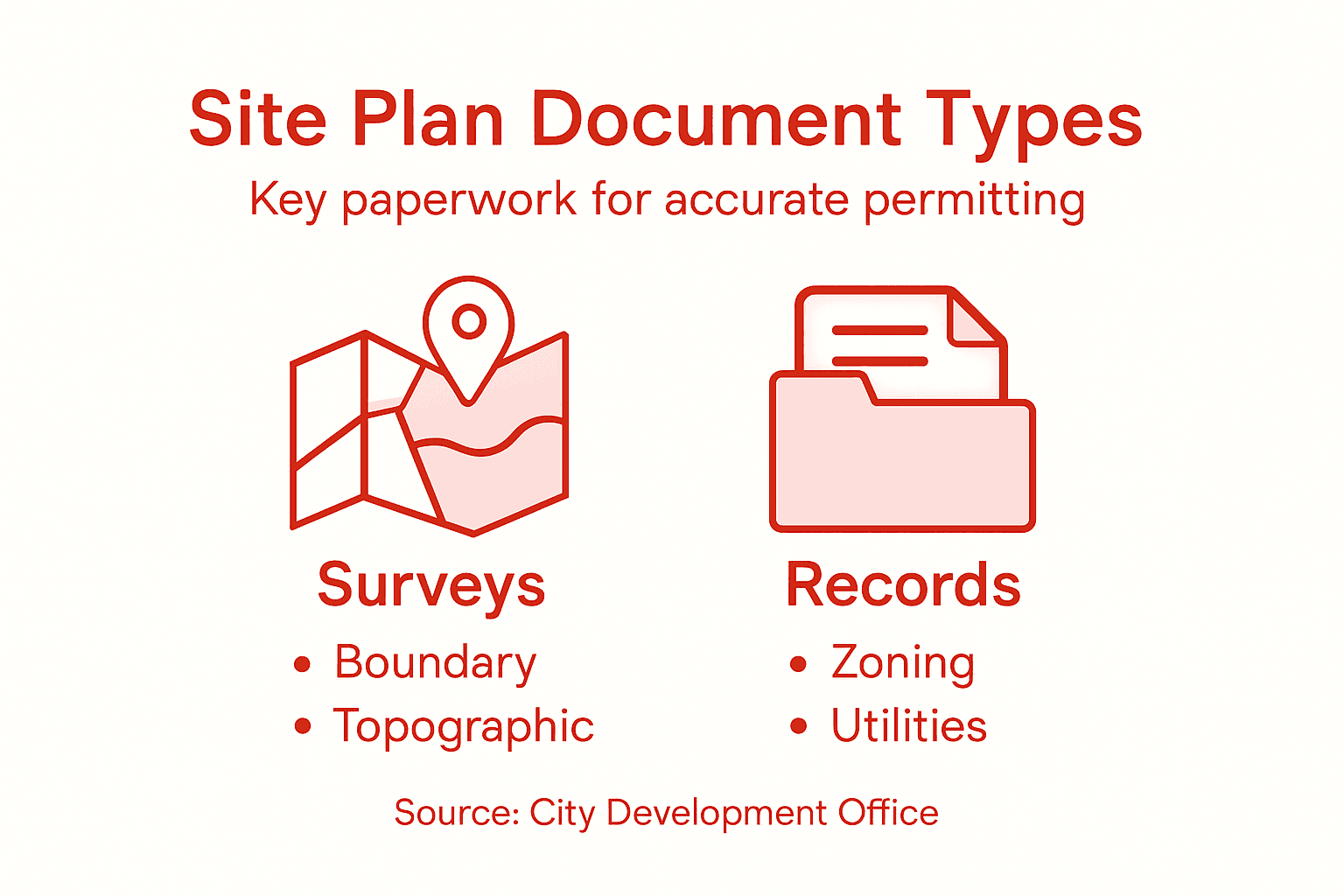
Start by gathering critical documents including property surveys, legal property descriptions, zoning records, and existing site information. Comprehensive construction documentation requires meticulous attention to detail. You will need precise property line measurements, existing structure dimensions, proposed building footprints, setback requirements, and landscape elements. Specifically focus on obtaining official documents such as deed records, tax maps, municipal zoning information, and any previous site plans or architectural drawings.
Typically, your documentation package should include topographical surveys, boundary surveys, utility location maps, and environmental constraint assessments. Pay special attention to local Florida municipal requirements which can vary significantly between jurisdictions. Some key documents include elevation certificates, drainage plans, and utility connection specifications. Always verify document authenticity and ensure all measurements are current within the last 24 months.
Here’s a reference table summarizing essential site plan documentation and its primary purpose:
| Document Type | Purpose | Typical Source |
|---|---|---|
| Property Survey | Defines legal boundaries and lot specifics | Licensed surveyor |
| Legal Description | Confirms official property identity | County records |
| Zoning Record | Details permitted uses and restrictions | Municipal planning office |
| Utility Map | Locates existing utility connections | Utility provider or city |
| Environmental Assessment | Identifies site constraints and hazards | Environmental consultant |
| Elevation Certificate | Validates flood zone requirements | Certified surveyor |
| Previous Site Plans | Shows historic layouts and changes | Property owner or archives |
Professional Advice: Request certified copies of all documents directly from official sources to guarantee accuracy and acceptance during the permitting process.
Step 2: Assess property boundaries and existing site features
Accurate site plan development starts with a comprehensive assessment of your property boundaries and existing site characteristics. This critical step ensures your design aligns with legal requirements and physical site constraints.
Site analysis processes require meticulous data collection about your property. Begin by obtaining an official land survey that precisely defines property lines, easements, and right of way restrictions. Professional surveyors will document exact measurements, topographical variations, and potential geographical limitations that could impact your construction project. Pay close attention to existing infrastructure like utility lines, drainage systems, and underground connections that might affect your proposed design.
Your assessment should include detailed documentation of current site features such as vegetation, elevation changes, soil conditions, and existing structures. Look for potential environmental constraints or zoning regulations that could influence your site plan. Some critical elements to evaluate include flood zones, protected landscape areas, setback requirements, and any municipal restrictions specific to your Florida location.
Professional Advice: Request a certified boundary survey from a licensed professional land surveyor to guarantee absolute accuracy in your property documentation.
Step 3: Establish design parameters and zoning criteria
Drafting an accurate site plan requires a comprehensive understanding of local zoning regulations and design parameters specific to your project location. This critical step ensures your proposed design meets all legal requirements and municipal guidelines.
Design parameters and zoning criteria demand thorough research and precise interpretation of local land development codes. Start by obtaining the most recent zoning ordinance documentation from your local municipal planning department. Carefully review restrictions related to building height, setback requirements, maximum site coverage, permitted land uses, and environmental protection zones. Pay special attention to specific Florida municipal regulations that could impact your project footprint and design possibilities.
Your comprehensive review should include detailed analysis of allowable building envelopes, density restrictions, parking requirements, and any specialized overlay zones that might affect your site plan. Consult directly with local planning authorities to confirm interpretation of zoning guidelines and identify any potential variances or special permissions required for your specific project. Understanding these parameters early in the design process will help you avoid costly redesigns and potential permitting challenges.
Professional Advice: Always request a pre application consultation with municipal planners to clarify complex zoning requirements before finalizing your site plan design.
Step 4: Create detailed layout with engineering specifications
Developing a comprehensive site plan requires precise engineering specifications that translate your project concept into technical documentation. Your goal is to create a detailed layout that communicates every critical design element with absolute clarity.
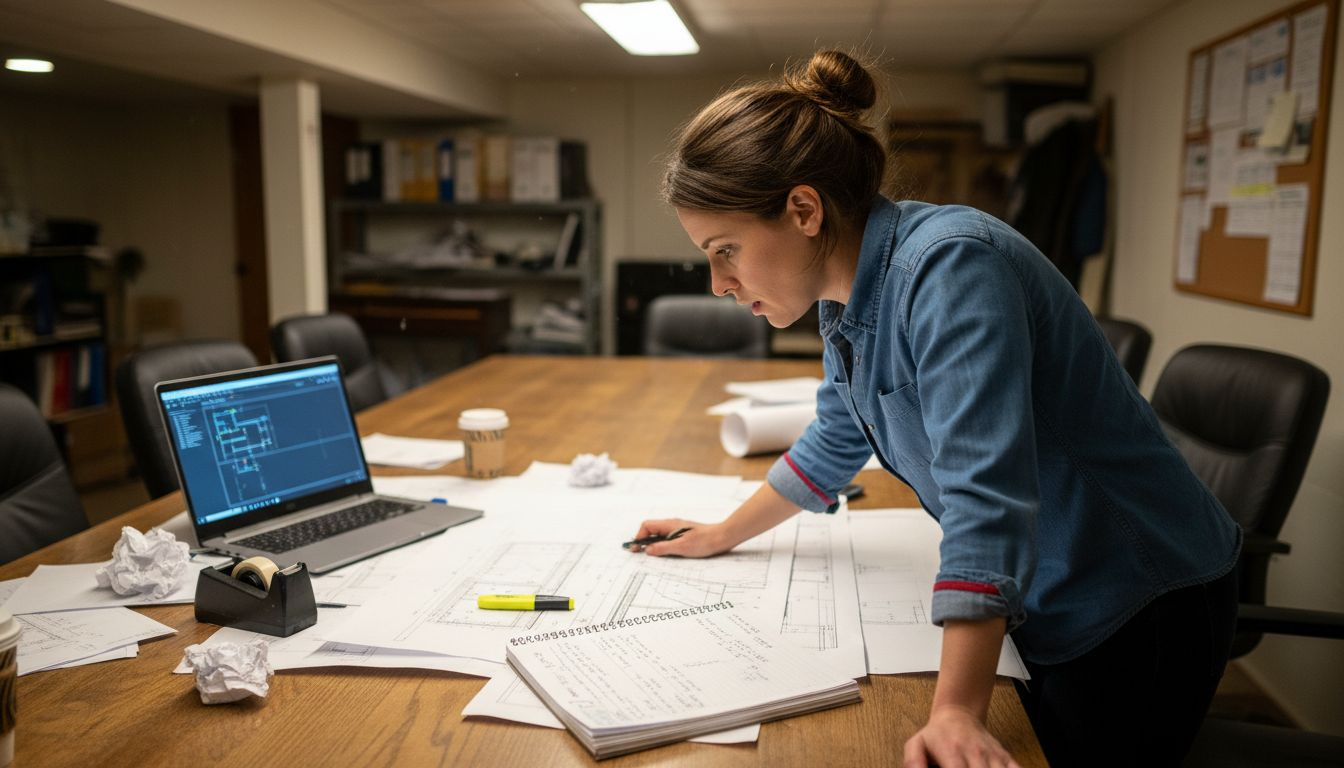
Drafting engineers prepare technical site plans using surveyed data and rigorous engineering analysis. Begin by generating scaled drawings that accurately represent all site features including property boundaries, proposed structures, utility connections, drainage systems, and topographical contours. Include precise measurements for building footprints, setbacks, elevation changes, and infrastructure components. Ensure your drawings incorporate standard engineering symbols and notation that clearly communicate design intent to reviewers and contractors.
Your detailed layout must demonstrate technical proficiency through comprehensive documentation. Include cross sectional views, grading plans, utility mapping, structural load calculations, and material specifications. Pay special attention to Florida specific requirements such as hurricane wind load standards, flood zone elevation requirements, and local building code specifications. Verify that every graphical element and written specification aligns perfectly with the zoning and design parameters established in previous planning stages.
Professional Advice: Invest in professional drafting software and consider having a licensed engineer review your site plan before submission to catch potential technical inconsistencies.
Step 5: Verify accuracy and ensure compliance with codes
The final stage of site plan development demands meticulous review and verification to guarantee your documentation meets all regulatory requirements. Your objective is to create a comprehensive plan that will successfully pass municipal and state level inspections.
Site plan compliance requires clear documentation that demonstrates precise adherence to local building codes and zoning regulations. Conduct a systematic cross reference check comparing your site plan against current Florida municipal guidelines, building codes, and specific local ordinances. Review every technical specification for accuracy ensuring all dimensions, notes, and proposed work details are thoroughly documented and align with existing property characteristics and approved design parameters.
During your verification process, pay special attention to critical compliance areas such as structural setbacks, maximum building coverage, height restrictions, parking requirements, and environmental protection standards. Request a preliminary review from local building officials or a licensed engineer who can provide an independent assessment of your site plan. This additional professional verification can help identify potential issues before formal submission, potentially saving significant time and preventing costly redesign work.
Professional Advice: Create a comprehensive compliance checklist that matches your site plan against each relevant building code and zoning requirement to ensure nothing is overlooked.
Compare the typical verification methods used during compliance review and their benefits:
| Verification Method | Main Benefit | Who Conducts Review |
|---|---|---|
| Cross-reference checklist | Ensures code and ordinance match | Project manager or engineer |
| Preliminary official review | Identifies permit issues early | Local building department |
| Independent engineer audit | Spots technical inconsistencies | Licensed engineer |
| Review of zoning conditions | Confirms municipal compliance | Planning official |
Ensure Your Site Plans Are Permit-Ready with Expert Engineering Support
Navigating the complexities of site plan drafting for accurate permitting can be overwhelming. From gathering precise surveys and zoning records to meeting stringent Florida building codes, one small oversight can create delays and costly revisions. If you are looking to streamline this process with professional expertise in civil engineering and comprehensive site plan services, look no further. Our team specializes in detailed site plan preparation, including grading, drainage, utility mapping, flood mitigation, and elevation certificates—all tailored to Florida’s unique requirements.

Take control of your permitting journey now by partnering with seasoned professionals who understand every technical and regulatory detail. Visit our Engineering and Inspection Archives – Florida Licensed Engineers to learn more about how our services can eliminate guesswork and ensure compliance. Ready to get started on your next project with confidence? Explore our full range of engineering solutions at Florida Licensed Engineers and turn your site plan into an approved blueprint for success.
Frequently Asked Questions
What documents are essential for drafting a site plan for accurate permitting?
To draft an accurate site plan, you need essential documents like property surveys, legal descriptions, zoning records, and existing site information. Start gathering these documents as soon as possible to ensure you have all required information to support your project.
How can I assess property boundaries effectively for my site plan?
You can assess property boundaries by obtaining an official land survey that defines property lines and easements. Consider hiring a licensed surveyor to ensure precise measurements and documentation of your property’s boundaries.
What are the typical design parameters I should consider when creating a site plan?
When creating a site plan, consider design parameters like building height restrictions, setback requirements, and maximum site coverage. Review your local zoning ordinance thoroughly to comply with specific regulations applicable to your property.
How do I ensure my site plan meets local building codes and requirements?
To ensure your site plan meets local building codes, conduct a systematic review comparing your plan against municipal guidelines. Create a compliance checklist to identify and address any discrepancies before submission for permitting.
What steps should I take to verify the accuracy of my site plan before submission?
Before submission, verify the accuracy of your site plan by conducting a cross-reference check with local regulations. Additionally, consider requesting a preliminary review from a local building official or a licensed engineer to catch potential issues ahead of time.
How can I improve the chances of my site plan being approved during the permitting process?
To improve the chances of site plan approval, ensure that all documentation is accurate, complete, and compliant with local guidelines. Consider investing extra time in thorough preparation, as this can reduce the time to obtain permits and avoid costly redesigns.
Recommended
- How to Create Architectural Drawings for Your Project – Florida Licensed Engineers
- How to Create Architectural Drawings for Your Project – FloridaLicensedEngineers.com
- Architectural Plans Step by Step for Any Project – Florida Licensed Engineers
- Architectural Plans Step by Step for Any Project – FloridaLicensedEngineers.com
