
How to Design MEP Plans for Permitting Success
Facing a new project in Florida means more than drafting blueprints and ordering materials. For mechanical, electrical, and plumbing contractors, every successful MEP plan starts with gathering the right details and fitting each system within strict local codes. With careful coordination and precise documentation, contractors can avoid costly redesigns and get projects approved faster. This guide lays out the fundamental steps to creating fully compliant MEP plans that stand up to Florida’s permitting requirements.
Table of Contents
- Step 1: Gather Project Requirements and Site Data
- Step 2: Coordinate Architectural and Structural Plans
- Step 3: Develop Mechanical, Electrical, and Plumbing Layouts
- Step 4: Apply Local Florida Codes and Standards
- Step 5: Review, Verify, and Prepare Plans for Permit
Quick Summary
| Main Insight | Detailed Explanation |
|---|---|
| 1. Gather Comprehensive Requirements | Start with a detailed survey to collect all necessary project data before beginning MEP design. |
| 2. Coordinate Multi-Disciplinary Plans | Utilize collaborative tools like BIM to ensure seamless integration of MEP systems with architectural and structural plans. |
| 3. Develop Compliant MEP Layouts | Create specific layouts for mechanical, electrical, and plumbing systems that meet local building codes and performance requirements. |
| 4. Understand Local Codes & Standards | Familiarize yourself with Florida’s building regulations to ensure your designs comply with all relevant safety and performance standards. |
| 5. Prepare Thorough Permit Applications | Diligently review all plans and documentation to ensure accuracy and compliance before submitting for permits. |
Step 1: Gather Project Requirements and Site Data
Successfully designing MEP plans starts with comprehensive requirement gathering. This critical initial phase determines the entire trajectory of your engineering project, establishing a solid foundation for permitting and construction.
Begin by conducting a thorough requirements gathering process that maps out every detail of your mechanical, electrical, and plumbing project. Start with a comprehensive site survey that documents existing conditions, infrastructure limitations, and specific project constraints. Collect precise measurements, evaluate utility connections, assess building codes, and identify potential challenges that might impact your MEP design.
Your site data collection should include comprehensive documentation such as topographic surveys, existing utility maps, soil reports, and architectural drawings. Pay special attention to local Florida building regulations, zoning requirements, and specific permitting guidelines that could influence your mechanical, electrical, and plumbing system designs. Interview stakeholders including property owners, contractors, and local building officials to understand both explicit and implicit project requirements.
Pro Tip: Create a detailed digital checklist with all required site data and project requirements to ensure nothing gets overlooked during the initial information gathering stage.
Step 2: Coordinate Architectural and Structural Plans
Coordinating architectural and structural plans is a critical phase in creating successful MEP designs that integrate seamlessly with the building’s overall blueprint. This step requires precision and collaborative communication across multiple engineering disciplines.
Implement multi-disciplinary collaboration strategies using Building Information Modeling (BIM) technology to ensure your mechanical, electrical, and plumbing systems align perfectly with architectural and structural elements. Carefully map out each system’s pathway to prevent potential interference between HVAC ducts, electrical conduits, plumbing lines, and critical structural supports. This detailed coordination helps identify potential conflicts early and reduces the risk of costly redesigns during the construction phase.
Pay special attention to spatial relationships between different building systems and structural components. Verify that your MEP designs accommodate structural constraints while maintaining optimal system performance. This includes analyzing floor and wall penetrations, ensuring adequate clearance for mechanical equipment, and confirming that utility connections meet both architectural design requirements and local building codes.
Here’s a summary of how key disciplines interact in the MEP design process:
| Discipline | Main Focus Area | Vital Coordination Tasks |
|---|---|---|
| Mechanical | HVAC, ventilation, systems | Duct routing, space allocation |
| Electrical | Power, lighting, controls | Conduit paths, load calculations |
| Plumbing | Water supply, drainage | Pipe routes, fixture placement |
| Structural/Architectural | Building framework, layouts | Penetrations, system integration |
Pro Tip: Create a color coded overlay mapping showing exact locations of MEP systems relative to structural elements to quickly identify potential integration challenges.
Step 3: Develop Mechanical, Electrical, and Plumbing Layouts
Developing comprehensive MEP layouts is a critical step that transforms project requirements into precise engineering blueprints. Your goal is to create detailed system designs that meet both functional requirements and regulatory standards.
Systematic MEP plan design requires a methodical approach that begins with detailed schematic development for each system. Start by creating individual layouts for mechanical, electrical, and plumbing systems that account for spatial constraints, equipment specifications, and potential interdisciplinary interactions. Use specialized computer aided design (CAD) software to draft precise routes for HVAC ductwork, electrical conduits, and plumbing lines that minimize conflicts and maximize system efficiency.

Each system layout must comply with local Florida building codes and performance standards. This means carefully calculating load requirements, specifying appropriate equipment sizes, and ensuring proper clearances for maintenance and future modifications. Pay special attention to potential interference points between mechanical, electrical, and plumbing systems, using color coding and layered drawings to clearly distinguish each system’s pathway through the building structure.
Pro Tip: Develop a comprehensive cross reference matrix that tracks each MEP system component against building codes and performance specifications to ensure absolute regulatory compliance.
Step 4: Apply Local Florida Codes and Standards
Navigating Florida’s complex building codes and standards is a critical step in ensuring your MEP plans will successfully pass permitting review. Your objective is to demonstrate comprehensive compliance with state and local regulatory requirements that govern mechanical, electrical, and plumbing system design.
Carefully review the comprehensive inspection procedures specific to Florida building regulations. Each MEP system must meet stringent performance and safety standards established by the Florida Building Code, which includes detailed requirements for electrical load calculations, mechanical ventilation standards, plumbing fixture specifications, and energy efficiency guidelines. Pay particular attention to regional variations that might impact your specific project location, such as wind load requirements in coastal areas, hurricane resistant design standards, and specialized environmental regulations.
Document every code compliance detail meticulously, creating a clear audit trail that demonstrates how your MEP designs meet or exceed all applicable regulatory standards. This means cross referencing your plans against the Florida Building Code, National Electrical Code, Mechanical Code, and Plumbing Code, while also considering local municipal amendments that could introduce additional requirements specific to your project’s jurisdiction.
Below is a quick reference of Florida-specific codes relevant to MEP design:
| Code Type | Primary Area Covered | Notable Florida Requirement |
|---|---|---|
| Florida Building Code | All systems, safety | Hurricane and wind load standards |
| National Electrical Code | Electrical systems | Coastal corrosion protection |
| Mechanical Code | HVAC, ventilation | Energy efficiency, climate zones |
| Plumbing Code | Water supply, waste handling | Backflow prevention |
Pro Tip: Maintain a dedicated compliance tracking spreadsheet that maps each MEP system component directly to specific code sections, making it easier to demonstrate regulatory adherence during permitting reviews.
Step 5: Review, Verify, and Prepare Plans for Permit
Successfully navigating the permitting process requires meticulous review and verification of your MEP plans before submission. This crucial stage determines whether your project will move forward smoothly or encounter potential delays.
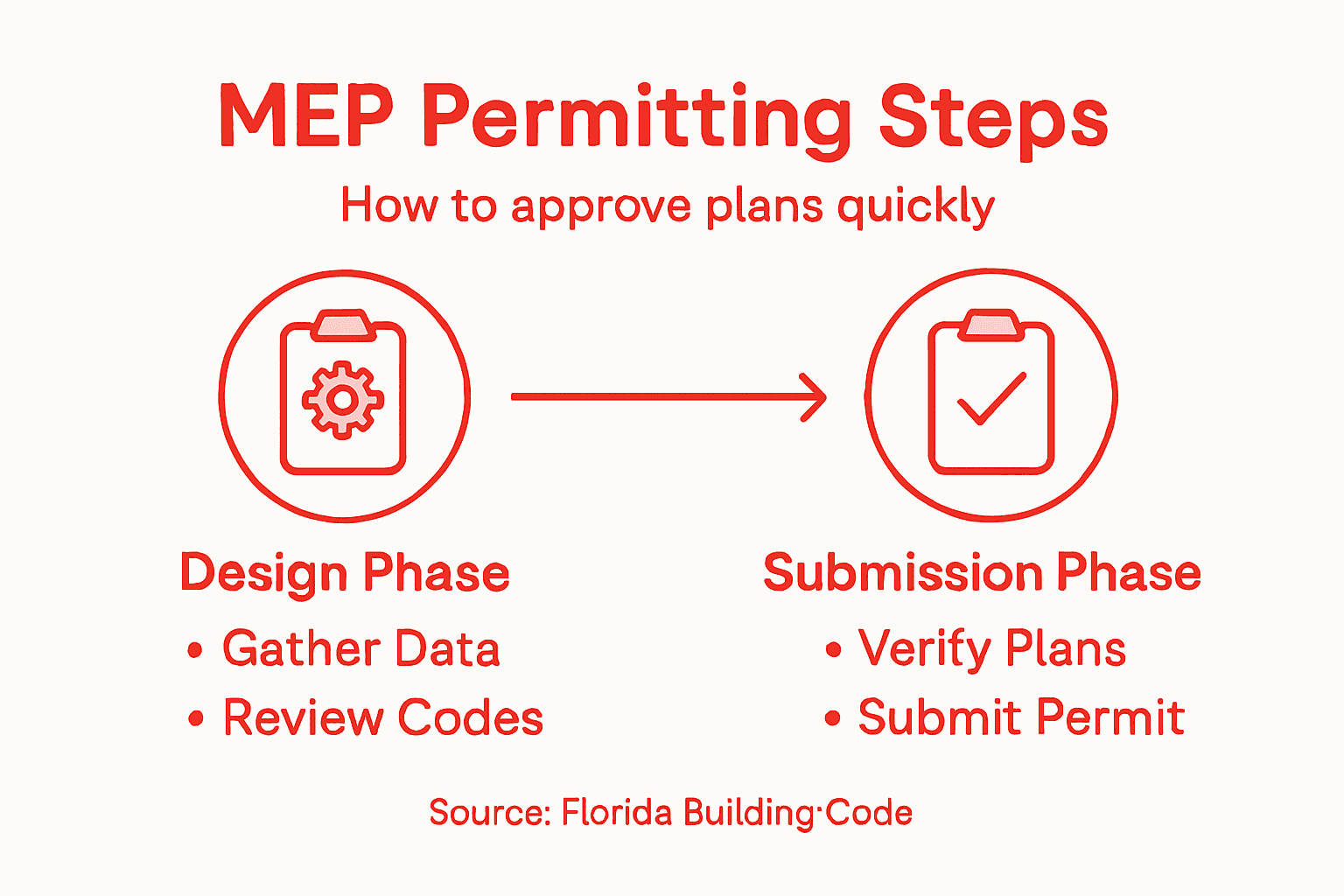
Carefully conduct a comprehensive permitting process review that scrutinizes every technical detail of your mechanical, electrical, and plumbing plans. Systematically cross check all engineering calculations, ensuring mathematical accuracy and absolute compliance with Florida building regulations. Verify that each drawing precisely reflects project requirements, including accurate scale representations, clear notation of material specifications, and comprehensive system layout details.
Prepare a complete permit application package that demonstrates exceptional attention to detail. Organize all supporting documentation including structural calculations, energy compliance reports, load analysis, and system performance specifications. Anticipate potential review questions by including detailed explanations that preemptively address potential concerns from permitting authorities. Include clear legends, comprehensive notes, and precise dimensional information that leaves no room for interpretation or additional clarification requests.
Pro Tip: Create a digital checklist with all required permit submission documents arranged in the exact order preferred by your local building department to streamline the review process.
Ensure Your MEP Plan Meets Every Requirement for Permitting Success
Designing Mechanical, Electrical, and Plumbing plans that fully comply with Florida’s strict building codes can be overwhelming. From navigating energy efficiency mandates to ensuring structural integration, your challenge is to deliver precise, code-compliant blueprints that accelerate permit approval and avoid costly delays. Our engineering services are tailored to resolve these exact pain points by providing expert inspections, detailed blueprints, and permitting expediter support that aligns seamlessly with your project needs.

Discover how we simplify complex requirements through collaborative engineering disciplines on our Engineering and Inspection Archives – Florida Licensed Engineers page. Take the next step toward permit approval confidence today by partnering with professionals who understand the nuances of Florida’s MEP codes and regulations. Visit Florida Licensed Engineers for comprehensive solutions tailored to residential and commercial projects.
Frequently Asked Questions
How do I start gathering project requirements for MEP plans?
Gather project requirements by conducting a thorough site survey to document existing conditions and infrastructure limitations. Create a detailed checklist to ensure you collect all necessary measurements, utility connections, and building codes before moving on to design.
What are the key steps to coordinate architectural and structural plans in MEP design?
Coordinate architectural and structural plans by utilizing Building Information Modeling (BIM) technology to map out system pathways accurately. This will help you identify potential conflicts early and enable seamless integration with the building’s overall design.
How do I ensure my MEP layouts meet local building codes?
Ensure compliance with local building codes by carefully reviewing the Florida Building Code and related standards relevant to mechanical, electrical, and plumbing systems. Maintain a compliance tracking spreadsheet that maps each system component directly to specific code sections to facilitate regulatory adherence.
What should be included in the permit application package for MEP plans?
Include all supporting documentation in your permit application package, such as structural calculations, energy compliance reports, and system performance specifications. Organize these documents clearly and include detailed explanations to preemptively address potential questions from permitting authorities.
How can I efficiently verify my MEP plans before submission?
Efficiently verify your MEP plans by conducting a comprehensive review that cross-checks every engineering calculation for accuracy. Create a digital checklist of required documents in the preferred order of your local building department to streamline the review process.
Recommended
- How to Create Architectural Drawings for Your Project – Florida Licensed Engineers
- How to Create Architectural Drawings for Your Project – FloridaLicensedEngineers.com
- Mechanical Design Process for Construction Projects – Florida Licensed Engineers
- Mechanical Design Process for Construction Projects – FloridaLicensedEngineers.com
