
Role of Architects in Construction – Streamlining Permitting
Delays and costly complications often frustrate Florida property owners when starting construction projects. Understanding how architects shape project outcomes and navigate regulatory requirements is vital to avoid these setbacks. Learn how architects serve as multifaceted problem-solvers, combining design expertise, regulatory knowledge, and strategic coordination to bring your vision to life while ensuring efficient permitting and compliance with the Florida Building Code. Discover practical ways their role creates smoother, safer construction from start to finish.
Table of Contents
- Defining The Architect’s Role In Construction
- Types Of Architectural Services For Projects
- Architects And Florida Building Code Compliance
- Architects In The Permit Approval Process
- Minimizing Delays And Legal Risks Through Architecture
Key Takeaways
| Point | Details |
|---|---|
| Architects are essential in project success | Their role goes beyond aesthetics to include technical, regulatory, and strategic functions throughout the construction supply chain. |
| Architectural services encompass various phases | These include schematic design, construction documentation, and project management, addressing both standard and specialized needs. |
| Compliance with building codes is critical | Architects must ensure designs meet local regulations to protect public health and facilitate the permit approval process. |
| Risk mitigation is a key responsibility | Architects proactively analyze potential challenges and employ strategies to minimize construction risks and legal complications. |
Defining the Architect’s Role in Construction
Architects play a pivotal role in transforming construction projects from conceptual designs to functional realities. Their responsibilities extend far beyond aesthetic considerations, encompassing critical technical, regulatory, and strategic functions that ensure project success. Future roles for architects have evolved to include multifaceted responsibilities across the entire construction supply chain.
The architectural profession involves several key responsibilities that shape construction projects:
- Design Development: Creating comprehensive blueprints and visual representations of proposed structures
- Technical Specification: Detailing precise material requirements and construction techniques
- Regulatory Compliance: Ensuring plans meet local building codes and zoning regulations
- Stakeholder Coordination: Facilitating communication between contractors, engineers, and clients
Architects serve as critical problem-solvers who bridge theoretical design concepts with practical construction constraints. Their expertise allows them to anticipate potential challenges and develop innovative solutions that balance aesthetic appeal with structural integrity and functional requirements.
Moreover, architects are increasingly becoming project integrators who manage complex interdisciplinary processes. They must synthesize inputs from multiple professionals, translate abstract design concepts into executable plans, and maintain a holistic view of project development from initial sketches through final construction.
Pro tip: Always request detailed portfolio examples and professional certifications when selecting an architect to ensure they have comprehensive experience in your specific project type.
Types of Architectural Services for Projects
Architectural services represent a comprehensive range of professional offerings that transform project concepts into functional realities. Architectural services encompass multiple design phases that go far beyond simple drawing creation, involving intricate technical and strategic planning.
The core architectural services typically include:
- Schematic Design: Initial concept development and preliminary sketches
- Design Development: Detailed refinement of architectural plans
- Construction Documentation: Creating precise technical drawings and specifications
- Construction Administration: Overseeing project implementation and ensuring design integrity
- Project Management: Coordinating between various stakeholders and contractors
Specialized architectural services extend the profession’s capabilities to address unique project requirements. These advanced offerings include:
- Sustainable design consultation
- Historic preservation planning
- Interior design integration
- Urban planning and zoning analysis
- Feasibility study development
- Code compliance consulting
Professional architects leverage advanced technologies like Computer-Aided Design (CAD) and Building Information Modeling (BIM) to create precise, comprehensive project representations. These digital tools enable architects to develop intricate 3D models, simulate potential design challenges, and provide clients with immersive visualization experiences.

Pro tip: Request a comprehensive service breakdown and portfolio review before engaging an architectural firm to ensure their expertise matches your specific project requirements.
Architects and Florida Building Code Compliance
Architects play a critical role in ensuring buildings meet stringent safety and regulatory standards in Florida. Architects must comply with complex building regulations that protect public health, safety, and welfare through meticulous design and documentation processes.
The key compliance responsibilities for architects in Florida include:
- Design Validation: Ensuring all architectural plans meet current building code requirements
- Permit Documentation: Preparing comprehensive drawings that satisfy local regulatory standards
- Professional Certification: Signing and sealing plans to verify professional accountability
- Code Interpretation: Staying current with evolving Florida Building Code updates
- Interdisciplinary Coordination: Collaborating with engineers and other design professionals
Florida’s building code compliance involves navigating multiple layers of regulatory requirements. Zoning regulations, land-use restrictions, and Americans with Disabilities Act (ADA) accessibility standards all factor into architectural design considerations. Architects must demonstrate deep understanding of these complex requirements to successfully guide projects through the permitting process.
Professional architects employ several strategies to maintain regulatory compliance:
- Continuous education on code updates
- Regular consultation with legal and regulatory experts
- Utilizing advanced design technologies
- Maintaining detailed documentation
- Proactive communication with local building authorities
Pro tip: Request a comprehensive code compliance review from your architect before finalizing project designs to minimize potential regulatory complications.
Architects in the Permit Approval Process
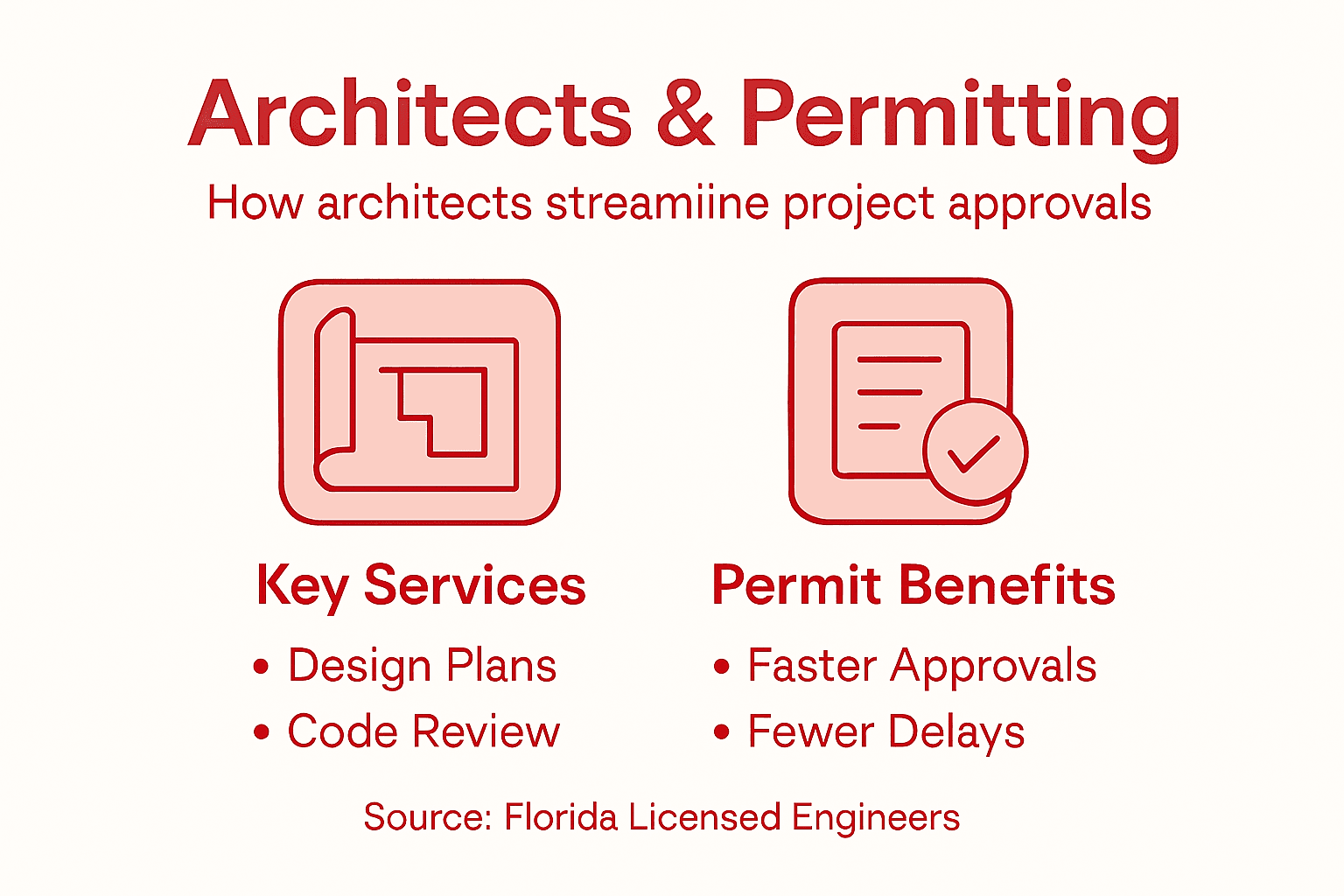
Architects play a critical role in simplifying building permit processes by acting as expert navigators through complex regulatory landscapes. Their comprehensive knowledge of local zoning laws and building codes enables them to streamline documentation and reduce potential approval delays.
The permit approval process involves several key architectural responsibilities:
- Document Preparation: Creating detailed, accurate submission packages
- Code Compliance Review: Ensuring all design elements meet regulatory standards
- Stakeholder Communication: Interfacing with permitting authorities and project teams
- Technical Interpretation: Translating complex regulatory requirements into actionable design strategies
- Error Mitigation: Identifying and resolving potential compliance issues before submission
Modern architectural practices increasingly leverage advanced technologies to enhance permit approval workflows. Building Information Modeling (BIM), digital submission platforms, and automated code-checking tools help architects produce more precise documentation and accelerate review processes.
Key strategies architects employ to expedite permit approvals include:
- Maintaining updated knowledge of local building regulations
- Developing comprehensive, meticulously detailed plan sets
- Establishing strong relationships with local permitting authorities
- Utilizing digital submission and tracking technologies
- Proactively addressing potential compliance questions
Pro tip: Request a comprehensive pre-submission review from your architect to identify and resolve potential regulatory issues before formal permit application.
Minimizing Delays and Legal Risks Through Architecture
Architectural design plays a critical role in mitigating construction risks through proactive planning and comprehensive risk management strategies. By anticipating potential challenges and developing strategic solutions, architects help prevent costly delays and legal complications before they emerge.
Key risk mitigation strategies in architectural design include:
- Comprehensive Site Analysis: Identifying potential environmental and structural challenges
- Detailed Documentation: Creating precise, unambiguous project specifications
- Regulatory Compliance: Ensuring alignment with local building codes and zoning requirements
- Advanced Visualization: Using Building Information Modeling (BIM) to detect potential conflicts
- Stakeholder Communication: Maintaining transparent, clear communication channels
Technological innovations have significantly enhanced architects’ ability to minimize project risks. Digital collaboration platforms, automated clash detection tools, and real-time project management software enable architects to identify and resolve potential issues more efficiently than traditional methods.
Here’s a summary of how advanced technologies enhance architectural practice:
| Technology | Main Use in Architecture | Key Benefit |
|---|---|---|
| CAD | Drafting detailed drawings | Greater precision |
| BIM | Building modeling and simulation | Conflict detection, clarity |
| Digital Submission Platforms | Permit application management | Faster approvals |
| Clash Detection Tools | Identifying design issues early | Reduces costly rework |
| Real-Time Project Management | Tracking project status | Improved coordination |
Risk management approaches architects employ to prevent legal complications include:
This table highlights major legal risks architects help mitigate and their prevention strategies:
| Legal Risk | Prevention Strategy | Typical Outcome |
|---|---|---|
| Code violations | In-depth code analysis | Avoided fines, permits secured |
| Ambiguous contracts | Comprehensive documentation | Clear responsibilities |
| Missed deadlines | Proactive risk planning | Fewer project delays |
| Accessibility non-compliance | ADA integration in design | Increased project approval rate |
| Stakeholder disputes | Transparent communication | Fewer legal conflicts |
- Conducting thorough preliminary assessments
- Developing comprehensive contingency plans
- Maintaining meticulous project documentation
- Implementing rigorous quality control processes
- Establishing clear communication protocols with all project stakeholders
Pro tip: Request a detailed risk assessment report from your architect that outlines potential project challenges and mitigation strategies before finalizing design plans.
Simplify Your Construction Permitting with Expert Engineering Support
Navigating the complexities of architectural design and permit approval can be overwhelming. This article highlights the crucial role architects play in ensuring compliance with Florida Building Codes and streamlining permitting processes. However, challenges such as detailed documentation, code compliance, and coordination with multiple stakeholders often require specialized engineering expertise to prevent delays and legal risks.
At Florida Licensed Engineers, we understand these pain points and offer comprehensive engineering and inspection services designed to complement your architectural efforts. Whether you need precise blueprints, thorough inspections, or permit expediter services, our skilled team delivers tailored solutions that keep your project on track. Learn how our capabilities in structural, mechanical, and civil engineering, including drainage and flood mitigation strategies, can reduce costly regulatory complications and accelerate approvals. Explore our Engineering and Inspection Archives – Florida Licensed Engineers to see how we have assisted numerous residential and commercial projects.

Don’t let permitting hurdles slow down your construction timeline. Partner with experts who streamline the entire process with clear communication and detailed documentation. Visit Florida Licensed Engineers today and take the first step toward hassle-free permitting and project success.
Frequently Asked Questions
What is the role of architects in the permitting process?
Architects play a critical role in simplifying the building permit process by preparing detailed documentation, ensuring code compliance, and communicating effectively with permitting authorities to streamline approvals.
How can architects help prevent permit delays?
Architects can prevent permit delays by maintaining updated knowledge of local building regulations, creating meticulously detailed plan sets, and developing strong relationships with local permitting authorities.
What strategies do architects use to ensure compliance with building codes?
Architects ensure compliance with building codes by conducting thorough code reviews, preparing comprehensive drawings, and collaborating with engineers and other design professionals to adhere to regulatory standards.
How do advanced technologies support architects in the permitting process?
Advanced technologies like Building Information Modeling (BIM), digital submission platforms, and automated code-checking tools help architects produce precise documentation, detect potential issues early, and expedite the approval workflows.
Recommended
- Role of Engineers in Permitting – Streamlining Florida Projects – Florida Licensed Engineers
- Residential Permitting: Why Homeowners Must Comply – FloridaLicensedEngineers.com
- Residential Permitting: Why Homeowners Must Comply – Florida Licensed Engineers
- Home Builder Permit Guide for Fast Florida Approvals – Florida Licensed Engineers


