
Types of Forensic Investigations in Florida: 70% Error Detection
Over 70% of structural failures stem from design or construction errors that forensic investigations can detect before they escalate into costly disasters. Florida’s unique climate, from hurricane-force winds to coastal erosion, demands precise forensic analysis to protect your property investment. This guide explains the main forensic investigation types, selection criteria, and situational recommendations to help you choose the right approach for your specific structural, environmental, or compliance challenge.
Table of Contents
- How to Choose the Right Forensic Investigation
- Overview of Forensic Investigation Types
- Types of Forensic Investigations: Detailed Analysis
- Comparison of Forensic Investigation Types
- Forensic Reports and Deliverables
- Situational Recommendations: Choosing the Best Investigation for Your Property
- Explore Expert Forensic Engineering Services in Florida
- Frequently Asked Questions About Forensic Investigations in Florida
Key Takeaways
| Point | Details |
|——-|———||
| Multiple investigation types | Structural, geotechnical, material, and environmental investigations address distinct Florida property challenges. |
| Selection depends on specifics | Choose based on issue type, environmental exposure, and legal reporting requirements. |
| Unique strengths per type | Each investigation offers specialized methodologies, scope, and deliverables for different scenarios. |
| Comparative criteria matter | Scope, cost, timeline, and report quality differ significantly across investigation types. |
| Situational guidance available | Practical recommendations match investigation types to common Florida property issues. |
How to Choose the Right Forensic Investigation
Selecting the appropriate forensic investigation protects your Florida property from escalating damage and ensures compliance with state engineering standards. Start by assessing the type and symptoms of your structural or environmental issues. Visible cracks, foundation movement, water intrusion, or material degradation each point toward different investigation needs.
Evaluate Florida-specific environmental factors that affect your property. Coastal exposure brings saltwater corrosion and erosion risks. Hurricane zones require analysis of wind damage and structural integrity. Inland properties face different soil stability and drainage challenges. Your location dictates which investigation type provides the most actionable insights.
Understand applicable Florida statutes and legal reporting demands for your situation. Insurance claims, permit compliance, and dispute resolution often require specific documentation formats. Selection criteria include structural issue type, environmental exposure, legal requirements, methodology, and expert qualifications to ensure your investigation meets all necessary standards.
Review investigation methodologies and expected report outputs before committing. Different approaches use varied testing equipment, sampling techniques, and analysis depth. Confirm the forensic engineer holds proper Florida licensure and demonstrates extensive experience with cases similar to yours. Verify their track record with insurance companies and legal proceedings if your case involves claims or disputes.
Pro Tip: Prioritize investigations offering multi-discipline expertise when dealing with complex cases involving both structural and environmental factors. Combined assessments often reveal interconnected issues single-focus investigations might miss.
Overview of Forensic Investigation Types
Florida property owners can access several forensic investigation types, each designed to diagnose specific categories of structural or environmental problems. Understanding these categories helps you match your property’s symptoms to the appropriate expertise.
Structural investigations address foundation failures, framing defects, and building envelope breaches. These assessments examine load-bearing elements, connection integrity, and compliance with Florida Building Code requirements. Engineers evaluate cracks, deflections, corrosion, and settlement patterns to determine root causes and repair needs.
Material investigations analyze the physical and chemical properties of construction components. Concrete degradation, metal corrosion, wood rot, and composite failures fall under this category. Laboratory testing reveals material composition, strength characteristics, and deterioration mechanisms affecting your property.
Geotechnical forensic investigations assess soil and foundation movement critical for Florida’s coastal erosion and soil issues. These studies examine subsurface conditions, bearing capacity, settlement patterns, and groundwater impacts. Soil sampling, lab analysis, and field testing identify the underground factors compromising your foundation’s stability.
Environmental investigations diagnose water intrusion, moisture accumulation, mold growth, and storm damage. These assessments map moisture patterns, identify entry points, and evaluate indoor air quality. Thermal imaging, moisture meters, and air sampling equipment locate hidden problems threatening your property’s habitability and structural integrity.
Types of Forensic Investigations: Detailed Analysis
Each forensic investigation type employs specialized methodologies tailored to Florida’s challenging property conditions. Understanding their applications helps you request the right expertise for your situation.
Structural forensic investigations focus on load-bearing system failures, visible cracking, and material corrosion following hurricanes or long-term weathering. Engineers conduct detailed visual inspections, structural calculations, and non-destructive testing to assess component capacity. They evaluate whether damage stems from design flaws, construction defects, material failures, or maintenance neglect. These investigations prove essential after major storm events when insurance claims require documented proof of wind or water damage versus pre-existing conditions.
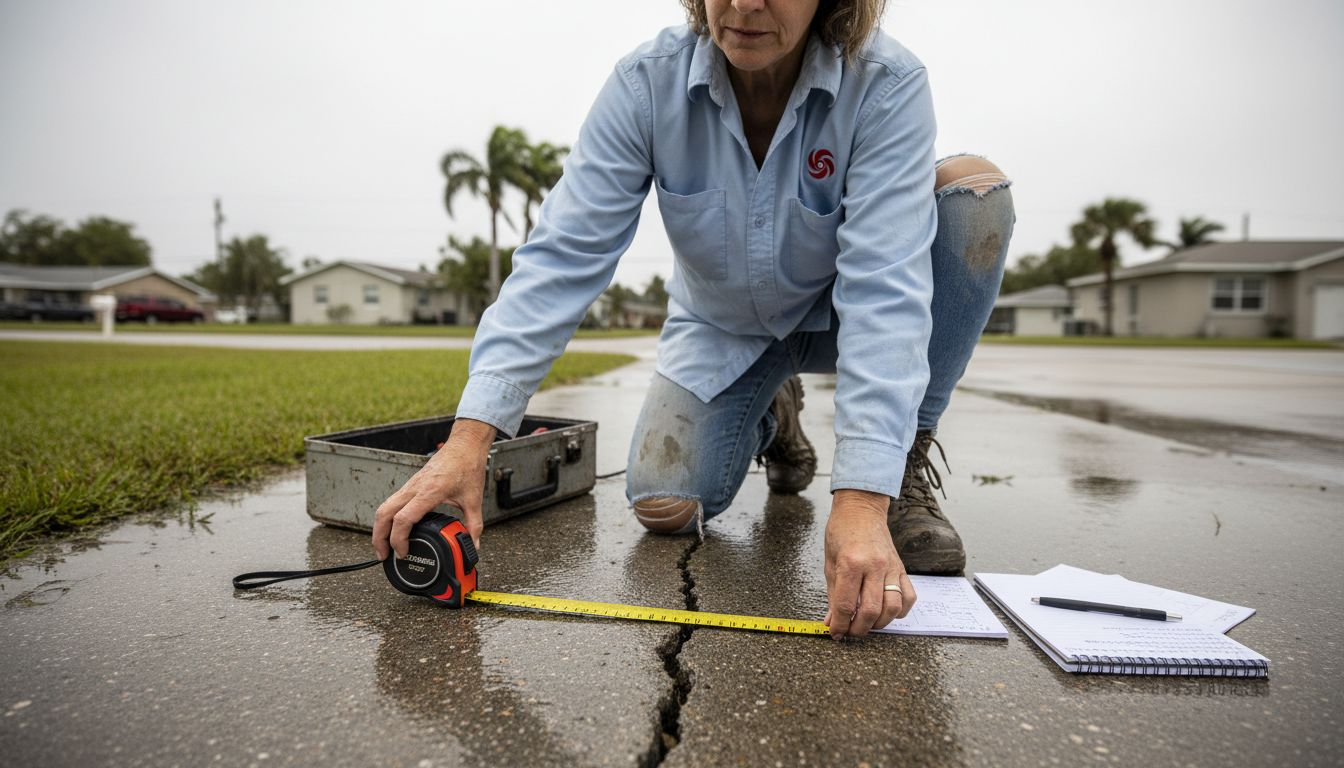
Geotechnical investigations use soil testing including core samples and shear strength analysis to reveal foundation risks near Florida shorelines. Engineers drill boreholes, extract soil samples, and perform laboratory tests measuring bearing capacity, compressibility, and permeability. They analyze settlement patterns, erosion rates, and groundwater levels affecting foundation stability. Coastal properties benefit most from these investigations when experiencing differential settlement, foundation cracking, or visible soil movement.
Material investigations conduct detailed laboratory analyses for concrete spalling, rebar corrosion, and metal degradation common in Florida’s saltwater environments. Engineers extract samples for petrographic examination, chemical analysis, and mechanical testing. They identify chloride penetration, alkali-silica reactions, and carbonation depth to determine deterioration causes. These investigations prove critical when visible surface damage suggests deeper material compromise requiring extensive repairs.
Environmental investigations employ moisture mapping, infrared thermography, and water intrusion tracing vital for storm-damaged buildings across Florida. Specialists measure humidity levels, locate moisture sources, and assess mold contamination. They distinguish between acute storm damage and chronic leakage problems to guide remediation strategies. Florida’s intense rainfall and hurricane exposure make these investigations essential for protecting indoor air quality and preventing progressive structural damage.
Comparison of Forensic Investigation Types
Comparing investigation types clarifies which approach delivers the most value for your specific Florida property challenge. Each type varies in scope, methodology, timeline, and cost structure.
| Investigation Type | Primary Focus | Typical Timeline | Cost Range | Best For |
|---|---|---|---|---|
| Structural | Load systems, framing, connections | 1-3 weeks | $3,000-$8,000 | Hurricane damage, visible cracks |
| Geotechnical | Soil stability, foundation movement | 2-4 weeks | $4,000-$10,000 | Coastal erosion, settlement |
| Material | Component degradation, corrosion | 2-5 weeks | $2,500-$7,000 | Concrete spalling, metal corrosion |
| Environmental | Moisture, mold, water intrusion | 1-2 weeks | $2,000-$5,000 | Storm damage, humidity issues |
Structural investigations deliver rapid on-site assessments combined with targeted materials testing. Engineers complete field inspections quickly, then specify laboratory tests for suspect components. This approach works ideally for hurricane damage requiring fast insurance claim documentation. The scope includes visual examination, measurements, photography, and structural calculations verifying code compliance.
Geotechnical investigations require extensive soil sampling and laboratory analysis. Field crews drill boreholes, extract samples at various depths, and install monitoring equipment. Laboratory technicians perform multiple tests measuring soil properties. This lengthier process proves essential for coastal properties where erosion threatens foundation integrity. Reports include soil profiles, bearing capacity analyses, and foundation repair recommendations.
Material investigations involve careful sample extraction followed by microscopy, chemical testing, and mechanical evaluation. Specialists document deterioration patterns, quantify damage extent, and predict remaining service life. These investigations excel at diagnosing corrosion in reinforced concrete or metal components common to Florida’s saltwater exposure. Detailed analysis supports repair specifications and material selection.
Environmental investigations utilize electronic moisture detection, thermal imaging, and air quality sampling. Technicians map moisture patterns throughout affected areas, identify hidden leaks, and assess mold contamination. Florida’s frequent storms and high humidity make these investigations vital for protecting health and preventing progressive structural damage. Reports guide targeted remediation addressing root causes rather than surface symptoms.
Pro Tip: Weigh report detail and legal defensibility alongside initial cost when budgeting forensic services. Comprehensive documentation often saves money by supporting insurance claims and preventing repair disputes.
Forensic Reports and Deliverables
Forensic investigation reports serve as critical evidence supporting insurance claims, legal actions, and repair planning for Florida properties. Understanding report contents helps you evaluate investigation quality and usefulness.
Standard forensic reports contain comprehensive photo documentation showing damage extent, condition timelines establishing when problems developed, and detailed root cause analyses explaining failure mechanisms. Engineers describe investigation methodologies, present test results with supporting data, and provide technical conclusions backed by calculations or laboratory findings. Florida-licensed professionals structure reports to meet state regulatory requirements and insurance industry standards.
Forensic reports contain photo documentation, root cause narratives, repair scope, and cost estimates crucial for claims and disputes. These documents translate technical findings into actionable recommendations property owners and contractors can implement. They specify materials, methods, and quality standards for effective repairs addressing underlying causes rather than surface symptoms.
Reports guide insurance claim negotiations by documenting pre-existing conditions versus storm damage, quantifying repair costs, and establishing liability. Adjusters rely on licensed engineer certifications when evaluating coverage decisions. Well-documented forensic reports often mean the difference between claim approval and denial for complex damage scenarios.
Regulatory compliance depends on proper forensic documentation when Florida building officials require engineering certification for permits. Repair plans must address code violations and structural deficiencies identified during investigation. Licensed engineers’ reports carry legal weight satisfying permit requirements and protecting property owners from future liability.
Forensic reports include detailed scope descriptions and cost estimates enabling accurate repair budgeting and contractor bidding. Specifications prevent misunderstandings about work requirements and quality expectations. Property owners use these documents to compare contractor proposals and verify completed work meets engineering standards.
Situational Recommendations: Choosing the Best Investigation for Your Property
Matching forensic investigation types to your specific Florida property issues ensures you get actionable answers and cost-effective solutions. These scenarios guide your decision based on common symptoms and property characteristics.
-
Choose structural investigations when your property shows hurricane damage like roof lifting, wall cracks, or structural sagging. These assessments quickly document storm impacts for insurance claims while evaluating whether repairs require engineering design. Aging structures with progressive cracking, deflection, or connection failures also need structural forensic analysis to determine if problems stem from original design flaws, construction defects, or deterioration requiring immediate remediation.
-
Select geotechnical investigations for coastal properties experiencing foundation movement, differential settlement, or visible erosion. Properties near waterways, on reclaimed land, or in known subsidence areas benefit from subsurface analysis revealing soil instability. Request geotechnical forensics when foundation cracks widen progressively, doors and windows bind, or floor slopes develop, indicating ongoing settlement requiring soil stabilization before structural repairs succeed.
-
Request material investigations when you observe concrete spalling, exposed rebar, rust staining, or surface deterioration suggesting deeper component compromise. Visible corrosion on metal structural elements, especially in saltwater environments, warrants laboratory analysis determining damage extent and remaining capacity. These investigations prove essential before major renovations or additions when building officials require material condition certifications.
-
Order environmental investigations immediately following water intrusion events, when musty odors indicate hidden moisture, or when visible mold appears. Properties with chronic humidity problems, condensation issues, or suspected roof or plumbing leaks need moisture mapping locating water sources. Storm-damaged buildings require environmental assessment before occupancy to ensure indoor air quality and prevent health hazards from contamination.
-
Base your decision on symptom severity, property location, and intended use of investigation results. Insurance claims favor comprehensive structural or environmental reports documenting acute damage. Pre-purchase evaluations benefit from targeted investigations addressing specific concerns. Legal disputes require thorough documentation across all relevant disciplines supporting your position with irrefutable technical evidence.
Explore Expert Forensic Engineering Services in Florida
Protecting your Florida property investment requires access to licensed forensic engineers who understand local conditions and regulatory requirements. Making informed decisions about structural issues, environmental challenges, and compliance needs starts with expert guidance tailored to your situation.
Florida Licensed Engineers delivers comprehensive forensic investigations backed by professional licensure and extensive experience with residential and commercial properties across the state. Our reports support insurance claims with detailed documentation, meet legal standards for disputes, and provide actionable repair guidance protecting your investment. Whether you need engineering services addressing structural concerns or forensic reports for insurance claims, we offer the multi-discipline expertise Florida properties demand.
Our team provides complete engineering support including inspections, blueprints, permitting assistance, and forensic analysis across architectural, structural, mechanical, electrical, and plumbing systems. We also deliver civil engineering services covering drainage, grading, utilities, and flood mitigation with elevation certificates and no-rise documentation. Discover how professional engineering inspections and permits streamline your project while ensuring compliance and protecting your property value.
Frequently Asked Questions About Forensic Investigations in Florida
When should Florida property owners request a forensic investigation?
Request forensic investigation immediately after discovering significant structural damage, foundation movement, or environmental contamination. Time-sensitive situations include post-hurricane assessments, insurance claim documentation, pre-purchase due diligence on problem properties, and resolving construction defect disputes. Early investigation prevents damage progression and preserves evidence supporting claims or legal actions.
How do forensic investigations differ from standard home inspections?
Standard home inspections provide general property condition overviews without in-depth technical analysis or specialized testing. Forensic investigations employ licensed engineers who conduct detailed examinations, laboratory testing, structural calculations, and root cause analyses. Forensic reports meet legal and insurance documentation standards while home inspection reports serve informational purposes without engineering certification or liability opinions.
What qualifications should property owners verify in forensic investigators?
Verify investigators hold current Florida Professional Engineer licenses in relevant disciplines like structural, geotechnical, or environmental engineering. Confirm they carry professional liability insurance and have extensive experience with cases similar to yours. Request references from insurance companies, attorneys, or property owners who used their services. Check their familiarity with Florida Building Code and local permit requirements affecting your property type.
How do forensic investigations support insurance claims in Florida?
Forensic investigations provide documented proof distinguishing covered storm damage from pre-existing conditions or maintenance issues. Licensed engineers certify damage causes, quantify repair costs, and establish timelines supporting claim validity. Their reports carry legal weight insurance adjusters respect when evaluating coverage decisions. Comprehensive documentation often expedites claim approval and prevents disputes over damage extent or causation.
What preparation helps property owners before forensic assessment?
Gather available property records including original construction drawings, previous inspection reports, repair invoices, and maintenance logs. Document damage progression with dated photographs showing condition changes. Provide access to all affected areas including attics, crawl spaces, and mechanical rooms. List specific concerns and symptoms you’ve observed. Clear communication about your goals for the investigation, whether insurance claims, repairs, or legal actions, helps engineers focus their assessment appropriately.
Can one forensic investigation address multiple property issues?
Yes, comprehensive forensic investigations often examine multiple interconnected issues when licensed engineers coordinate assessments across structural, geotechnical, material, and environmental disciplines. This integrated approach proves more cost-effective than separate investigations while revealing how different problems interact. For example, water intrusion may cause both structural deterioration and environmental contamination requiring coordinated analysis and repair strategies addressing all aspects simultaneously.


