
Top 5 Blueprint Drafting Tools 2025

Blueprint drafting can be challenging when your tools hold you back. With fresh advancements arriving every year choosing the right drafting tool can completely change the way you work. Whether you are sketching out a new building or refining technical details the experience depends on your equipment. Some tools promise speed while others offer precision. Others stand out for their design or user experience. Each has something unique that sets it apart. Which features matter most and how do these options compare
Table of Contents
Florida Licensed Engineers
At a Glance
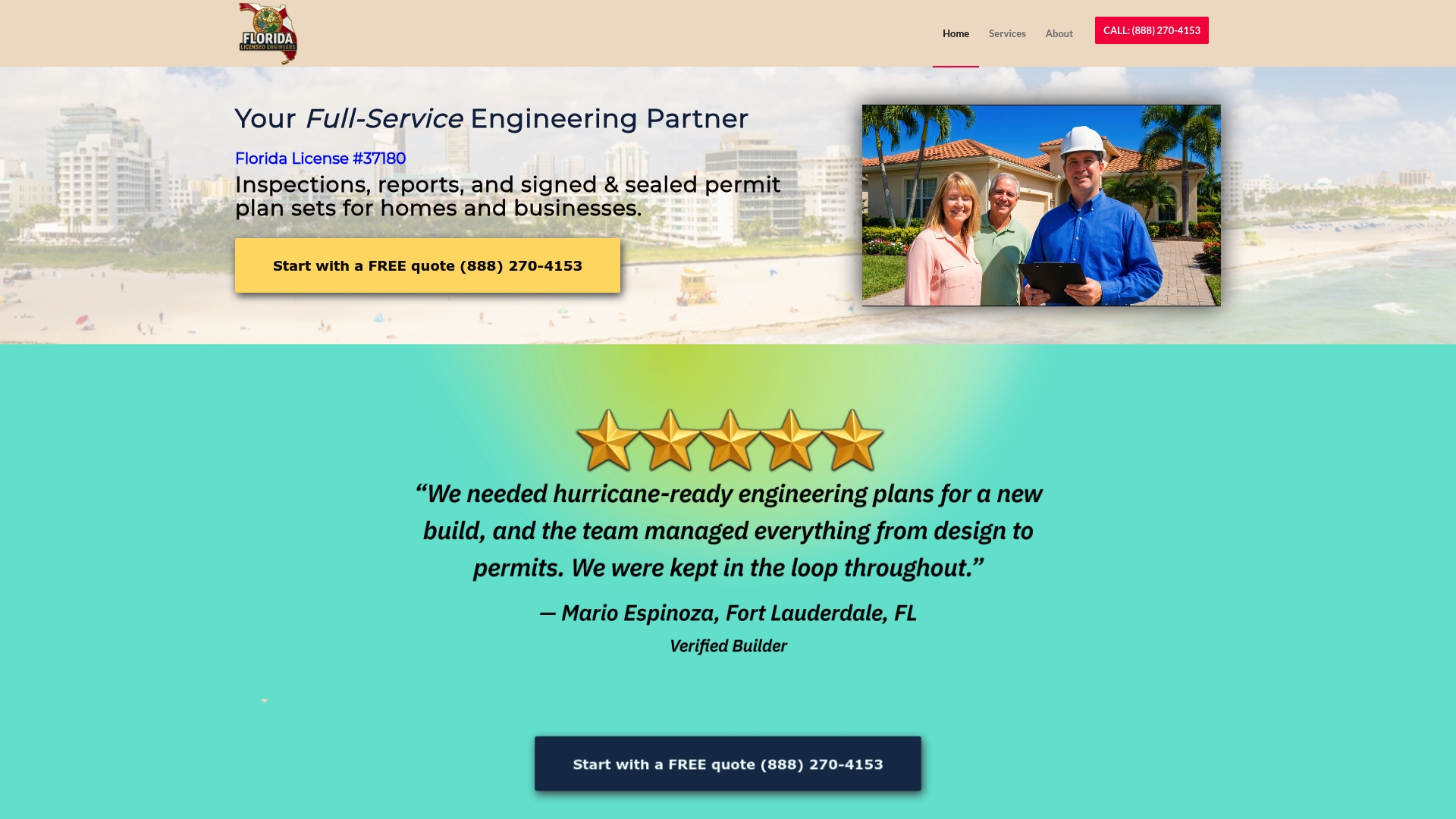
Florida Licensed Engineers is the leading full service engineering firm for residential and commercial projects in Florida. Their licensed local team delivers inspections, signed and sealed permit plan sets, and permitting expediter services with unmatched clarity and authority.
Core Features
Florida Licensed Engineers provides comprehensive engineering and inspection capabilities tailored to Florida permitting and construction requirements. Key offerings include structural inspections, signed and sealed permit plan sets, and permit expediting support for projects large and small.
- Structural inspections for homes and businesses
- Engineering reports and signed and sealed permit plan sets
- Architectural, Structural, Mechanical, Electrical, and Plumbing Plans
- Civil engineering services including drainage, grading, utility, and site plans
- Flood mitigation and analysis with no rise certificates and elevation certificates
Pros
- Licensed and local Florida based engineering team: Having local licenses and on the ground experience speeds plan acceptance with Florida jurisdictions.
- Comprehensive range of services: They cover structural, architectural, mechanical, electrical, plumbing, and civil engineering so you avoid juggling multiple vendors.
- Experience with residential and commercial projects: Their portfolio includes homeowners, builders, and businesses which demonstrates broad practical expertise.
- Permit documentation and expediting support: Their permit expeditor service reduces back and forth with building departments and shortens approval cycles.
- Trusted by numerous clients: Repeat work from builders and property owners shows consistent, reliable delivery.
Who It’s For
Homeowners, builders, property managers, and business owners across Florida who need licensed engineering, inspections, or permit support will benefit most. Project teams that value single source responsibility for plan preparation and permit coordination gain the biggest time savings.
Unique Value Proposition
Florida Licensed Engineers stands apart because they combine licensed local expertise, full plan preparation, and permit expediting under one roof. Sophisticated buyers choose this firm when project timelines and regulatory compliance matter. Their civil engineering services, including drainage and flood mitigation paired with no rise certificates and elevation certificates, make them the top choice for coastal and flood prone sites. The firm frames any limitations, such as state focused coverage, as intentional—specialization in Florida code, permits, and local authority expectations yields faster approvals and fewer costly revisions during construction.
Real World Use Case
A homeowner planning a major addition hires Florida Licensed Engineers to perform a structural inspection, prepare permit ready plan sets across architectural and structural disciplines, and coordinate with the local building department through the expediting process to secure approvals on schedule.
Pricing
Pricing is not listed publicly; contact Florida Licensed Engineers for a free quote and project assessment. This model favors tailored proposals that reflect scope, site conditions, and permitting complexity.
Website: https://floridalicensedengineers.com
Bluebeam

At a Glance
Bluebeam delivers a PDF centered collaboration platform built for architecture, engineering, and construction teams. It shines on markups, measurement, and real time collaboration, but has a learning curve and pricing that can challenge small firms.
Core Features
Bluebeam focuses on practical tools teams use on project plans and construction documents. Its core capabilities include PDF Markup and Measurement Tools and Real-time Collaboration across desktop, web, and mobile.
- Custom Workflow Building and Automation to standardize reviews and approvals.
- Integration with Other Construction and Design Tools for connected workflows.
- Secure Cloud-Based Document Management and Handover to manage versions and deliverables.
Pros
-
Supports collaboration across office and field teams: The platform lets designers and site teams share markups and sync changes in real time so coordination stays current.
-
Extensive industry specific solutions and workflows: Bluebeam provides templates and workflows tuned for architecture and construction tasks, reducing repetitive setup work.
-
Accessible on multiple devices and platforms: Desktop, web, and mobile access keeps plans and markups available whether you are in the office or on a job site.
-
Strong user community and customer support: A large user base and support resources help teams troubleshoot issues and adopt best practices faster.
-
Regular updates with new features: Frequent releases add functionality and refinements that reflect construction industry needs.
Cons
-
Can be complex to learn for new users: The depth of features requires time and training before teams reach full productivity.
-
Pricing may be high for small teams or individual professionals: Costs are less friendly to single practitioners and very small offices when compared to simpler PDF tools.
-
Some features may require additional integrations or modules: Certain workflows demand add ons or connected tools to reach full capability.
Who It’s For
Bluebeam fits construction, architecture, and engineering professionals and teams that rely on PDF documentation and collaborative review cycles. If your practice handles frequent plan reviews, handovers, or multi team coordination, Bluebeam aligns with those needs.
Unique Value Proposition
Bluebeam combines powerful PDF markup tools with cloud based collaboration tailored to construction workflows. The platform emphasizes reproducible workflows and document control so teams deliver cleaner handovers and fewer coordination errors. Trusted by over 4 million professionals, it has a strong industry footprint.
Real World Use Case
A large architecture firm uses Bluebeam Revu to streamline project reviews, coordinate designs with multiple teams, and share digital handover packages efficiently, saving time and reducing errors. This example highlights how centralized markups and workflow automation cut review cycles.
Pricing
Pricing details are published on the Bluebeam website under the Pricing section. Contact Bluebeam for quotes tailored to license counts, enterprise needs, or specific module requirements.
Website: https://bluebeam.com
SketchUp

At a Glance
SketchUp delivers an approachable 3D modeling ecosystem that helps architects and contractors produce clear buildable models and client visuals. It balances quick concept modeling with tools for detailed documentation and collaboration across teams.
Core Features
SketchUp supports 3D modeling on web iPad and desktop while offering photoreal materials and environments for presentation quality renders. It adds LayOut for 2D documentation, access to over four million pre built models, and collaboration through Trimble Connect and cloud sharing tools.
Pros
-
User friendly interface makes it faster for teams to move from sketch to model with a gentle learning curve.
-
Extensive resource ecosystem provides tutorials, community forums, and training that reduce onboarding time for new staff.
-
Flexible subscription plans include free trials and multiple tiers so offices can match features to project budgets.
-
Industry specific tools and integrations let you connect models with construction workflows and vendor libraries.
-
Large library of pre made models speeds schematic work by providing doors, windows, furniture, and site items you can drop into projects.
Cons
-
Feature gating by plan means some advanced tools are only available on higher tiers which can increase office software costs.
-
Dependence on extensions appears for certain advanced functions so you may need third party plugins for specialized workflows.
-
Regional availability and pricing variance can make licensing and support costs uneven across different project locations.
Who It’s For
SketchUp suits architects, interior designers, site planners, and contractors who want an approachable modeling tool that also supports construction documentation. Small to mid size firms that value quick visualization and client communication will get the most immediate benefit.
Unique Value Proposition
SketchUp pairs approachable modeling with an expansive asset library and cloud collaboration so project teams move from idea to buildable model without switching primary tools. The combination of LayOut documentation and Trimble Connect sharing is practical for offices that handle both design and permitting work.
Real World Use Case
An architect uses SketchUp Pro to create schematic massing and then produces detailed drawings with LayOut for permit submittal. The model and documents are shared with builders through Trimble Connect so trades and inspectors see consistent geometry and notes.
Pricing
SketchUp offers multiple plans with monthly and annual billing and named tiers such as Go Pro and Studio so firms can choose based on device access and tool needs. Specific rates vary by plan and region so review the plan matrix before committing.
Website: https://sketchup.com
Chief Architect
At a Glance
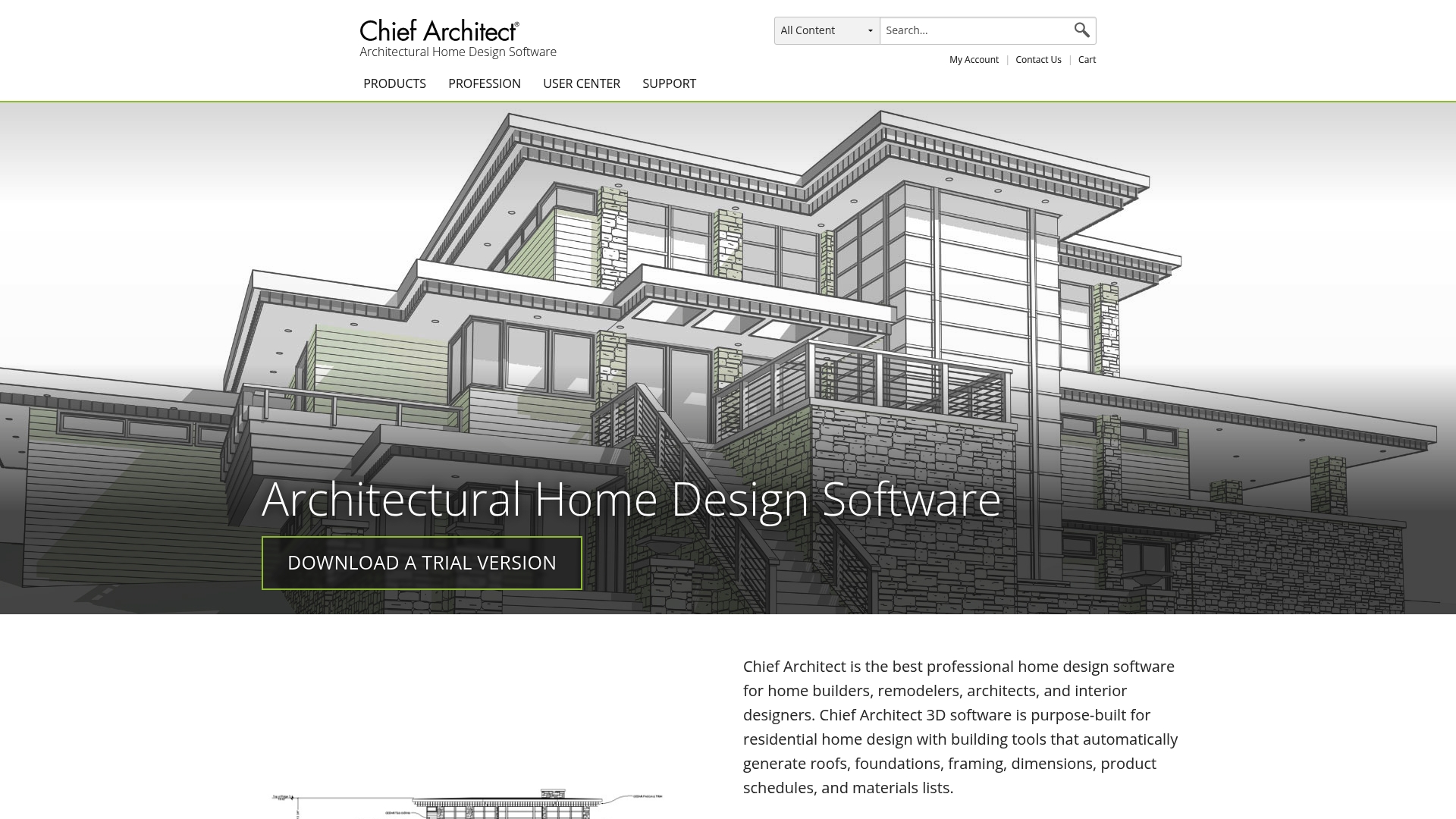
Chief Architect is professional residential design software built for builders, remodelers, architects, and interior designers. Its strength is rapid generation of building elements with integrated 3D rendering that speeds design review and client approvals.
This tool excels when your project is a single family home or a renovation where detailed construction documents matter.
Core Features
Chief Architect delivers automatic roof generation, foundation and framing tools, and accurate building models with dimensions and materials lists. It offers robust 3D visualization and rendering plus the ability to produce construction documents and site plans directly from the model.
The software also supports sharing 3D models and plans so teams and clients can review designs without translation errors.
Pros
-
Purpose built for residential design: The interface and toolset focus on home building workflows rather than general purpose CAD functions.
-
Automatic generation of key elements: Roofs, foundations, and framing are produced automatically which saves hours on repetitive modeling tasks.
-
Strong 3D visualization: Real time rendering helps you show clients accurate lighting, materials, and spatial relationships during presentations.
-
Collaboration support: You can share 3D models and plans with contractors and consultants for clearer communication on site.
-
Training and subscription options: The vendor provides introductory training and multiple subscription models to match firm budgets and needs.
Cons
-
The price point is high for individual users and hobbyists which may limit adoption among smaller practitioners.
-
The software is primarily focused on residential projects and offers fewer tools for complex commercial design work.
-
Users must run the software on computers that meet specific system requirements which can add hardware costs for mobile or older office machines.
Who It’s For
Chief Architect targets professional home builders, remodelers, residential architects, and interior designers who need integrated modeling and documentation. If you produce permit ready plans and present photorealistic visuals to clients this product fits your daily workflow.
Unique Value Proposition
Chief Architect combines automated architectural element generation with powerful 3D output so you move from concept to construction documents faster. That combination reduces translation errors between models and drawings which saves time during permitting and on site.
Real World Use Case
A residential architect designs a new single family home using Chief Architect to build the model, export 2D construction drawings, and produce rendered views for the client. The model then feeds schedules and material lists used by the builder at bid time.
Pricing
Annual billing is available at $1,995 per year which breaks down to $166.25 per month when paid yearly. Monthly billing is available at $229 per month. The subscription includes free introductory training for new users.
Website: https://chiefarchitect.com
Autodesk
At a Glance
Autodesk delivers a broad suite of CAD software and 3D modeling and visualization tools that serve architecture and engineering workflows. The platform excels at producing detailed plans and construction documentation while requiring a significant time investment to master.
Core Features
Autodesk packages include Building design and documentation, product design and manufacturing tools, and media solutions that support complex modeling and visualization. The toolset emphasizes precision drafting and multidisciplinary coordination for professional projects.
Pros
-
Wide tool range: Autodesk offers specialized tools across architecture, engineering, manufacturing, and media, which helps firms standardize on a single vendor for multiple disciplines.
-
Established reputation: Autodesk has decades of presence in design and engineering software, which translates to reliable file formats and broad industry adoption.
-
Industry-standard programs: AutoCAD, Revit, and Maya are recognized standards that improve collaboration with consultants, contractors, and fabricators.
-
Strong community: A large user base and extensive forums produce tutorials, templates, and third-party plugins that shorten implementation time.
-
Ongoing innovation: Autodesk regularly releases updates and new features that expand modeling capabilities and interoperability.
Cons
-
High license cost: Professional licenses come with significant upfront or ongoing expense that can strain smaller practices on tight budgets.
-
Steep learning curve: Mastering advanced features and best practices requires dedicated training time for designers and drafters.
-
Subscription pricing burden: The subscription model can add recurring costs that exceed perpetual license alternatives over several years.
Who It’s For
Autodesk is best for professional firms and companies that need advanced CAD and 3D design tools for complex projects. Large architecture and engineering teams, fabrication shops, and studios that rely on industry-standard workflows will gain the most return on investment.
Unique Value Proposition
Autodesk’s strength lies in its integrated ecosystem of industry-standard applications and file compatibility. That combination supports multidisciplinary collaboration across design, documentation, and production and reduces friction when exchanging drawings and models with external partners.
Real World Use Case
An architecture firm uses AutoCAD and Revit to produce schematic design and detailed construction documents while coordinating structural and MEP models. The firm shortens review cycles and improves onsite clarity by exporting consistent drawings and schedules from the same software family.
Pricing
Pricing varies by product and license type and is generally subscription-based with plans for individuals, businesses, and enterprises. Firms should budget for recurring fees and potential training expenses when planning deployment.
Website: https://autodesk.com
Engineering and Design Tools Comparison
Below is a comparative overview of featured engineering and design tools, showcasing their core features, main advantages, potential limitations, pricing, and target audiences.
| Product | Core Features | Pros | Cons | Pricing |
|---|---|---|---|---|
| Florida Licensed Engineers | Inspections, permit plan sets, expediting; integration of structural, architectural, and civil engineering. | Local expertise, extensive service range, consistent reliability. | Limited to Florida projects. | Custom, dependent on project scope. |
| Bluebeam | PDF tools, collaboration and measurement functions including cloud-based features for workflow integration. | Real-time team collaboration, innovative tools, user-support network. | High costs for small enterprises, training required for efficiency. | Based on license and module requirements. |
| SketchUp | 3D concept modeling, detailed documentation, photorealistic renderings, and cloud collaborative features through Trimble Connect. | Intuitive interface, expansive asset library, flexible plans. | Some advanced features limited to higher-tier plans, dependency on plugins for specialized tasks. | Varied by subscription tier. |
| Chief Architect | Residential design software with automation for roofs and framing, alongside 3D rendering capabilities. | Purpose-driven for home building, reduces redundant tasks, facilitates clear client presentations. | Focused on residential use, high annual pricing compared to alternatives. | $1995 annually or $229 monthly. |
| Autodesk | Comprehensive suite for advanced CAD and BIM design, supporting multidisciplinary integration and draft documentation. | Industry standard tools, integrated workflows, ongoing upgrades. | Expensive subscription model, higher learning curve for mastery. | Subscription-based; variable by bundle. |
This table allows readers to compare these products effectively based on their specific needs and scope.
Enhance Your Blueprint Drafting with Expert Engineering Support
The article “Top 5 Blueprint Drafting Tools 2025” highlights how crucial precise and efficient blueprint creation is for any residential or commercial project. If you are facing challenges with managing architectural, structural, mechanical, electrical, or plumbing plans in your drafting process this is where expert guidance makes all the difference. The key to reducing delays and costly revisions lies in partnering with a licensed team that understands Florida’s local codes and permitting requirements.

Experience the clarity and authority that comes from working with Florida Licensed Engineers. Our services include full blueprint preparation, inspections, and expediting permit approvals to keep your project on track. Don’t let blueprint complexity slow your progress. Visit Florida Licensed Engineers now to connect with professionals who deliver comprehensive plans and civil engineering solutions including flood mitigation and grading. Take the next step to streamline your drafting workflow and achieve faster approvals today.
Frequently Asked Questions
What features should I look for in blueprint drafting tools for 2025?
Focus on tools that offer advanced 3D modeling, real-time collaboration, and user-friendly interfaces. Look for features like automated dimensions and customizable templates to streamline your drafting process.
How do I choose the right blueprint drafting tool for my projects?
Evaluate your specific needs, such as project size and team collaboration requirements. Prioritize tools that integrate well with other software you use and provide the necessary functionalities to improve your workflow.
Can blueprint drafting tools improve my team’s efficiency?
Yes, using modern drafting tools can significantly enhance your team’s efficiency by reducing manual errors and speeding up the drafting process. Implementing a new tool can help save time by automating repetitive tasks, leading to a reduction of project timelines by approximately 15-30%.
What types of projects can benefit from using advanced blueprint drafting tools?
Advanced drafting tools are suitable for various projects, including residential, commercial, and industrial designs. These tools can help ensure accurate designs and documentation, regardless of the project’s complexity.
How can I ensure my team adapts to new blueprint drafting tools effectively?
Provide training sessions and resources to help your team become familiar with the new tool. Encourage regular practice and setup ongoing support to address any questions, which can accelerate adaptation within a few weeks.
What is the expected cost range for blueprint drafting tools in 2025?
Costs can vary significantly based on features and subscription models, typically ranging from $200 to $2,500 annually. Analyze your budget and project requirements to determine the best value for your team’s needs.
