
Civil Engineering Basics for Homeowners: Ensure Safe Renovations
Over half of Florida homeowners face unexpected setbacks when renovations reveal hidden structural or drainage issues. For anyone managing an American home project, understanding local regulations makes a world of difference between smooth progress and costly delays. This guide provides the foundational knowledge every homeowner needs to confidently address property condition assessment, drainage planning, permitting, and compliance with civil engineering standards.
Table of Contents
- Step 1: Assess Property Conditions And Potential Challenges
- Step 2: Identify Drainage And Grading Requirements
- Step 3: Review Local Codes And Obtain Proper Permits
- Step 4: Develop Site And Utility Plans With Compliance In Mind
- Step 5: Verify Installation And Ensure Regulatory Approval
Quick Summary
| Key Takeaway | Explanation |
|---|---|
| 1. Assess Property Conditions Thoroughly | Conduct a detailed inspection of structural elements to identify potential renovation challenges early. Document findings for professional consultation. |
| 2. Ensure Proper Drainage and Grading | Verify that the land slopes away from your home to prevent water pooling and foundation damage. Consider professional assistance for grading improvements. |
| 3. Understand Local Building Codes | Contact your local building department to gather required permits and regulations before starting renovations. Maintaining compliance averts legal issues. |
| 4. Develop Site and Utility Plans Carefully | Create precise engineering plans that adhere to zoning regulations and address drainage, utilities, and access points to avoid future complications. |
| 5. Maintain Documentation for Final Approval | Keep a detailed project file with all paperwork ready for inspection, facilitating the approval process and ensuring compliance with regulations. |
Step 1: Assess Property Conditions and Potential Challenges
Property assessment is your crucial first step in planning safe home renovations. Understanding your property’s current structural condition provides the foundation for intelligent renovation decisions and helps you avoid costly mistakes. A comprehensive building condition survey enables homeowners to identify potential challenges before investing significant time and resources into renovation projects.
To conduct a thorough property assessment, start by carefully examining your home’s primary structural elements. Walk through each room and systematically inspect walls, floors, ceilings, and foundations for signs of damage such as cracks, water stains, uneven surfaces, or structural shifting. Pay special attention to areas prone to stress like load-bearing walls, basement foundations, and roof structures. Document any visible issues with clear photographs and detailed notes. This visual record will become invaluable when consulting with professional engineers or contractors about potential renovation strategies.
Your property assessment should extend beyond visual inspections. Consider hiring a professional structural engineer who can perform a detailed evaluation using advanced diagnostic techniques. These experts can uncover hidden problems that might not be immediately apparent to an untrained eye, such as potential foundation weaknesses, moisture intrusion risks, or structural integrity concerns that could compromise your renovation plans.
Insider Tip: Invest in a professional building inspection before starting any major renovation project to save potentially thousands of dollars in future repair costs.
Step 2: Identify Drainage and Grading Requirements
Understanding drainage and grading requirements is essential for protecting your home from potential water damage and structural issues. This critical step helps you prevent costly foundation problems and ensure your property remains safe and stable. Proper land grading is the foundation of effective water management around your home.
To assess your property’s drainage needs, start by examining the current landscape around your foundation. Ideally, the ground should slope away from your home at a minimum grade of 6 inches over the first 10 feet. This slope helps direct water away from your foundation, preventing moisture buildup that could lead to structural damage. Use a long carpenter’s level or laser level to measure the existing grade, and look for areas where water might pool or flow towards your home instead of away from it.
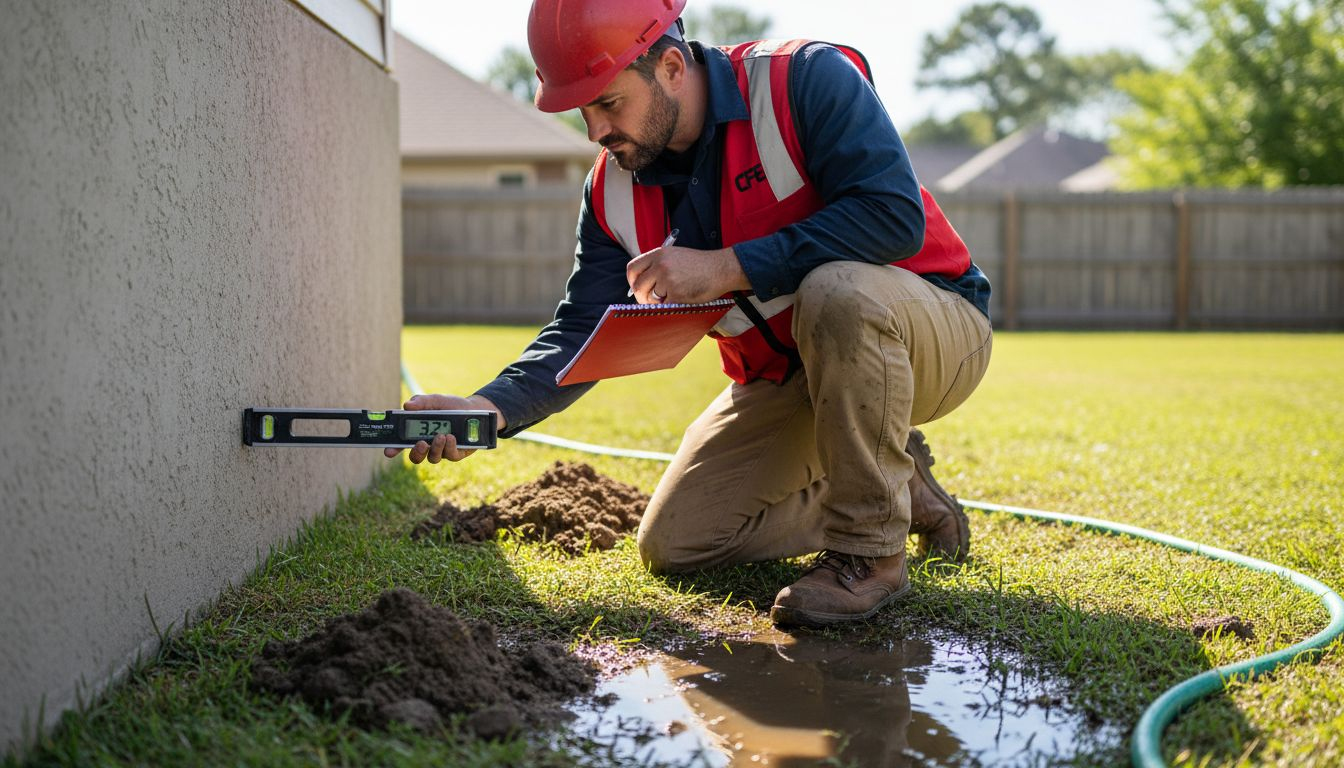
If your current grading does not meet recommended standards, you may need to add soil and reshape the landscape around your property. Focus on creating a consistent downward slope that channels water away from your home’s foundation. Consider consulting a professional civil engineer who can provide detailed recommendations specific to your property’s unique topography and drainage challenges.
Professional Tip: Regularly inspect your property’s grading and drainage after heavy rainfall to identify potential problem areas before they cause significant damage.
Step 3: Review Local Codes and Obtain Proper Permits
Navigating local building codes and permitting requirements is a crucial step in ensuring your home renovation project proceeds legally and safely. Building permits and codes serve as your roadmap for compliant construction, protecting both your investment and your property’s structural integrity.
Begin by contacting your local building department to understand specific requirements for your renovation project. Each municipality has unique regulations governing structural modifications, electrical work, plumbing updates, and other home improvements. Request a comprehensive list of required permits and documentation. Pay close attention to zoning restrictions, setback requirements, and specific guidelines that might impact your planned renovations. Some projects may require detailed architectural drawings, site plans, or professional engineer certifications before permit approval.
When preparing your permit application, gather all necessary documentation meticulously. This typically includes detailed project plans, property surveys, structural drawings, and proof of contractor licensing. Be prepared to submit multiple copies and potentially schedule initial review meetings with local building officials. Remember that permit processing times can vary, so factor in potential delays when planning your renovation timeline. Incomplete or incorrect applications can result in significant project setbacks.
Professional Tip: Always keep a complete copy of your permit documentation and maintain open communication with local building authorities throughout your renovation project.
Step 4: Develop Site and Utility Plans with Compliance in Mind
Developing comprehensive site and utility plans is a critical step in ensuring your renovation project meets all regulatory requirements and technical standards. Creating an engineering site plan requires meticulous attention to detail and a thorough understanding of your property’s unique characteristics.
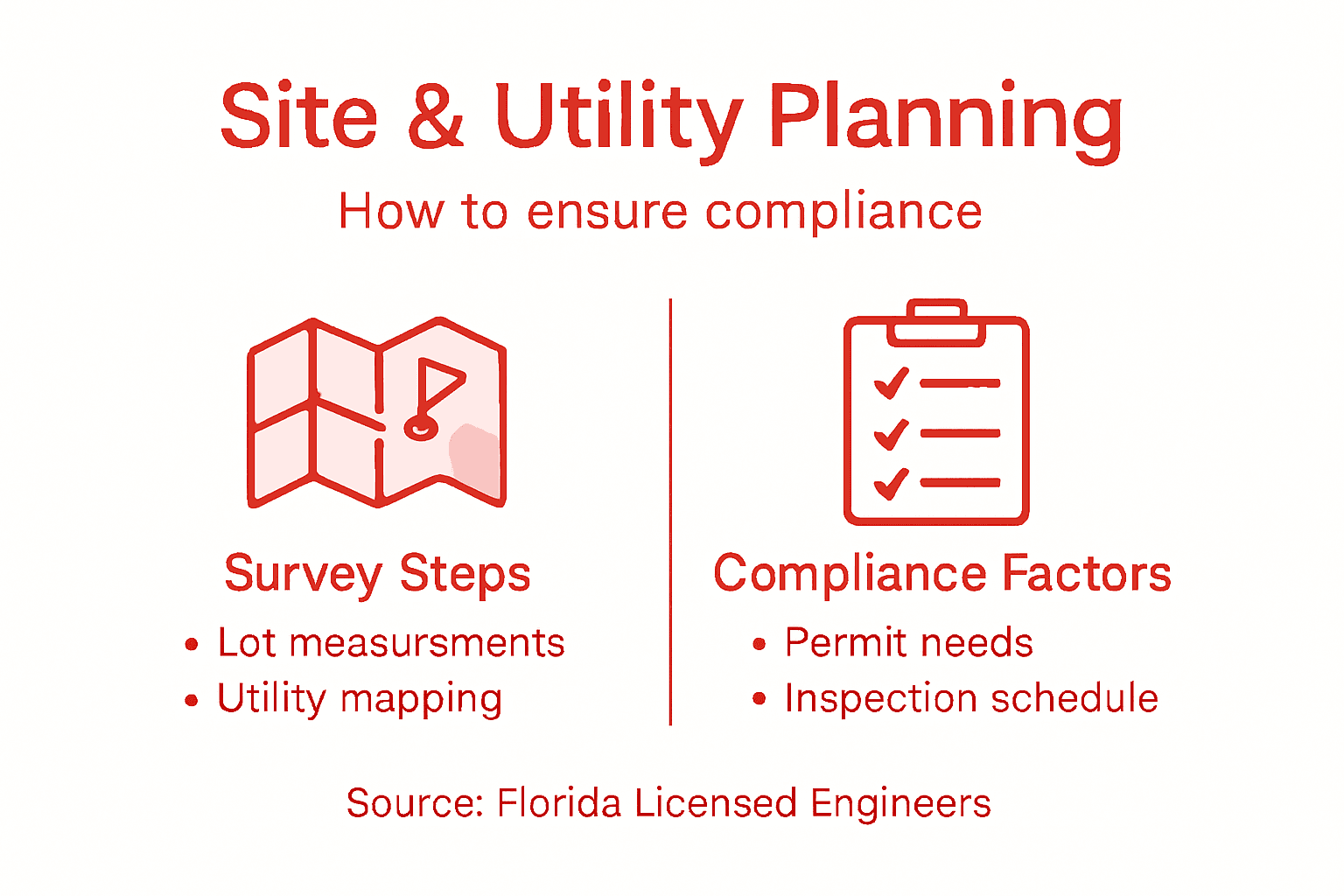
Start by conducting a detailed property survey that captures precise measurements of your lot, including property boundaries, existing structures, topography, and potential utility connections. This survey will serve as the foundation for your site plan, helping you identify critical elements such as drainage patterns, underground utility lines, and potential obstacles that might impact your renovation project. Engage a professional civil engineer who can help you translate these measurements into a comprehensive plan that meets local zoning regulations and building codes.
Your site plan should include a comprehensive diagram that illustrates existing and proposed structures, utility system layouts, grading requirements, and access points. Pay special attention to potential environmental considerations, such as stormwater management, soil conditions, and potential impact on neighboring properties. Collaborate closely with local building authorities to ensure your plan addresses all regulatory requirements and anticipates potential challenges before they become costly complications.
Professional Tip: Invest in a professional survey and engineering consultation early in your planning process to avoid expensive redesigns and regulatory complications.
Step 5: Verify Installation and Ensure Regulatory Approval
The final stage of your renovation project involves comprehensive verification and securing official regulatory approval. Regulatory approvals in civil engineering require meticulous documentation and proactive communication with local authorities to ensure your project meets all required standards.
Schedule a thorough inspection with local building officials who will systematically review your completed work against the originally approved site and utility plans. During this process, be prepared to provide detailed documentation including as built drawings, material specifications, and any modifications made during construction. Inspectors will carefully examine structural integrity, adherence to building codes, utility connections, safety features, and compliance with zoning regulations. They will look for precise details such as proper installation techniques, correct material usage, and alignment with original engineering specifications.
If any discrepancies are identified during the inspection, work closely with your engineering team to address them promptly. Be prepared to make necessary corrections or provide additional documentation to demonstrate full compliance. Maintaining open and transparent communication with regulatory authorities can help streamline the approval process and prevent potential project delays or legal complications.
Professional Tip: Maintain a comprehensive project file with all documentation easily accessible to expedite the final inspection and approval process.
Compare common renovation setbacks and their prevention methods:
| Challenge | Potential Impact | Prevention |
|---|---|---|
| Foundation cracks | Project delays, extra costs | Early structural assessment |
| Poor drainage | Water damage, mold risk | Proper grading and inspection |
| Permit issues | Legal fines, halted project | Detailed documentation and planning |
| Utility conflicts | Expensive redesign | Comprehensive site survey before work |
Here’s a summary of key professionals involved at each renovation step:
| Step | Expert Involved | Purpose |
|---|---|---|
| Property Assessment | Structural Engineer | Identify hidden risks |
| Drainage & Grading | Civil Engineer | Recommend grading improvements |
| Permits & Codes | Building Department Official | Ensure legal compliance |
| Site and Utility Plans | Civil Engineer & Surveyor | Create technically correct plans |
| Final Verification | Inspector | Confirm regulatory approval |
Secure Your Home Renovations with Expert Civil Engineering Support
Understanding the complexities of property assessments, drainage requirements, permitting, and site plans is vital to ensuring safe and successful home renovations. Your goal is to avoid costly delays and structural issues while meeting all local regulations. From foundational inspections to detailed engineering plans, these essential steps protect your investment and give you peace of mind.
At Florida Licensed Engineers, we specialize in providing comprehensive engineering services tailored for residential projects including structural inspections, civil engineering solutions for drainage and grading, and expert permitting expediter services. Our experienced team will help you navigate the often complex regulatory landscape with precise site plans and flood mitigation analysis, ensuring your project meets all code requirements and stays on track.

Don’t risk common renovation pitfalls like foundation cracks or permit delays. Visit our TLE Archives – Texas Licensed Engineers | Residential & Commercial for insights on engineering-driven renovation success. Explore how expert civil engineering can safeguard your home at Florida Licensed Engineers and learn more about our engineering services at the Uncategorized Archives – New Jersey Licensed Engineers. Take the next step toward a safe renovation today by contacting us for a consultation and personalized plan.
Frequently Asked Questions
What should I assess in my home’s structural condition before renovating?
To begin your renovation safely, assess your home’s primary structural elements like walls, floors, and foundations for damage. Inspect these areas for cracks, water stains, or uneven surfaces and document your findings with photographs and notes.
How do I determine if my property’s drainage is adequate?
Check if the ground around your home slopes away from the foundation at a minimum grade of 6 inches over the first 10 feet. Adjust the landscape as necessary to prevent water from pooling near the foundation; this can help reduce the risk of water damage.
What steps do I need to take to obtain building permits for my renovation?
Start by contacting your local building department to understand the specific licenses and documentation required for your project. Prepare a complete application with project plans and necessary permits, keeping in mind that processing may take additional time.
How can I create a thorough site plan for my renovation project?
Conduct a detailed property survey to capture measurements and identify existing structures and utility connections. Collaborate with a professional civil engineer to ensure the plan adheres to local zoning regulations and addresses drainage and safety issues.
What should I expect during the final inspection of my renovation?
During the final inspection, local building officials will review your completed work against approved plans for compliance with building codes. Prepare to provide detailed documentation and be responsive to any necessary corrections or adjustments required to obtain final approval.
How can I proactively prevent common renovation setbacks?
Identify challenges such as foundation cracks and drainage issues early in your planning process. Conduct thorough assessments and engage professionals to address these risks, helping you avoid expensive redesigns and project delays.
Recommended
- 7 Essential Homeowner Engineering Tips for Florida Homes – FloridaLicensedEngineers.com
- Residential Permitting: Why Homeowners Must Comply – FloridaLicensedEngineers.com
- What Is Civil Engineering and Why It Matters – FloridaLicensedEngineers.com
- 7 Essential Civil Engineering Examples for Property Owners – FloridaLicensedEngineers.com
- Drainage on Commercial Flat Roofs, Drainage Options in Vancouver
