
Master the Civil Engineering Reporting Process Step-by-Step
Over 80 percent of American civil engineering projects experience delays because of incomplete or inaccurate project data. Every successful project depends on clear reporting at each stage, from initial data collection to final compliance checks. With practical steps for organizing information, analyzing site conditions, and presenting reliable findings, this guide helps American engineers streamline the entire reporting process and avoid costly mistakes.
Table of Contents
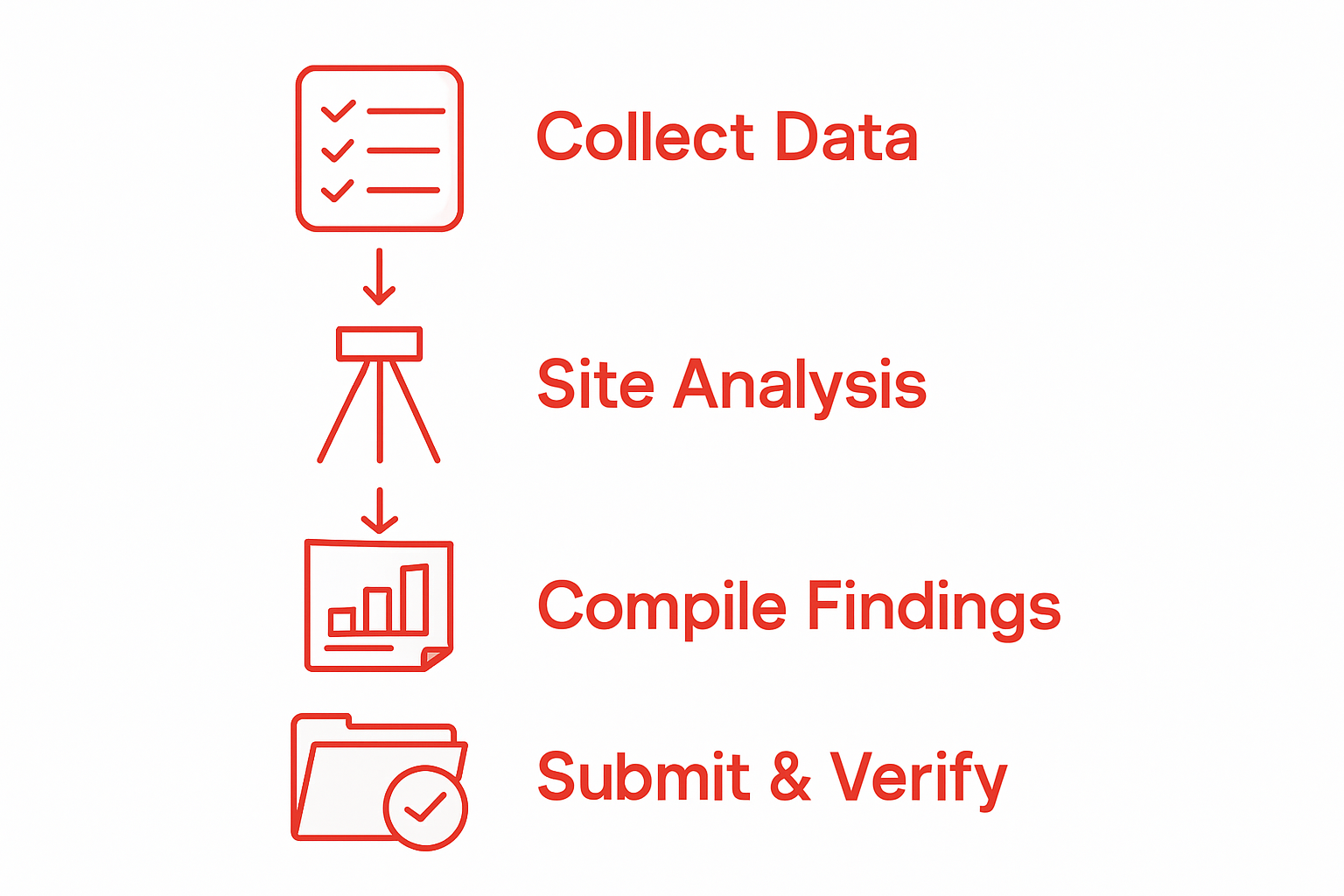
- Step 1: Collect Project Data and Requirements
- Step 2: Conduct Site Analysis and Field Investigations
- Step 3: Compile Technical Findings and Recommendations
- Step 4: Draft and Review Civil Engineering Reports
- Step 5: Submit Reports and Verify Compliance
Quick Summary
| Key Point | Explanation |
|---|---|
| 1. Gather Comprehensive Project Data | Develop a checklist to collect all project requirements, including scope, budget, and stakeholder expectations. |
| 2. Conduct Detailed Site Analysis | Utilize various reconnaissance techniques to understand site conditions, including soil sampling and environmental assessments. |
| 3. Compile and Organize Technical Findings | Structure your data into a comprehensive report that includes analyses and clear engineering recommendations. |
| 4. Rigorous Review of Engineering Reports | Follow industry-standard guidelines to ensure accuracy, clarity, and professional presentation in your reports. |
| 5. Verify Compliance with Standards | Ensure your report meets all regulatory and technical requirements, using a comprehensive compliance checklist for verification. |
Step 1: Collect Project Data and Requirements
Collecting comprehensive project data is your first critical task in the civil engineering reporting process. This stage sets the foundation for everything that follows, ensuring you have accurate information to guide your project planning and execution.
Start by developing a systematic approach to gathering project requirements. This means creating a detailed checklist that covers all potential data points. You’ll want to explore automated data collection frameworks that can help streamline complex information gathering processes. Begin with fundamental project details like scope, budget, timeline, stakeholder expectations, site conditions, and specific engineering constraints.
Your data collection strategy should include multiple information sources. Schedule interviews with project stakeholders, review existing documentation, conduct site surveys, and analyze historical project data. Pay special attention to capturing precise measurements, environmental conditions, regulatory requirements, and technical specifications. Always verify the accuracy of your collected information through cross referencing and direct confirmation with key project representatives.
Pro tip: Create a centralized digital repository for all project documents and data. This will help you maintain organization and make information easily accessible throughout the project lifecycle. Use cloud based document management systems that allow real time collaboration and secure file sharing.
Once you have compiled your comprehensive project data, you will be ready to move forward with developing initial project blueprints and conducting preliminary engineering assessments.
Step 2: Conduct Site Analysis and Field Investigations
Conducting a comprehensive site analysis is a critical phase in the civil engineering reporting process. Your goal is to gather detailed information about the project location, understanding its physical characteristics, potential challenges, and engineering constraints.

Begin by performing preliminary desk studies and systematic site investigations that involve multiple reconnaissance techniques. This includes reviewing historical aerial photographs, topographical maps, geological surveys, and existing site documentation. During your field investigations, systematically document site conditions through detailed measurements, soil sampling, and environmental assessments. Focus on capturing precise data about terrain, ground composition, drainage patterns, existing infrastructure, and potential geological risks.
Your field investigation toolkit should include professional surveying equipment like total stations, GPS devices, geological sampling tools, and environmental testing instruments. Carefully collect soil and rock samples for laboratory analysis to determine critical geotechnical parameters. Pay close attention to subsurface conditions, groundwater levels, and potential environmental constraints that might impact engineering design.
Pro tip: Always document your findings meticulously. Create a standardized field investigation report template that captures all relevant data systematically. Include detailed notes, photographs, measurement records, and preliminary analysis to ensure comprehensive documentation.
After completing your site analysis and field investigations, you will be prepared to transition into the next phase of developing initial engineering assessments and project recommendations.
Step 3: Compile Technical Findings and Recommendations
Compiling technical findings and recommendations represents a critical synthesis phase in your civil engineering reporting process. This step transforms raw data and field observations into actionable insights that will guide project decision making and strategic planning.
Begin by systematically organizing your collected data using advanced sensor data modeling techniques that help structure complex technical information. Create a comprehensive report that clearly articulates your findings, presenting data through charts, graphs, and concise narrative descriptions. Your compilation should include detailed analysis of site conditions, structural assessments, potential risks, and recommended engineering interventions. Focus on presenting information that is both technically rigorous and easily comprehensible to stakeholders with varying levels of technical expertise.
Utilize functional data analysis methods to interpret your technical findings critically. Analyze patterns, identify potential structural vulnerabilities, and develop precise recommendations that address specific engineering challenges. Your recommendations should provide clear rationales, potential implementation strategies, and estimated impact of proposed solutions. Include cost benefit analyses, potential risks, and long term performance projections to support your proposed engineering approaches.
Pro tip: Develop a standardized technical findings template that ensures consistent reporting across different projects. This template should include sections for data summary, detailed analysis, visual representations, and explicit recommendations.
After compiling your technical findings and recommendations, you will be prepared to present your comprehensive engineering report to project stakeholders and decision makers.
Step 4: Draft and Review Civil Engineering Reports
Drafting and reviewing civil engineering reports is a critical process that transforms your technical findings into a professional comprehensive document. This step requires meticulous attention to detail, ensuring that your report communicates complex technical information clearly and effectively.
Begin by consulting comprehensive engineering documentation resources that provide industry standard guidelines for report preparation. Structure your report with clear sections including executive summary, methodology, findings, analysis, recommendations, and conclusions. Use precise technical language while maintaining readability for both technical and non technical audiences. Incorporate visual elements like charts, graphs, diagrams, and photographs to illustrate key points and enhance understanding of your technical observations.
During the review process, conduct multiple rounds of rigorous editing. Start with a technical review by subject matter experts who can validate the accuracy of your findings and the soundness of your recommendations. Next, perform a language and formatting review to ensure consistent style, proper grammar, and professional presentation. Pay special attention to technical terminology, numerical data precision, and citations of research or supporting documentation.
Pro tip: Develop a standardized internal checklist for report review that covers technical accuracy, formatting consistency, clarity of communication, and alignment with project objectives. This will help streamline your review process and maintain high quality standards across different projects.
After completing your draft and comprehensive review, you will be ready to submit the final engineering report to project stakeholders and clients.
Step 5: Submit Reports and Verify Compliance
Submitting civil engineering reports and verifying compliance represents the final critical stage in your professional documentation process. This step ensures that your technical findings meet all regulatory standards, professional guidelines, and project specific requirements.
Begin by carefully reviewing your report against established site investigation compliance standards that outline comprehensive legal and technical documentation protocols. Verify that every section of your report adheres to industry regulations, including precise technical specifications, measurement accuracy, risk assessments, and professional formatting requirements. Pay close attention to jurisdictional guidelines specific to your project location, ensuring that your documentation meets local engineering codes and regulatory frameworks.
During the compliance verification process, conduct a systematic cross reference of your report against multiple professional standards. This involves checking technical calculations, validating data sources, confirming measurement precision, and ensuring that all recommendations are scientifically sound and legally defensible. Create a detailed compliance checklist that covers technical accuracy, formatting consistency, regulatory alignment, and professional presentation standards.
Pro tip: Maintain a comprehensive archive of all submitted reports and compliance documentation. This record keeping practice helps establish a professional track record and provides valuable reference materials for future projects.
After successfully submitting and verifying your report, you will complete the civil engineering reporting process and prepare for potential follow up reviews or additional project requirements.
Simplify Your Civil Engineering Reports with Expert Support
Navigating the complex steps of civil engineering reporting can be overwhelming. From collecting precise project data to verifying compliance with regulatory standards the challenges are many. This article highlighted crucial concepts like site analysis, technical findings, and comprehensive report drafting—areas where accuracy and expertise truly matter. You deserve a partner who understands these demands and can help you deliver flawless results on time.
Take control of your projects with professional engineering services that cover everything from detailed inspections and blueprints to civil engineering solutions including drainage grading and flood mitigation. Our team at Connecticut Licensed Engineers specializes in turning technical challenges into clear, actionable reports.

Don’t let reporting setbacks slow you down. Visit Florida Licensed Engineers now for dependable support that guarantees thorough documentation and regulatory compliance. Ready to streamline your reporting process and achieve impeccable engineering outcomes? Contact us today to get started.
Frequently Asked Questions
What are the first steps in the civil engineering reporting process?
To begin the civil engineering reporting process, start by collecting comprehensive project data and requirements. Create a checklist that includes key data points like scope, budget, and stakeholder expectations to guide your planning.
How can I effectively conduct site analysis and field investigations?
Effectively conduct site analysis by performing preliminary desk studies and systematic site investigations. Use multiple tools, such as surveying equipment and soil sampling, to document site conditions and capture critical data for your project.
What should be included in my technical findings and recommendations report?
Your technical findings and recommendations report should clearly present data analysis, site conditions, and suggested engineering interventions. Organize findings visually with charts and graphs to enhance understanding among stakeholders with different technical backgrounds.
How do I draft and review my civil engineering report?
Draft your civil engineering report by structuring it clearly, including sections such as executive summary and recommendations. Incorporate multiple rounds of editing for technical accuracy and language clarity, ensuring it meets industry standards for documentation.
What steps should I take to verify compliance before submitting my report?
To verify compliance, review your report against established site investigation compliance standards. Create a compliance checklist to ensure all technical specifications and regulatory requirements are met before submission to stakeholders.
Recommended
- Master Civil Engineering Workflow for Smooth Project Delivery – FloridaLicensedEngineers.com
- Engineering Reports: Everything You Need to Know – FloridaLicensedEngineers.com
- Civil Engineering Plans Guide for Successful Projects – FloridaLicensedEngineers.com
- Civil Engineering Basics: Everything You Need to Know – FloridaLicensedEngineers.com
- HVAC Installation Process: Step-by-Step Guide for Success – HVAC Service and Repair | Louisville, KY | Project Heating & Cooling
