
Engineering Documentation Explained: Building Confidence
Most American engineering teams know that even a single documentation error can cause costly delays or failed inspections. Precision and clear communication are everything in this field. Up to 40 percent of project issues stem from poor documentation practices. Mastering engineering documentation is critical for keeping projects on track, meeting strict regulations, and ensuring every stakeholder understands the technical details at every stage.
Table of Contents
- Defining Engineering Documentation And Its Purpose
- Types Of Engineering Documents For Projects
- How Documentation Supports Permits And Inspections
- Legal And Regulatory Compliance Requirements
- Common Pitfalls And Documentation Mistakes
Key Takeaways
| Point | Details |
|---|---|
| Purpose of Engineering Documentation | It acts as a communication bridge and ensures the accurate recording of technical information throughout a project’s lifecycle. |
| Types of Engineering Documents | Diverse documentation types, such as technical drawings and specifications, are crucial for conveying project requirements and facilitating collaboration among stakeholders. |
| Support for Permits and Inspections | Comprehensive documentation is vital for regulatory compliance, enabling smoother permitting processes and inspections by providing necessary evidence of design integrity. |
| Common Documentation Pitfalls | Engineers must avoid issues like outdated specifications and incomplete records, as poor documentation can significantly compromise project integrity. |
Defining Engineering Documentation And Its Purpose
Engineering documentation represents a systematic approach to capturing, communicating, and preserving critical technical information across project lifecycles. At its core, this process ensures that complex technical details are accurately recorded, maintained to industry standards, and accessible to all stakeholders involved in a project.
The primary purpose of engineering documentation goes far beyond simple record-keeping. It serves as a communication bridge between engineers, contractors, clients, and regulatory bodies, translating intricate technical concepts into clear, actionable information. Technical documentation functions as a comprehensive reference that outlines project specifications, design parameters, methodological approaches, and critical decision points. By creating detailed records, engineering teams establish a transparent trail of project development, enabling effective collaboration, quality control, and future problem-solving.
Key components of robust engineering documentation typically include detailed blueprints, technical reports, specifications, design calculations, and project management plans. These documents not only guide current project implementation but also provide historical context for future modifications or similar projects. As NASA’s Systems Engineering Management Plan (SEMP) demonstrates, comprehensive documentation is crucial for maintaining technical alignment and ensuring project objectives are consistently met throughout development stages.
Effective engineering documentation requires precision, clarity, and comprehensive detail. Engineers must capture complex technical information in a manner that is both technically rigorous and comprehensible to diverse audiences. This means creating documents that are simultaneously technical manuals, communication tools, and legal records – bridging technical expertise with practical understanding and serving as critical resources for project success.
Types Of Engineering Documents For Projects
Engineering projects rely on a diverse array of documentation to communicate technical specifications, design details, and project requirements. Different types of engineering drawings serve unique purposes throughout the project lifecycle, ranging from initial conceptual layouts to detailed technical specifications that guide precise implementation.
The core types of engineering documents typically include technical drawings, specifications, reports, and design plans. These documents provide critical information for various project stakeholders – including architects, contractors, regulatory agencies, and construction teams. Specific document types might encompass layout drawings, detail drawings, assembly diagrams, installation plans, modification sketches, and interface documentation. Each document serves a distinct function in translating complex engineering concepts into actionable technical guidance.
Piping engineering documents demonstrate the complexity of specialized documentation, showcasing how different industries require unique documentation approaches. For instance, piping projects might include plot plans, equipment layouts, isometric drawings, stress analysis reports, and material specifications. These documents ensure precise technical communication, safety compliance, and accurate project implementation across various engineering disciplines.
Engineering documents are not merely paperwork but critical communication tools that bridge conceptual design and practical execution. They provide a comprehensive record of project development, enabling clear understanding, facilitating collaboration, and serving as essential references for current and future project stages. By maintaining meticulous, well-structured documentation, engineering teams can ensure project success, regulatory compliance, and effective knowledge transfer.
How Documentation Supports Permits And Inspections
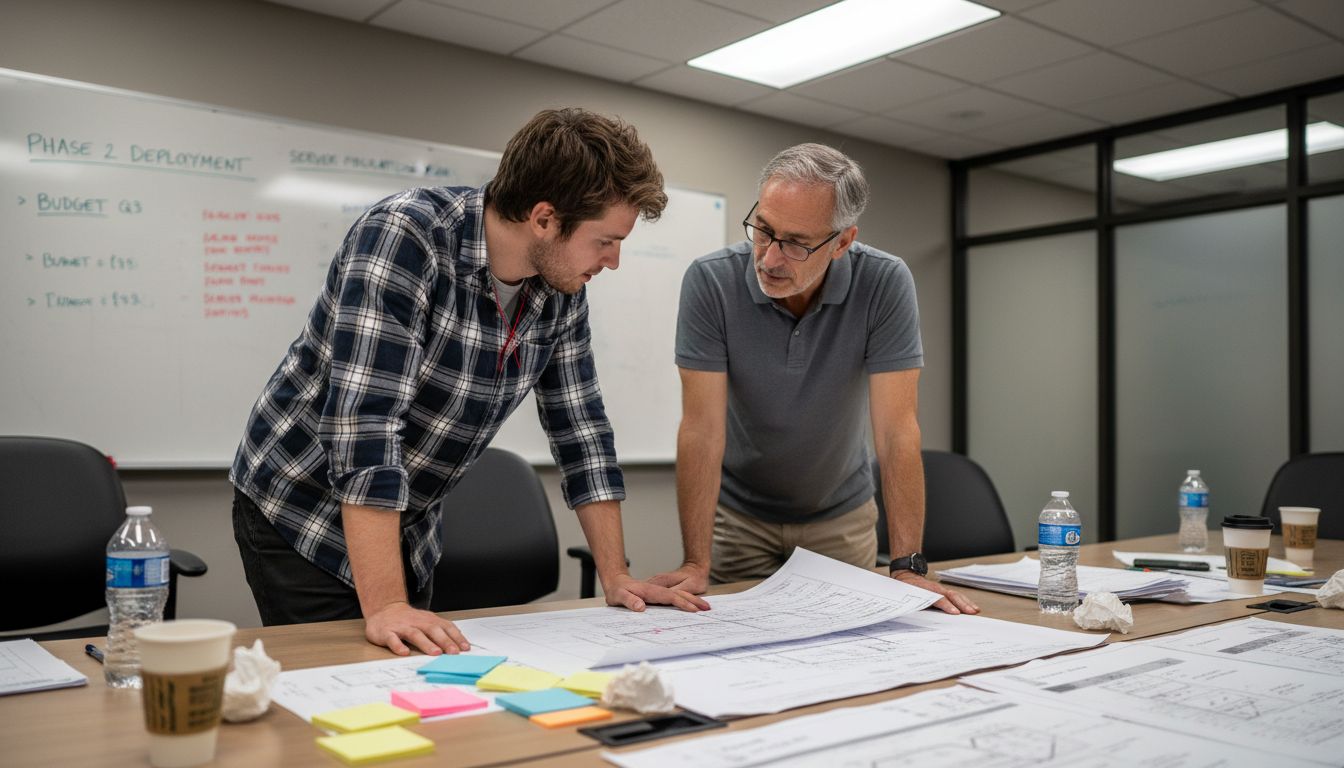
Permits and inspections represent critical checkpoints in construction and engineering projects, with comprehensive documentation serving as the foundational bridge between project planning and regulatory compliance. Standard construction documents play a pivotal role in meeting regulatory requirements, providing detailed evidence of design integrity, safety standards, and technical specifications that government agencies demand before approving project progression.
The documentation process involves multiple layers of technical records that demonstrate compliance with local, state, and federal regulations. Engineers must prepare detailed submissions including architectural drawings, structural calculations, mechanical system designs, electrical plans, and environmental impact assessments. These documents not only prove technical feasibility but also serve as legal records that protect both project developers and regulatory bodies by establishing clear expectations and performance standards.
Carefully constructed contract provisions help reduce potential conflicts during the permitting process, ensuring smoother interactions between project teams and inspection authorities. Professional engineering documentation typically includes long-form, brief-form, and design-build documentation formats, each tailored to specific project requirements and regulatory frameworks. These comprehensive records enable inspectors to quickly assess project compliance, verify technical specifications, and identify potential areas of concern before construction begins.
Ultimately, high-quality engineering documentation acts as a critical communication tool that translates complex technical details into a language understood by regulatory agencies. By providing clear, precise, and thoroughly documented project plans, engineers can streamline the permitting and inspection processes, minimize potential delays, and demonstrate professional commitment to safety, quality, and regulatory adherence.
Legal And Regulatory Compliance Requirements
Engineering legal compliance represents a complex framework of standards, regulations, and professional obligations that govern technical project development. Engineering standards establish uniform criteria and methods that ensure projects meet stringent legal requirements across local, state, and federal jurisdictions. These comprehensive guidelines create a structured approach to design, implementation, and safety protocols that protect both professionals and end-users.
The regulatory landscape for engineering projects involves multiple layers of compliance, requiring professionals to navigate intricate legal frameworks. Engineers must demonstrate adherence to building codes, safety regulations, environmental standards, and professional licensing requirements. This process involves comprehensive documentation, rigorous technical assessments, and ongoing verification of design integrity and performance standards. Key compliance elements include detailed risk assessments, safety analysis, environmental impact studies, and precise technical specifications that meet or exceed established regulatory benchmarks.
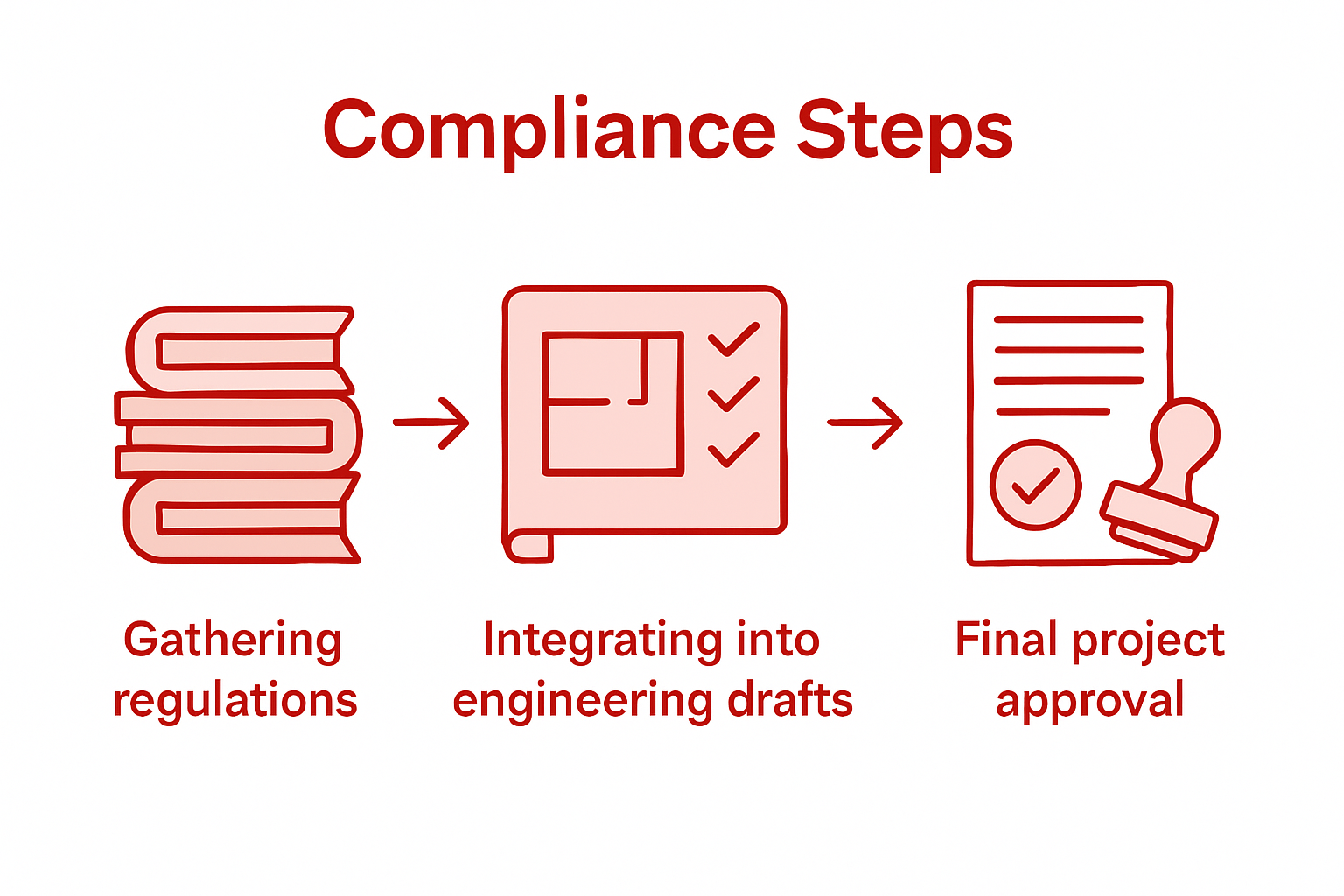
Contract documents developed by professional engineering organizations provide critical resources for managing legal and regulatory expectations. These professionally crafted documents help engineers establish clear contractual provisions, reduce potential litigation risks, and create transparent frameworks for project execution. Professional engineering associations develop these standards to ensure that technical projects not only meet legal requirements but also maintain the highest levels of professional integrity and technical excellence.
Successful legal compliance requires a proactive approach that integrates regulatory understanding with technical expertise. Engineers must continuously update their knowledge of changing regulations, maintain meticulous documentation, and demonstrate a commitment to safety, ethics, and professional standards. By approaching legal requirements as an integral part of the engineering process rather than a bureaucratic burden, professionals can create innovative solutions that balance technical creativity with rigorous regulatory compliance.
Common Pitfalls And Documentation Mistakes
Engineering documentation requires precision and careful attention to detail, with numerous potential pitfalls that can compromise project integrity. Poor documentation can account for up to 40% of project issues, underscoring the critical importance of maintaining comprehensive and accurate technical records. These documentation errors can range from minor inconsistencies to significant oversights that potentially derail entire project lifecycles.
Common documentation mistakes often emerge from several key challenges. Engineers frequently struggle with maintaining document currency, allowing technical specifications to become outdated or misaligned with current project configurations. Incomplete technical descriptions, ambiguous terminology, insufficient detail, and lack of systematic update protocols can create significant communication barriers. Critical errors might include inadequate drawing annotations, missing critical calculation references, incomplete change logs, or failure to document design modifications comprehensively.
Documentation processes can become time-consuming and perceived as tedious, leading many professionals to take shortcuts or minimize their documentation efforts. This approach introduces substantial risks, including potential miscommunication, regulatory non-compliance, and increased likelihood of project errors. Professional engineers must develop robust documentation strategies that balance efficiency with thoroughness, implementing systematic review processes, maintaining clear version control, and creating standardized documentation templates that streamline record-keeping.
Preventing documentation mistakes requires a proactive, disciplined approach. Successful engineering teams implement comprehensive documentation review protocols, leverage collaborative digital platforms, and cultivate a culture that values meticulous record-keeping. By recognizing documentation as a critical component of project success rather than an administrative burden, engineers can transform potentially tedious paperwork into a strategic asset that enhances project communication, ensures regulatory compliance, and supports long-term project understanding and maintenance.
Build Confidence With Clear Engineering Documentation and Expert Support
Engineering documentation is a critical foundation for every successful project. It solves the challenge of conveying complex technical details clearly and precisely while ensuring legal and regulatory compliance. Without thorough, accurate records, projects encounter costly delays, misunderstandings, or safety risks. At the heart of this is the need for precise blueprints, thorough inspections, and seamless permitting that empower your project to move forward confidently and efficiently.
Don’t let documentation mistakes hold you back. Explore our full range of residential and commercial engineering services at Florida Licensed Engineers. From architectural and structural plans to mechanical and plumbing designs we provide the expertise needed to meet rigorous standards. Start today by visiting our Uncategorized Archives – Pennsylvania Licensed Engineers for insights or check out solutions others in the industry rely on at TLE Archives – Texas Licensed Engineers | Residential & Commercial. Act now to secure expert guidance that turns your engineering documentation challenges into streamlined, successful outcomes.
Frequently Asked Questions
What is engineering documentation?
Engineering documentation is a systematic approach to capturing, communicating, and preserving critical technical information throughout project lifecycles, ensuring that complex details are accurately recorded and accessible to all stakeholders.
Why is comprehensive documentation important in engineering projects?
Comprehensive documentation acts as a communication bridge between engineers, contractors, clients, and regulatory bodies. It provides clear, actionable information that facilitates collaboration, quality control, and problem-solving throughout the project.
What are the key components of effective engineering documentation?
Key components of effective engineering documentation typically include technical drawings, specifications, reports, design calculations, and project management plans, all serving distinct functions in guiding project implementation.
How does engineering documentation support regulatory compliance?
Engineering documentation supports regulatory compliance by providing detailed technical records that demonstrate adherence to local, state, and federal regulations, ensuring that all design integrity, safety standards, and technical specifications are met before project progression.
Recommended
- How to Create Architectural Drawings for Your Project – FloridaLicensedEngineers.com
- The Function As-Built Drawings Guide | Expert Engineers
- How to Pass Building Inspection: A Step-by-Step Guide – FloridaLicensedEngineers.com
- How to Prepare for Engineering Inspection with Confidence – FloridaLicensedEngineers.com
