
How to Start Construction Project in Florida: Step-by-Step Guide
Launching a residential project in Florida can feel like navigating a maze of permits, regulations, and engineering demands. Missing a crucial step in site assessment or overlooking local guidelines often leads to costly setbacks. Developers and contractors need a clear process that covers site evaluations, engineering coordination, and compliance checks. This guide breaks down essential actions to keep your project legal, efficient, and environmentally sound from the very beginning.
Table of Contents
- Step 1: Assess Site And Project Requirements
- Step 2: Secure Permits And Plans
- Step 3: Coordinate Engineering And Inspections
- Step 4: Verify Compliance And Begin Construction
Quick Summary
| Key Point | Explanation |
|---|---|
| 1. Conduct a thorough site assessment | Understanding property conditions prevents costly surprises and helps align project plans with reality before construction begins. |
| 2. Ensure professional plans and permits | Stamped drawings from licensed professionals are necessary for legal compliance and to avoid project delays during the permitting process. |
| 3. Coordinate engineering and inspections | Regular engineering oversight and communication with inspectors reduce the likelihood of costly rework and ensure project adherence to codes. |
| 4. Verify all compliance before construction | A detailed verification checklist ensures all permits and regulations are met, protecting against project stoppages and legal issues. |
| 5. Maintain excellent documentation practices | Keeping a master compliance spreadsheet during the project streamlines audits and provides protection in case of disputes. |
Step 1: Assess Site and Project Requirements
Before breaking ground, you need a clear picture of your site’s conditions and your project’s scope. This assessment phase prevents costly surprises later and ensures your plans align with reality.
Start by understanding your property boundaries and existing conditions. Walk the site with a measuring tape, camera, and notebook. Document current features like drainage patterns, vegetation, existing structures, utility lines, and topography. Note the soil type, any slopes, and water flow direction during or after rain.
Your site assessment should include:
- Property lines and easements
- Existing utilities (water, sewer, electric, gas lines)
- Drainage patterns and soil conditions
- Vegetation and natural features
- Access points for construction vehicles
- Neighbor proximity and property setbacks
Next, clarify your project scope. Define what you’re building, how many units, square footage, building height, and intended use. These details shape every decision downstream. Check zoning requirements early to confirm your project aligns with what the area allows.
Conducting a thorough site inspection helps identify potential issues with grading, drainage, and structural considerations before design work begins. This prevents rework and delays.
Gather existing documentation too. Request survey reports, previous site plans, and any engineering studies from the property owner. If surveys don’t exist, budget for a professional survey. You’ll need accurate data for permit applications and design work.
Consider your project timeline and budget constraints. Do you have environmental or flooding concerns that require special studies? Are there trees you need to preserve? Does the site have historical significance? These factors influence what engineering studies and permits you’ll need.
Accurate site assessment now saves thousands in unexpected costs and delays later.
Pro tip: Document everything with photos and GPS coordinates, then create a detailed site inventory spreadsheet. Share this with your engineering team before design work starts to ensure everyone understands the existing conditions.
Here’s a summary of professional team roles and how they impact Florida construction projects:
| Role | Primary Responsibility | Project Impact |
|---|---|---|
| Engineer | Oversees project compliance and inspections | Prevents rework and violations |
| Architect | Designs structure and prepares plans | Ensures aesthetics and function |
| Contractor | Manages day-to-day construction | Delivers project on schedule |
| Legal Advisor | Confirms regulatory compliance | Reduces risk of legal delays |
| Surveyor | Provides accurate site data | Essential for permits and design |
Step 2: Secure Permits and Plans
With your site assessed, you now need professional plans and the permits that authorize your project. This step separates legitimate construction from legal problems.
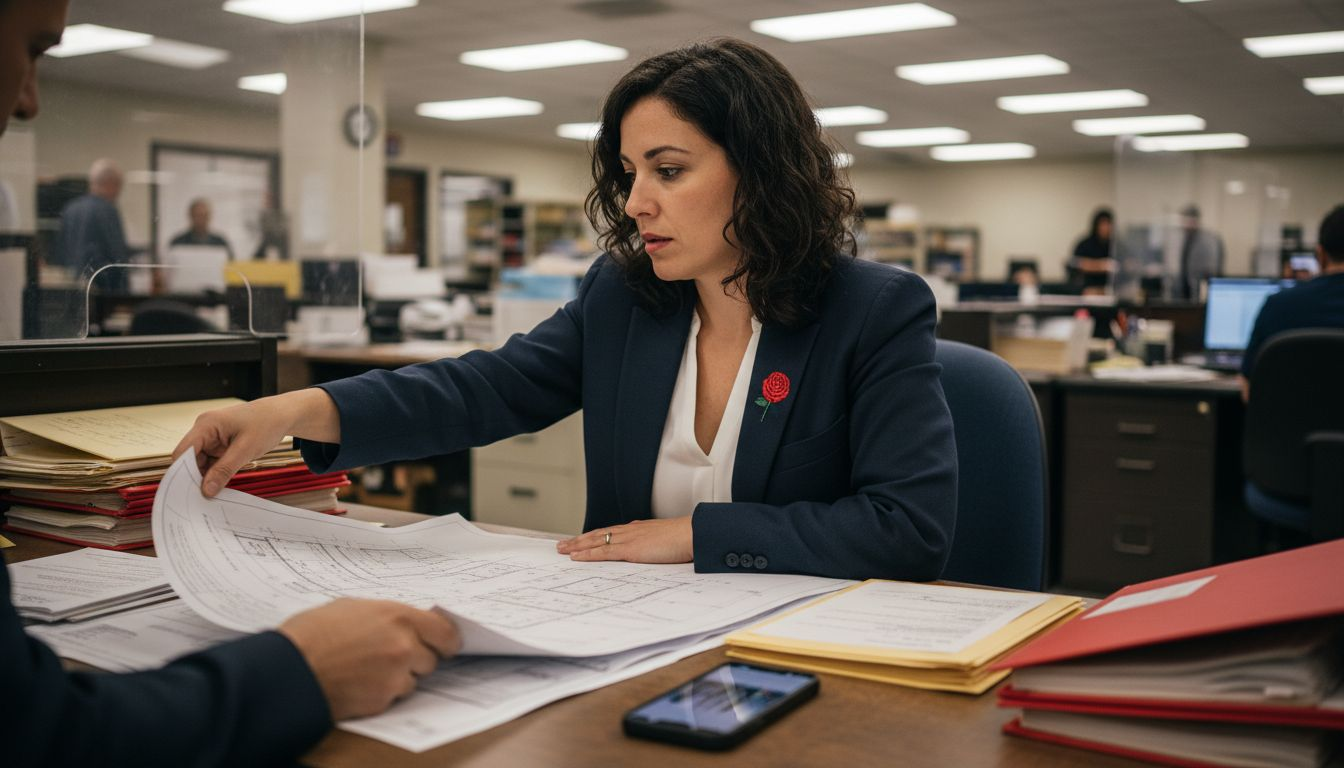
Start by hiring a licensed engineer and architect to create your construction documents. These professionals translate your vision into detailed technical drawings that Florida’s building department will review. Your design team examines your site assessment data and incorporates local code requirements into every plan.
Your permit package typically includes:
- Architectural drawings showing building layout and design
- Structural plans detailing how the building will stand safely
- MEP systems (mechanical, electrical, plumbing) that serve the building
- Site plans showing property lines, grading, and utilities
- Flood elevation certificates if in a flood zone
- Environmental studies if required by location
Before submitting, ensure all drawings carry professional engineer stamps, which certify that licensed professionals designed and reviewed the work. Florida requires stamped drawings for virtually all commercial and residential projects. Without them, your application gets rejected immediately.
Next, submit your plans to your local permitting authority. Different cities and counties have varying timelines, but expect 2 to 4 weeks for initial review. The building department examines your plans against local codes, zoning ordinances, and Florida Building Code requirements.
Review comments usually come back with requested changes or clarifications. Your engineer addresses these revisions and resubmits. Sometimes this cycle repeats two or three times before approval.
Once approved, you receive your permit. This document authorizes you to begin construction and allows inspectors to monitor your work. Post it visibly at the job site.
Professional plans and permits protect your investment and keep your project legal from day one.
Pro tip: Hire your engineering team early in the design phase, not after drawings are finished. Their input during design prevents costly revisions during permitting and saves weeks of back-and-forth with the building department.
Step 3: Coordinate Engineering and Inspections
Once construction begins, your engineer becomes your on-site partner. They oversee quality, ensure compliance, and coordinate with inspectors throughout the project.
Assign your engineer clear responsibilities before work starts. They should conduct regular site visits, typically weekly or bi-weekly depending on project phase. During these visits, they verify that construction follows approved plans, materials meet specifications, and workmanship meets code requirements.
Your engineer’s coordination duties include:
- Monitoring foundation, framing, and structural work
- Verifying utility installations match engineered plans
- Documenting progress with photos and reports
- Communicating with trade contractors about deviations
- Scheduling inspections with the building department
- Preparing for and attending third-party inspections
Coordinate with your local building department early. Schedule required inspections before the work reaches each inspection point. Common inspection milestones include foundation, framing, mechanical rough-ins, electrical rough-ins, and final walkthrough.
If your project involves stormwater management or environmental considerations, compliance becomes even more critical. Your team must maintain permits like the Construction Generic Permit and follow stormwater pollution prevention plans. Regular inspections verify that construction activities meet environmental standards to prevent water pollution.
When inspectors arrive, have your engineer present to answer questions. If the inspector identifies deficiencies, document these findings and create a correction plan. Your contractor addresses issues, your engineer verifies the fix, and you schedule a re-inspection.
Understanding the role of engineering inspections helps you appreciate why this coordination matters. Inspections catch problems early when they’re cheaper to fix.
Proactive engineering oversight prevents costly rework and keeps your project on schedule and within budget.
Pro tip: Maintain clear communication channels between your contractor, engineer, and building official. Weekly status meetings prevent misunderstandings and keep everyone aligned on progress and upcoming inspection dates.
Step 4: Verify Compliance and Begin Construction
You’ve secured permits and assembled your team. Now comes the critical verification step before breaking ground. Confirming that all conditions are met protects you from costly delays and legal problems.
Conduct a final compliance checklist with your engineer and legal advisor. Verify that all permit conditions have been satisfied and documentation is complete. This includes proof of notifications to neighbors, utility locates, environmental clearances, and any special requirements specific to your project.
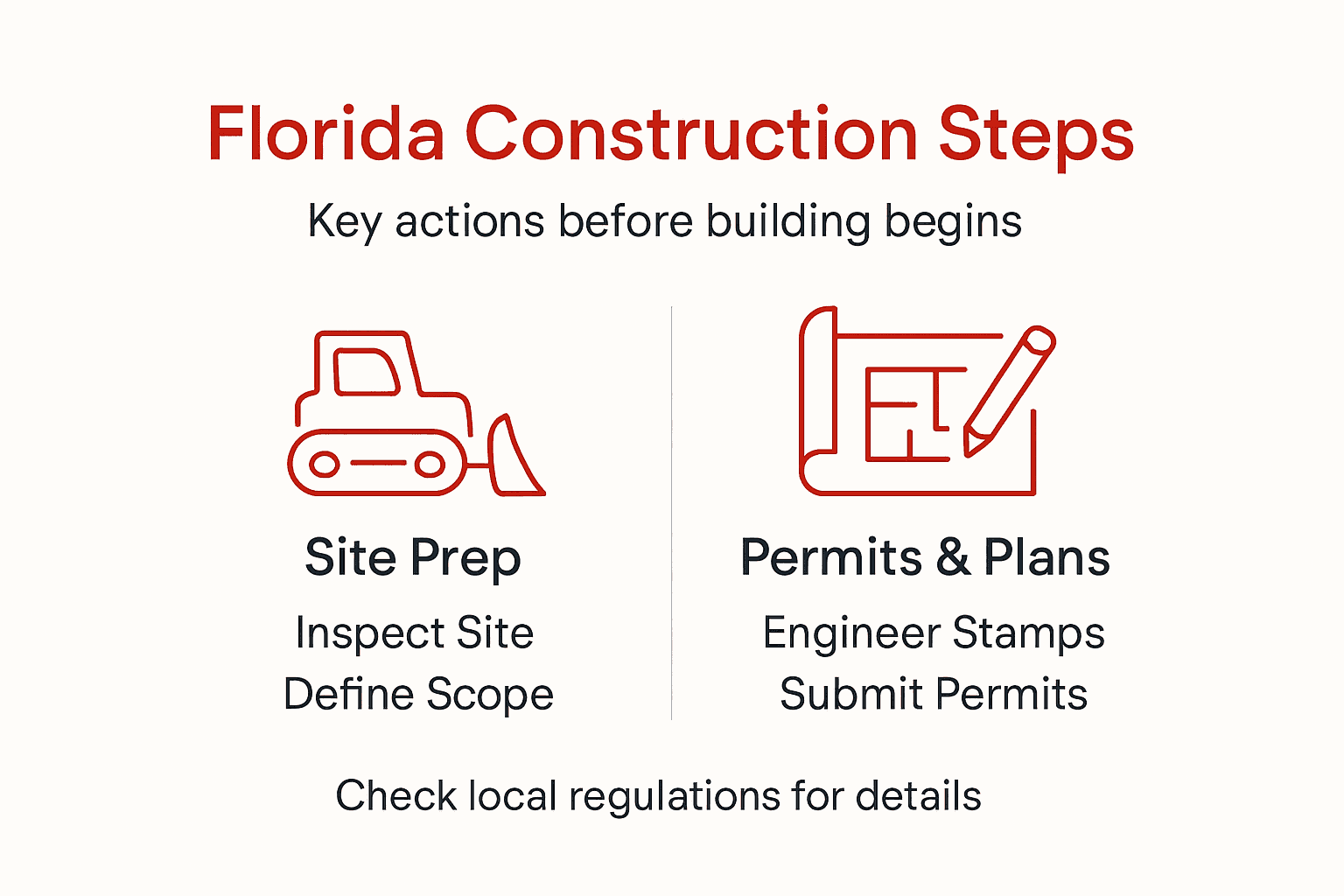
Your pre-construction verification should confirm:
See how different permit types affect project success:
| Permit Type | Required When | Consequence if Missing |
|---|---|---|
| Building Permit | New construction or major remodel | Project shut down, fines |
| Environmental Clearance | Near protected zones or wetlands | Legal action, stop-work order |
| Utility Permit | Connecting to public utilities | No service hookup |
| Flood Elevation Certificate | In designated floodplains | Insurance denial, delay |
| Labor Law Compliance | Employing workers on site | Penalties, work stoppage |
- All permits are approved and posted at the site
- Utility locate marks are clearly visible
- Site access and staging areas are prepared
- Insurance and bonding requirements are in place
- Labor law compliance documentation is filed
- Environmental compliance plans are approved
Before beginning construction, ensure compliance with zoning laws, environmental regulations, and labor laws is complete. Non-compliance can lead to legal challenges, fines, or project stoppages. Verify all necessary permit conditions have been met and engage with local authorities to confirm readiness.
Schedule a pre-construction meeting with your contractor, engineer, and key trade partners. Review the project schedule, safety protocols, and communication procedures. Walk the site together to discuss logistics, staging areas, and potential challenges.
Once everyone confirms readiness, issue a written notice to proceed. This formal authorization starts the construction clock. Your contractor begins mobilization while your engineer prepares for initial inspections.
Understanding construction documentation practices ensures you maintain proper records throughout the project. Good documentation protects you legally and operationally.
Starting construction without complete compliance verification is the fastest way to stop a project and lose money.
Pro tip: Create a master compliance spreadsheet documenting every permit condition, environmental requirement, and regulatory item. Check off each item as it’s satisfied and keep this document current throughout construction.
Get Your Florida Construction Project Started Right with Expert Engineering Support
Starting a construction project in Florida means facing challenges like securing permits, coordinating inspections, and ensuring site compliance. This guide highlights how critical it is to have professional plans stamped by licensed engineers, meet environmental and zoning regulations, and maintain smooth communication between contractors, engineers, and building officials. Without expert oversight, costly delays and legal issues can derail your project before it truly begins.
That is where we come in. At Florida Licensed Engineers, we specialize in providing comprehensive engineering services tailored for residential and commercial construction projects across Florida. From creating precise architectural, structural, mechanical, electrical, and plumbing plans to offering permit expediting and thorough inspection services, our team ensures your project meets every requirement from day one. We also provide expert civil engineering services including drainage design, grading, site plans, flood mitigation analysis, and elevation certificates to protect your investment and keep construction compliant.

Don’t risk permit delays or unexpected compliance headaches. Take control of your build with seasoned professionals who understand Florida’s unique construction landscape. Visit Florida Licensed Engineers to learn how partnering with us can help you start strong and stay on track. Contact us today and get a head start on your permitting, inspections, and engineering needs.
Frequently Asked Questions
What is the first step to start a construction project in Florida?
Begin by assessing your site and project requirements. Walk the site with tools to document existing conditions, such as property lines, utilities, and drainage patterns to prevent costly surprises later.
How do I secure the necessary permits for my construction project?
Hire a licensed engineer and architect to create construction documents that comply with local codes. Once your plans are complete, submit them to your local permitting authority for review, which typically takes 2 to 4 weeks.
How do I coordinate inspections during the construction process?
Your engineer should oversee coordination with inspectors throughout the project. Schedule required inspections before each inspection point, such as foundation or framing, to ensure compliance and keep your project on track.
What should I include in my pre-construction verification checklist?
Ensure your verification checklist covers all approved permits, visible utility marks, compliance documents, and staging areas. Confirm everything is in place with your engineer and legal advisor before proceeding to construction.
Why is it important to conduct a site assessment before construction?
A thorough site assessment identifies potential issues such as drainage and soil conditions that can impact construction. Documenting these factors early saves time and money by preventing rework and delays during the project.
How can I ensure my construction project stays within budget?
Clearly define your project scope and timeline, addressing any special studies or permits upfront. Maintaining clear communication with your engineering team can help prevent costly revisions and delays, allowing you to manage expenses effectively.
Recommended
- How to Choose an Engineer for Florida Projects Step-by-Step – Florida Licensed Engineers
- Home Builder Permit Guide for Fast Florida Approvals – Florida Licensed Engineers
- Design and Permitting: Florida Construction Success – Florida Licensed Engineers
- Electrical Plans Process for Florida Construction Success – Florida Licensed Engineers
- Step-by-Step Guide to Choosing a Personal Injury Attorney

