
Guide to construction inspections for Florida homeowners
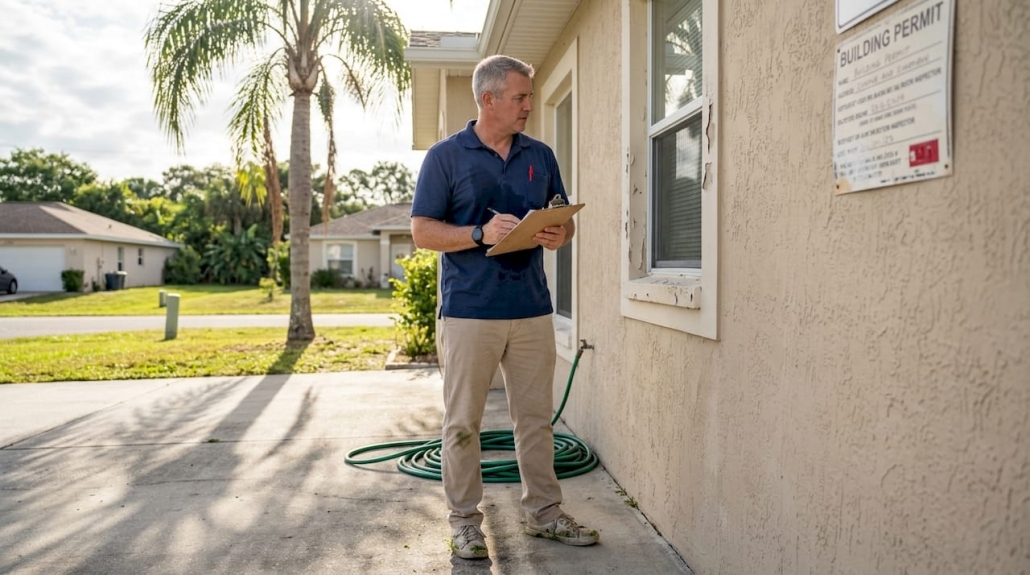
Florida construction inspections can feel overwhelming, but they are essential for ensuring your project meets building codes and safety standards. Whether you are a homeowner managing a renovation or a contractor overseeing new construction, understanding the inspection process helps you avoid costly delays, fines, and rework. This guide walks you through Florida’s staged inspection requirements, preparation strategies, and common challenges so you can navigate approvals confidently and keep your project on track from foundation to final certificate of occupancy.
Table of Contents
- Key takeaways
- Understanding Florida construction inspection requirements
- Preparing for and scheduling inspections in Florida
- How to navigate the staged inspection process step by step
- Handling special cases and common challenges in Florida construction inspections
- Explore engineering services to support your Florida construction inspections
- Frequently asked questions
Key Takeaways
| Point | Details |
|---|---|
| Permit driven sequence | Permits trigger a standard inspection sequence that includes foundation, framing, rough trades, insulation, and final inspections before moving to the next phase. |
| Required permits | Permits are required for work affecting structural, electrical, plumbing, or mechanical systems and skipping them risks stop work orders, fines, and complications when selling. |
| Code compliance checks | Inspectors verify that the work matches approved plans and meet safety and durability requirements under the Florida Building Code, with local amendments potentially adding stricter rules. |
| Prepare and schedule | Schedule inspections 24 to 48 hours in advance through online portals or by phone, and ensure the work area is clean, accessible, and has the approved permit plans on site. |
Understanding Florida construction inspection requirements
Florida construction inspections are governed by the Florida Building Code (FBC), enforced locally with permits required for most work including structural, electrical, plumbing, and mechanical alterations. The FBC establishes minimum safety standards, but individual counties and municipalities can adopt stricter amendments, especially in coastal areas prone to hurricanes. You must obtain permits before starting work that affects structural integrity, electrical systems, plumbing, or mechanical installations. Without permits, you risk stop-work orders, fines, and complications when selling your property.
Permits trigger a standard inspection sequence including foundation, framing, rough trades, insulation, and final inspections. Each stage verifies compliance before you can proceed to the next phase of construction. Inspectors check that work matches approved plans and meets code requirements for safety and durability. Skipping or failing inspections creates legal liability and can compromise your building’s structural integrity.
Florida’s diverse inspection types in Florida include:
- Foundation and footing inspections verify soil conditions, reinforcement placement, and structural design before concrete placement
- Slab inspections check underground plumbing, electrical conduits, vapor barriers, and reinforcement before pouring
- Framing inspections examine structural connections, shear walls, hurricane straps, and load-bearing elements
- Rough-in inspections cover electrical wiring, plumbing pipes, HVAC ducts, and mechanical systems before concealment
- Insulation inspections ensure proper materials, installation, and energy code compliance
- Final inspections certify completed work meets all codes and is safe for occupancy
High Velocity Hurricane Zones like Miami-Dade and Broward counties impose additional requirements for wind resistance and impact protection. Unpermitted work discovered during inspections or property sales can result in mandatory corrections, fines up to thousands of dollars, and legal complications. Counties maintain their own permitting portals and inspection schedules, so always verify local requirements early in your project planning.
Preparing for and scheduling inspections in Florida
Contractors and homeowners should schedule inspections 24 to 48 hours ahead via portal or phone; failed inspections incur correction notices and fees. Most jurisdictions offer online portals where you can request inspections, track status, and receive results electronically. Calling the permitting office works too, but online systems provide faster confirmation and documentation. Plan your work schedule to allow inspection time without rushing, as inspectors may arrive within a four-hour window or require specific appointment slots.

Proper preparation reduces failure rates and keeps your project moving forward. Before each inspection, ensure the work area is clean, accessible, and fully ready for review. Inspectors need clear access to all components being examined, so remove debris, temporary supports, and obstructions. Have your approved permit plans on site for reference, as inspectors compare actual work against approved drawings. If you are an owner-builder, you bear full responsibility for compliance even if you hire subcontractors.
Checklists cover foundation cracks, electrical grounding, plumbing leaks, HVAC sizing, roof flashing, and fire safety. Use a building inspection checklist tailored to each stage:
- Foundation: Check for proper excavation depth, rebar placement, anchor bolts, and drainage provisions
- Electrical: Verify grounding, circuit labeling, GFCI/AFCI protection, and wire sizing
- Plumbing: Inspect pipe materials, slope, venting, water pressure testing, and fixture rough-ins
- HVAC: Confirm equipment sizing, duct sealing, refrigerant line installation, and thermostat placement
- Roofing: Examine flashing details, underlayment, fastener patterns, and wind resistance features
- Fire safety: Ensure smoke detectors, carbon monoxide alarms, fire-rated assemblies, and egress windows meet code
Failing an inspection means you must correct deficiencies and pay reinspection fees, typically $50 to $150 depending on the jurisdiction. Repeated failures increase costs and delay your project timeline. Common failure causes include missing components, improper installation methods, code violations, and work that deviates from approved plans. Thorough self-inspection before calling the official inspector saves time and money.
Pro Tip: Take detailed photos of all work before covering it up, especially for rough-in stages. If questions arise later, photographic evidence helps resolve disputes and provides documentation for future reference.
How to navigate the staged inspection process step by step
Florida’s standard residential inspections follow foundation, slab/underground plumbing/electrical, framing/shear walls, rough trades, insulation, drywall, and final building/trades. Each stage builds on the previous one, so you cannot skip ahead or cover work before inspection approval. Understanding what inspectors examine at each phase helps you prepare correctly and avoid surprises.
-
Foundation and footing inspection occurs after excavation and formwork placement but before concrete pouring. Inspectors verify soil bearing capacity, depth below grade, rebar size and spacing, anchor bolt placement, and drainage provisions. They check that footings match structural plans and provide adequate support for the building loads. This inspection prevents foundation failures that could compromise the entire structure.
-
Slab inspection happens after underground plumbing and electrical conduits are installed but before concrete placement. Inspectors examine vapor barriers, wire mesh or rebar reinforcement, plumbing pipe materials and connections, electrical conduit routing, and termite treatment if required. They ensure proper slope for drainage and verify that all penetrations through the slab are correctly positioned.
-
Framing inspection reviews structural elements including wall studs, headers, joists, rafters, shear walls, hurricane straps, and nailing patterns. Inspectors confirm that lumber grades match specifications, connections meet wind load requirements, and framing aligns with approved structural plans. In hurricane zones, they pay special attention to tie-down systems and reinforcement details.
-
Rough-in inspections cover electrical, plumbing, and mechanical systems before walls are closed. Electrical inspectors check wire sizing, circuit protection, grounding, box fill calculations, and device placement. Plumbing inspectors verify pipe materials, slope, venting, water and drain-waste-vent systems, and pressure testing. HVAC inspectors examine duct sizing, sealing, equipment installation, and refrigerant line routing.
-
Insulation inspection ensures proper materials, installation techniques, R-values, and air sealing meet energy code requirements. Inspectors verify that insulation fills cavities completely without gaps or compression, vapor barriers face the correct direction, and penetrations are sealed. This inspection directly affects your home’s energy efficiency and comfort.
-
Drywall and interior inspection occurs after wall coverings are installed but before painting. Inspectors check fire-rated assemblies, smoke detector placement, egress window sizes, stair dimensions, handrail installation, and accessibility features. They verify that all previous corrections have been completed.
-
Final inspection certifies that the entire project meets code and is safe for occupancy. Inspectors perform a comprehensive walkthrough examining all systems, finishes, safety devices, and site conditions. They verify that work matches approved plans, all previous inspection corrections are complete, and the certificate of occupancy can be issued.
The following table shows typical inspection timing and focus areas:
| Inspection Stage | Timing | Primary Focus Areas | Common Issues |
|---|---|---|---|
| Foundation | Before concrete pour | Soil, rebar, anchors, drainage | Improper depth, missing reinforcement |
| Slab | Before concrete pour | Underground utilities, vapor barrier | Plumbing leaks, incorrect slopes |
| Framing | After structural complete | Connections, shear walls, hurricane ties | Missing straps, improper nailing |
| Rough Trades | Before wall closure | Wiring, pipes, ducts hidden in walls | Code violations, improper materials |
| Insulation | After installation | R-values, air sealing, coverage | Gaps, compression, wrong materials |
| Final | Project completion | Overall compliance, safety, finishes | Incomplete corrections, missing devices |
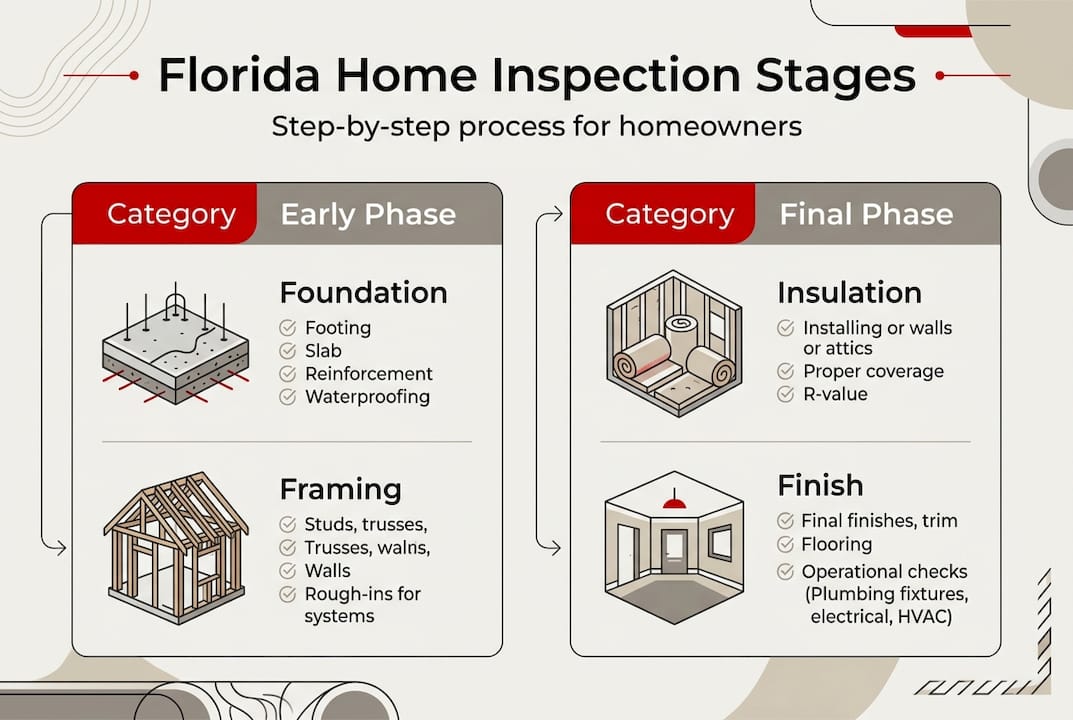
Follow inspection procedures in Florida carefully to maintain your project schedule. Request each inspection only when work is truly complete and ready for review. Inspectors appreciate well-prepared sites and thorough self-checks before their arrival.
Pro Tip: Keep a project binder with all permits, approved plans, inspection records, and correction notices organized chronologically. This documentation proves invaluable during final inspection and future property transactions.
Handling special cases and common challenges in Florida construction inspections
Florida’s unique climate and building history create special inspection scenarios beyond standard residential construction. High Velocity Hurricane Zones like Miami-Dade and Broward counties require stricter re-roofing deck nailing upgrades when replacing more than 25% of roof covering. These areas mandate enhanced wind resistance testing, impact-rated materials, and additional structural connections. Inspectors in HVHZ jurisdictions scrutinize hurricane protection details more carefully than elsewhere in the state.
Milestone inspections required for condos 3+ stories at 30 years and every 10 years thereafter, with phases including visual and possible destructive testing. Phase one involves visual examination of structural and life safety components by a licensed engineer or architect. If concerns arise, phase two requires more invasive testing including concrete coring, rebar exposure, and material analysis. Condo associations must submit milestone reports to the local authority having jurisdiction and address any substantial structural deterioration within strict deadlines. Failure to comply can result in building closure and legal liability.
Private providers offer faster same-day inspections with legal equivalence but require audits and sworn certifications. Licensed engineers and architects can serve as private providers, performing plan reviews and inspections with the same legal authority as public building departments. This option speeds up approvals significantly, often providing same-day or next-day service versus waiting days or weeks for public inspectors. However, private providers must maintain errors and omissions insurance, submit to random audits by the building department, and provide sworn certifications for each inspection. Their reports carry full legal weight and satisfy permitting requirements.
Owner-builder permits allow homeowners to act as their own general contractor, but all inspection requirements still apply. You remain responsible for code compliance, proper sequencing, and passing all required inspections. Many owner-builders underestimate the complexity of meeting code requirements and coordinating multiple trades. If you pursue this route, study the Florida Building Code thoroughly and consider consulting with licensed professionals for complex systems.
Common inspection challenges and solutions:
- Long wait times for public inspections: Consider private provider services or schedule inspections early in the morning for faster response
- Unclear correction notices: Contact the inspector directly for clarification rather than guessing at fixes
- Conflicting interpretations between inspectors: Request a supervisor review or cite specific code sections supporting your approach
- Work that deviates from approved plans: Submit a plan revision before inspection rather than hoping inspectors will overlook changes
- Multiple trade failures: Coordinate subcontractors carefully and perform thorough pre-inspections before calling officials
The following comparison shows public versus private inspection options:
| Factor | Public Inspections | Private Provider Inspections |
|---|---|---|
| Cost | Included in permit fees | Additional professional fees |
| Scheduling | 24 to 48 hours, limited slots | Same-day or next-day typically |
| Flexibility | Fixed department hours | Negotiable appointment times |
| Authority | Direct government enforcement | Equal legal authority via certification |
| Audit Risk | None | Subject to random audits |
| Expertise | Generalist inspectors | Specialized licensed professionals |
Navigating Florida’s home builder permit guide helps you understand the full permitting and inspection workflow. Start by identifying all required permits for your project scope, submit complete applications with detailed plans, schedule inspections strategically to minimize delays, and maintain open communication with inspectors throughout the process. When challenges arise, address them promptly rather than letting issues compound.
Explore engineering services to support your Florida construction inspections
Navigating Florida’s complex inspection requirements becomes significantly easier with professional engineering support. Licensed engineers and architects provide comprehensive services including plan preparation, code compliance reviews, inspection coordination, and permit expediting. These professionals understand local amendments, inspector expectations, and efficient approval strategies that save you time and reduce costly mistakes.
Professional firms offer private provider inspections that deliver faster turnaround while maintaining full legal compliance. Using licensed engineers for inspections often means same-day approvals instead of waiting weeks for public department schedules. They also provide forensic investigation services if disputes arise about code compliance or structural adequacy. For complex projects involving structural modifications, flood mitigation, or civil engineering elements like drainage and grading, expert guidance ensures you meet all requirements on the first attempt.

Whether you need architectural plans, structural calculations, MEP designs, or permitting assistance, experienced Florida engineering firms streamline the entire process from initial design through final certificate of occupancy. Learn more about comprehensive engineering services overview guide options or explore specific engineering services in Florida available for your project. For detailed permitting workflows, review the home builder permit guide Florida to understand how professional support accelerates approvals.
Frequently asked questions
What types of inspections are required for a new home in Florida?
New homes require staged inspections including foundation, framing, rough electrical/plumbing/mechanical, insulation, drywall, and final approvals. These are mandated by the Florida Building Code and local permitting offices for safety and compliance. Each inspection must pass before you can proceed to the next construction phase. The final inspection certifies the home is safe for occupancy and triggers certificate of occupancy issuance.
How do private provider inspections differ from public inspections in Florida?
Private providers are licensed engineers or architects authorized to perform inspections and plan reviews with legal weight equal to public departments. They offer faster scheduling and turnaround, often providing same-day service versus waiting days or weeks. Private providers must carry professional liability insurance, submit to random audits, and provide sworn certifications. Their inspections satisfy all permitting requirements and have identical legal authority to public building department inspections.
What should I do if my inspection fails?
If an inspection fails, review the correction notice carefully and address listed issues promptly. Schedule a reinspection after corrections, being aware of possible fees ranging from $50 to $150 depending on jurisdiction. Proper preparation and checklist use before the initial inspection reduce failure risks significantly. Contact the inspector directly if correction notices are unclear rather than guessing at required fixes.
Are milestone inspections required for condominium buildings in Florida?
Yes, condos three or more stories must undergo milestone inspections at 30 years and every 10 years after, with phased visual and possible destructive testing. Reports must be submitted to the local authority having jurisdiction. Phase one involves visual examination by a licensed engineer or architect, while phase two may require invasive testing if structural concerns emerge. Associations must address substantial structural deterioration within mandated deadlines to avoid building closure.
Can homeowners perform their own inspections before calling the official inspector?
Homeowners should perform thorough self-inspections using detailed checklists before requesting official inspections. This practice identifies potential issues early and reduces failure rates. However, self-inspections do not replace required official inspections by licensed inspectors or private providers. Use comprehensive checklists covering all code requirements for each stage, take photos of completed work, and verify that everything matches approved plans before scheduling the official inspection.


