
Role of blueprints in construction: Florida guide 2026
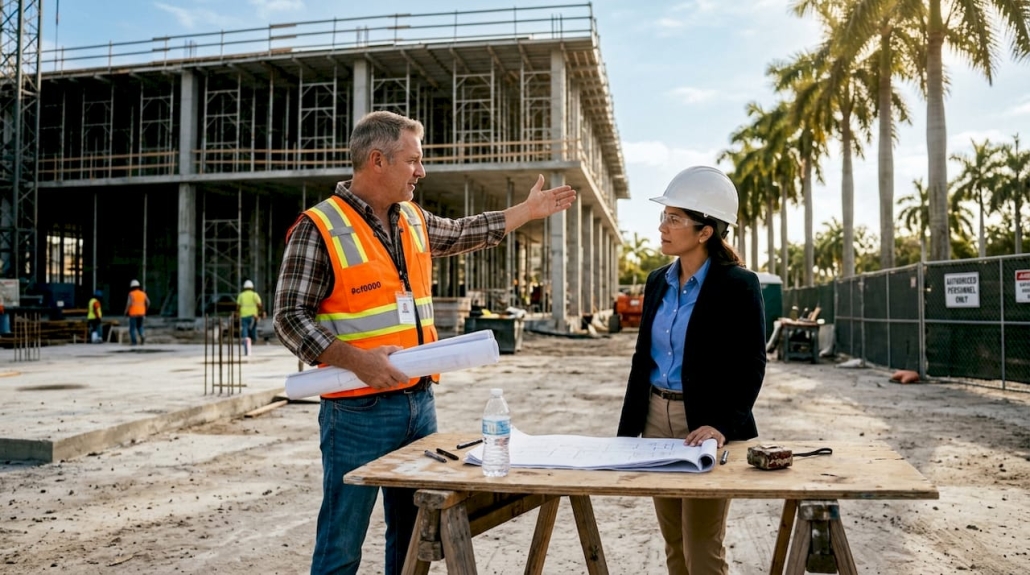
Every year, construction rework from poor blueprint interpretation costs the U.S. industry billions of dollars, with Florida projects particularly vulnerable due to unique wind, flood, and HVHZ zone requirements. Many homeowners and contractors mistakenly view blueprints as simple drawings rather than comprehensive technical guides that dictate every aspect of construction. Understanding blueprint fundamentals, Florida-specific code nuances, and proper interpretation methods can prevent expensive delays, failed inspections, and structural issues. This guide clarifies blueprint components, regional requirements, and practical applications to help you navigate Florida construction projects with confidence and precision.
Table of Contents
- Understanding Blueprint Essentials In Construction
- Navigating Florida-Specific Blueprint Requirements And Nuances
- The Impact Of Blueprint Interpretation On Construction Outcomes
- Traditional Blueprints Vs Digital Tools: Evolving Construction Workflows
- Applying Blueprint Knowledge For Successful Florida Construction Projects
- How Florida Licensed Engineers Can Support Your Blueprint Needs
- Frequently Asked Questions
Key takeaways
| Point | Details |
|---|---|
| Blueprints guide construction | They communicate design, specifications, dimensions, materials, and systems for every project phase. |
| Florida adds unique requirements | HVHZ zones demand enhanced wind and flood details that affect blueprint preparation and review. |
| Misinterpretation costs billions | Poor blueprint reading leads to rework, delays, and compliance failures across the construction industry. |
| Digital tools need human expertise | AI and BIM assist interpretation but require professional verification for Florida codes and edge cases. |
Understanding blueprint essentials in construction
Blueprints serve as detailed technical drawings that communicate design, specifications, dimensions, materials, and systems for construction projects, acting as the primary guide for builders, contractors, and inspectors. These documents translate architectural vision into buildable reality through standardized symbols, scales, and notations that every trade must understand. Without accurate blueprints, coordination between electrical, plumbing, structural, and mechanical teams becomes impossible, leading to conflicts and costly field changes.
Every blueprint package contains essential components that work together to provide complete project information. The title block identifies the project name, address, designer, revision dates, and sheet numbers, serving as your first stop when reviewing any drawing. Scales indicate how measurements on paper translate to actual dimensions, typically shown as ratios like 1/4"=1’0" for architectural plans. Symbols represent everything from electrical outlets to structural beams using standardized icons that professionals recognize instantly. Floor plans show horizontal room layouts and dimensions, while elevations display vertical exterior views. Sections cut through the building to reveal internal construction details, and MEP layouts detail mechanical, electrical, and plumbing systems.
Different blueprint types serve specific purposes throughout construction. Architectural plans focus on spatial design, room layouts, and aesthetic elements. Structural blueprints show load-bearing systems, foundation details, and reinforcement specifications. MEP drawings map out HVAC, electrical circuits, plumbing routes, and equipment locations. Site plans illustrate property boundaries, grading, drainage, and utility connections. Each type requires specialized knowledge to interpret correctly, and the role of blueprints extends beyond individual trades to coordinate entire project execution.
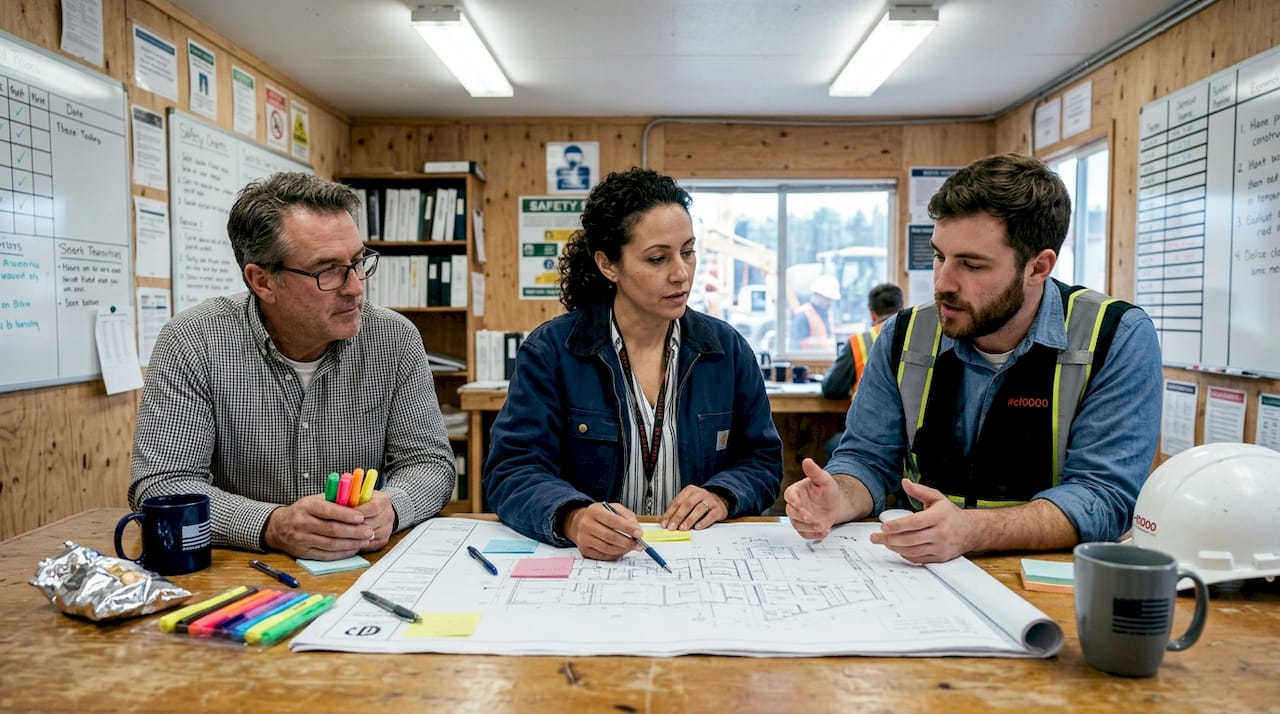
Blueprints are essential for coordination among contractors and inspectors because they establish the single source of truth for construction intent. When subcontractors work from the same drawings, conflicts get identified during planning rather than during expensive field installation. Building inspectors verify compliance by comparing actual work to approved blueprints, making accuracy critical for passing inspections. Changes to blueprints require formal revision processes that update all stakeholders, preventing miscommunication that leads to errors.
Pro Tip: Always start reading from the title block for project information and revisions. This habit ensures you’re working from the current version and understand the document’s context before diving into technical details.
Navigating Florida-specific blueprint requirements and nuances
Florida’s building environment creates unique blueprint requirements that differ significantly from other states. HVHZ zones in Miami-Dade and Broward counties require enhanced wind and flood details that must appear explicitly on construction drawings. These high velocity hurricane zones demand product approvals, impact-resistant specifications, and installation methods that withstand extreme weather events. Blueprint reviewers scrutinize these details during permit applications, rejecting incomplete submissions that lack proper HVHZ documentation.
Common blueprint correction issues plague Florida permit applications and delay project starts. Missing professional seals from licensed engineers or architects trigger immediate rejections since Florida requires stamped drawings for most residential and commercial work. Inadequate code references fail to demonstrate compliance with current Florida Building Code editions and amendments. Survey discrepancies between site plans and actual property conditions create legal and construction problems. Egress window details often get overlooked in bedroom additions, violating life safety requirements. These issues reflect gaps in what constitutes a complete blueprint for Florida jurisdictions.
Special inspections for soil conditions and pile foundations must be reflected on structural plans before permits issue. Florida’s variable soil composition, high water tables, and hurricane exposure require engineering analysis that appears in both geotechnical reports and foundation blueprints. Pile specifications, embedment depths, and load capacities need clear documentation that inspectors can verify during construction. Threshold inspections for certain building types add another layer of blueprint requirements that owners must understand early in design.
Verifying blueprint compliance for Florida permits involves systematic review steps. First, confirm all sheets have current professional seals and signatures from Florida-licensed professionals. Second, check that title blocks reference the correct Florida Building Code edition and local amendments. Third, verify HVHZ product approvals appear with NOA numbers when applicable. Fourth, ensure site plans match current surveys and show required setbacks. Fifth, review egress paths, window sizes, and life safety systems against code minimums. Using a blueprint review checklist prevents oversights that cause permit delays. Sixth, confirm special inspection callouts align with structural requirements. Following this process systematically improves first-submission approval rates and demonstrates the value of accurate blueprints for Florida projects.
The impact of blueprint interpretation on construction outcomes
Rework from poor blueprints and misinterpretation costs the construction industry billions annually across residential and commercial sectors. Field changes to correct design conflicts, missed dimensions, or misunderstood details consume labor, materials, and schedule buffers that projects can’t afford. Structural errors from blueprint misreads can compromise building safety, triggering expensive demolition and reconstruction. The financial impact extends beyond direct costs to include delayed occupancy, lost revenue, and damaged professional reputations.
Statistics reveal the widespread challenge of blueprint interpretation among construction professionals. Approximately 35% of professionals struggle with accurate blueprint reading, limiting their effectiveness on complex projects. An AGC survey identified that 72% of contractors face shortages of skilled blueprint readers, creating bottlenecks in project staffing and execution. These gaps in technical literacy slow decision making, increase requests for information, and force experienced personnel to spend time explaining basic drawing conventions rather than solving complex construction challenges.
Blueprint reading training reduces RFIs and project delays by equipping teams with skills to interpret drawings independently and catch conflicts before they reach the field.
Formal blueprint reading courses deliver measurable benefits to construction professionals and their employers. Participants gain systematic approaches to drawing review that catch errors during planning rather than construction. Training covers symbol recognition, scale interpretation, cross-referencing between drawing types, and code compliance verification. Workers who complete courses demonstrate faster drawing comprehension, fewer interpretation errors, and greater confidence in field decisions. Investing in education pays dividends through reduced supervision needs and improved first-time quality.
The connection between blueprint literacy and project outcomes becomes clear when examining successful projects. Teams that prioritize reading blueprints correctly experience fewer change orders, shorter construction durations, and higher client satisfaction. Subcontractors who understand drawings completely submit more accurate bids, reducing disputes over scope interpretation. General contractors benefit from smoother coordination when all trades work from shared technical understanding.
Pro Tip: Regular blueprint review sessions can reduce RFIs and project delays. Weekly coordination meetings where teams walk through upcoming work using blueprints catch conflicts early and align everyone’s understanding before problems emerge in the field.
Traditional blueprints vs digital tools: evolving construction workflows
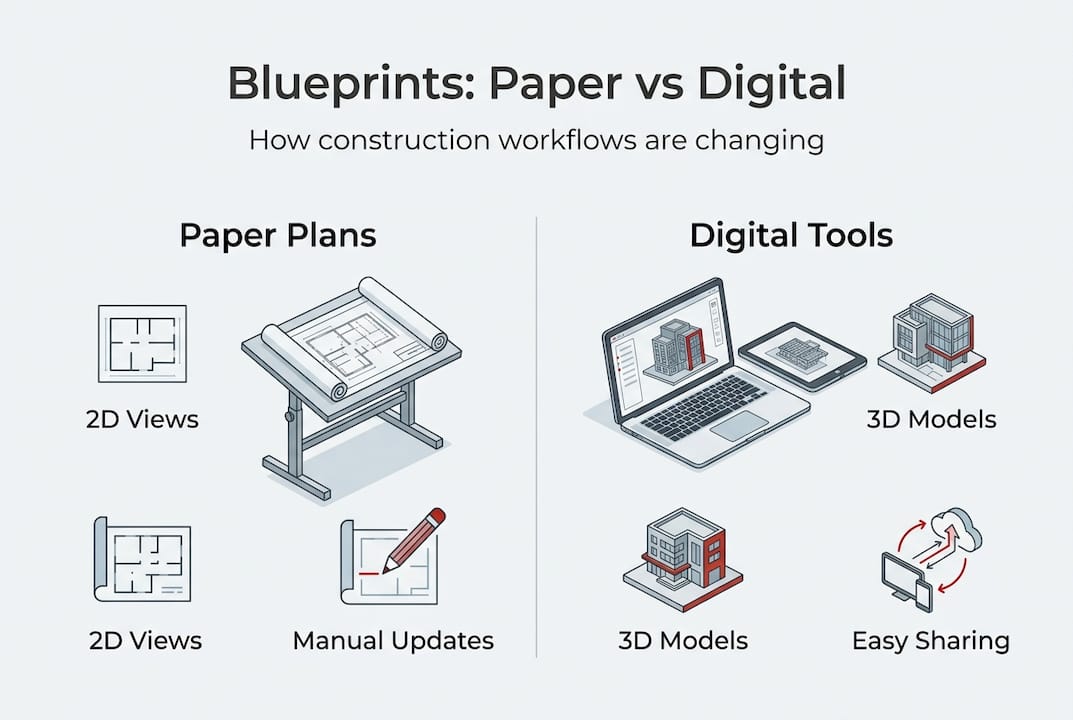
Traditional paper blueprints served construction effectively for decades but limited collaboration and revision management. Physical drawings required manual distribution, making version control challenging across large project teams. Markups and field notes stayed isolated unless someone manually compiled them. Storage of completed project records consumed physical space and made retrieval time consuming. Despite these limitations, paper blueprints remain familiar to many professionals and require no special equipment to review on site.
Digital BIM and CAD models offer significant advantages over traditional methods, providing more accurate representations through three-dimensional visualization. Building Information Modeling creates intelligent objects that carry data about materials, costs, and installation sequences beyond simple geometry. Clash detection identifies conflicts between systems before construction starts, preventing expensive field coordination problems. Digital distribution ensures all team members access current versions instantly, and cloud collaboration allows real-time markups and comments. Quantity takeoffs become automated, improving estimating accuracy and speed.
Emerging AI applications promise to augment blueprint interpretation through automated scanning and object recognition. Machine learning models can identify doors, windows, and fixtures in drawings, potentially accelerating quantity surveys and compliance checks. AI-powered tools analyze drawing sets for missing information or inconsistencies that human reviewers might overlook. These technologies show particular promise for large, complex projects where manual review becomes time prohibitive.
However, current AI accuracy faces limitations with construction symbols and counting precision, achieving only 40 to 55 percent accuracy on door and window identification in recent studies. Symbol recognition struggles with custom notations, hand-drawn elements, and regional variations in drafting standards. AI systems lack contextual understanding of construction intent, missing nuances that experienced professionals catch immediately. Edge cases, unusual conditions, and code interpretations remain beyond current AI capabilities.
| Aspect | Traditional Blueprints | Digital BIM/CAD Tools |
|---|---|---|
| Visualization | 2D drawings only | 3D models with walkthroughs |
| Collaboration | Manual distribution | Real-time cloud access |
| Clash detection | Manual coordination | Automated conflict identification |
| Version control | Physical markups | Digital revision tracking |
| Accessibility | Requires physical copies | Accessible on devices anywhere |
While BIM and AI augment blueprint workflows, human expertise remains critical for nuances like Florida codes and edge cases. Licensed professionals understand regional requirements, interpret ambiguous conditions, and apply judgment that technology cannot replicate. The optimal approach uses AI for initial scans and humans for verification, combining speed with accuracy. Exploring top blueprint drafting tools reveals how professionals integrate digital capabilities while maintaining essential oversight.
Pro Tip: Combine digital tools with expert checks for best results. Let software handle repetitive tasks like quantity counts and clash detection, then have licensed professionals review outputs for code compliance and constructability before finalizing designs.
Applying blueprint knowledge for successful Florida construction projects
Homeowners and contractors can take systematic steps to read and verify blueprints effectively before construction begins. Start by reviewing the title block to confirm project details, designer credentials, and revision status. Next, examine site plans to verify property boundaries, setbacks, and utility locations match actual conditions. Then, study floor plans to understand room layouts, dimensions, and spatial relationships. After that, review elevations to visualize exterior appearances and material specifications. Finally, analyze sections and details to grasp construction methods and material assemblies. This sequential approach builds comprehensive understanding from general to specific information.
Training and collaboration with engineers ensure compliance and fewer issues throughout project execution. Mastering blueprint reading boosts careers and reduces errors, making it essential for subcontractors and general contractors coordinating multiple trades. Engineers provide expert interpretation of complex structural, MEP, and code-related drawing elements that require specialized knowledge. Early involvement of licensed professionals during design review catches problems when changes cost least. Regular communication between field teams and designers maintains alignment as construction progresses and field conditions reveal unforeseen challenges.
Key checklist items before construction starts protect against common blueprint-related problems:
- Verify all drawings have current professional seals from Florida-licensed engineers or architects
- Confirm drawings reference applicable Florida Building Code editions and local amendments
- Check that site plans match current surveys and show accurate property information
- Ensure HVHZ requirements appear with proper product approvals when applicable
- Review egress paths, window sizes, and life safety systems for code compliance
- Confirm special inspection callouts align with structural and geotechnical requirements
- Validate that MEP systems coordinate without conflicts between trades
- Check that material specifications are clear, complete, and available in local markets
The relationship between blueprints and residential projects demonstrates how proper drawing review prevents issues that plague home construction. Understanding the role of engineers in permitting clarifies how professional involvement streamlines approval processes and ensures compliant designs. These resources help homeowners make informed decisions about when to seek expert assistance versus attempting DIY approaches.
Pro Tip: Regular site walkthroughs comparing work to blueprint plans catch issues early. Weekly inspections with drawings in hand reveal installation errors, material substitutions, or field changes that need documentation before they become hidden behind finishes or create downstream conflicts.
How Florida Licensed Engineers can support your blueprint needs
Navigating Florida’s complex building codes and blueprint requirements becomes manageable with expert engineering support. Florida Licensed Engineers provides comprehensive services including blueprint preparation, review, and compliance verification for residential and commercial projects. Our team understands HVHZ requirements, special inspection protocols, and jurisdiction-specific nuances that affect permit approval. We deliver architectural, structural, mechanical, electrical, and plumbing plans that meet current Florida Building Code standards. Early collaboration with our engineering services team prevents costly revisions and accelerates permit timelines. Whether you need complete design packages for new construction or compliance reviews for renovation projects, our licensed professionals ensure your blueprints for residential projects meet all requirements. Contact us to discuss how our engineering services in Florida can support your next construction project.

Frequently asked questions
What are blueprints in construction?
Blueprints are technical drawings that outline design and construction details for building projects. They serve as a roadmap showing dimensions, materials, systems, and specifications that contractors follow during construction.
Why are blueprints important for Florida construction projects?
Blueprints ensure adherence to Florida building codes and safety regulations, including unique HVHZ requirements for wind and flood resistance. They help contractors avoid costly rework and delays by providing clear construction guidance that passes inspections.
How can I improve my blueprint reading skills?
Enroll in blueprint reading classes for structured learning that covers symbols, scales, and interpretation techniques. Practice regularly by reviewing blueprints with experienced builders who can explain real-world applications and common pitfalls.
Are digital blueprints better than traditional ones?
Digital blueprints offer three-dimensional views, automated clash detection, and easy updates that improve coordination. However, human interpretation remains essential for accuracy and code compliance, making the combination of digital tools and professional expertise most effective.
Recommended
- Blueprints Explained: Transforming Florida Construction – Florida Licensed Engineers
- Why Accurate Blueprints Matter for Florida Projects – Florida Licensed Engineers
- Blueprint review checklist: ensure Florida compliance – Florida Licensed Engineers
- 7 Key Benefits of Home Blueprints for Florida Owners – Florida Licensed Engineers


