
Architectural vs structural plans in Florida: Key differences
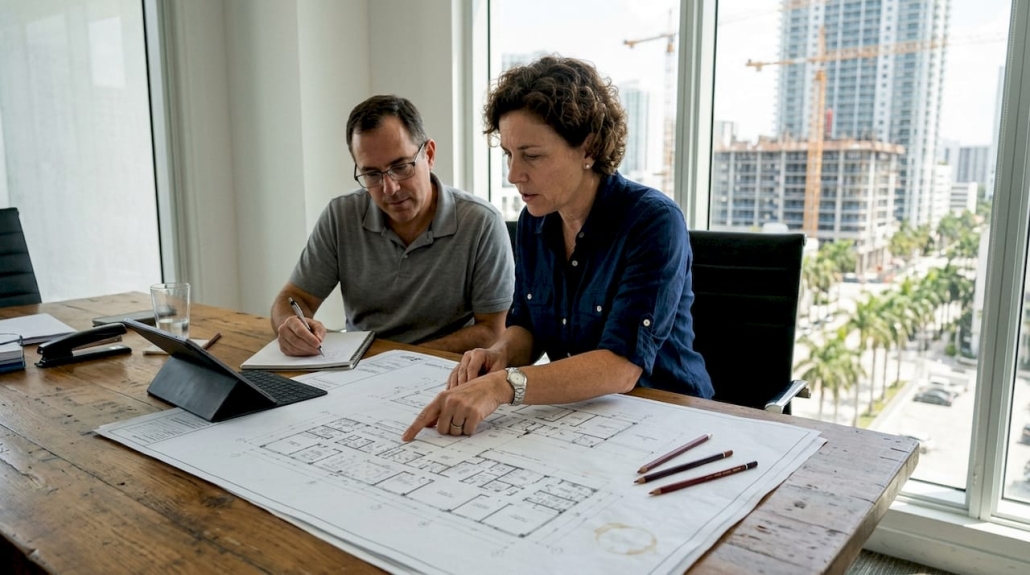
Most homeowners and developers assume one set of blueprints covers everything. That assumption costs real money. Construction issues arise when architectural and structural plans are treated as the same document, and in Florida, where hurricane codes and flood regulations add layers of scrutiny, the gap between these two plan types can stall your permit, fail your inspection, or force expensive redesigns. Understanding what each plan does, who creates it, and when you need both is one of the smartest moves you can make before breaking ground.
Table of Contents
- What are architectural plans?
- What are structural plans?
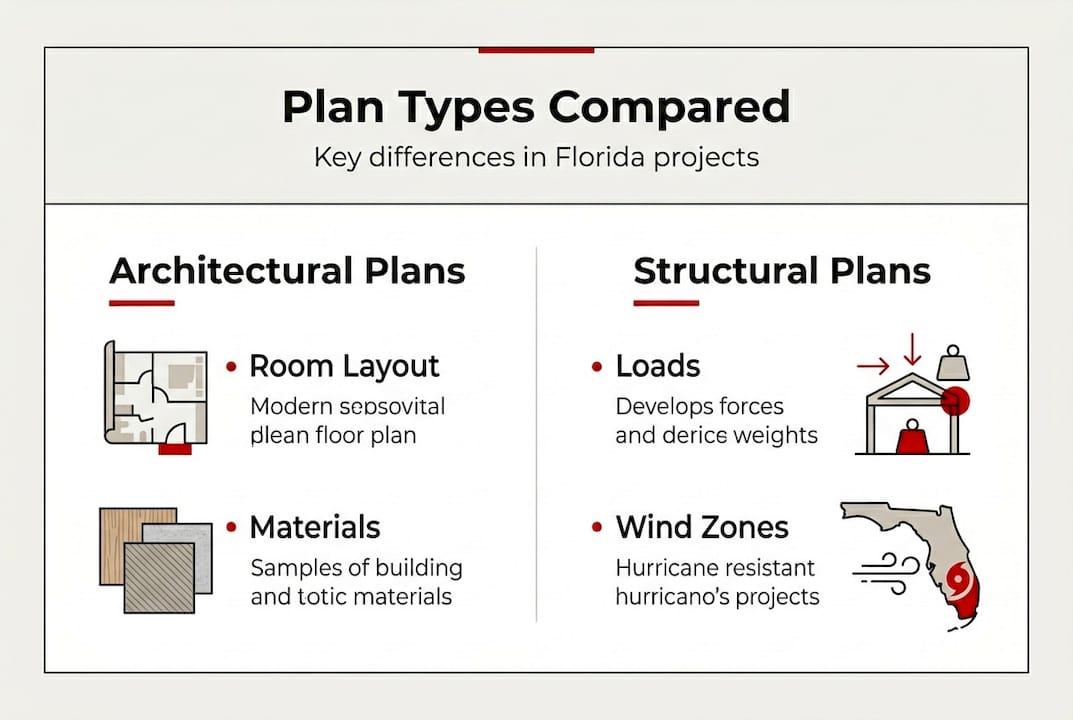
- Architectural vs structural plans: The key differences
- How architectural and structural plans work together in Florida projects
- When do you need both architectural and structural plans?
- Summary: The importance of both plans for a successful Florida project
- Get expert guidance for your Florida construction project
- Frequently asked questions
Key Takeaways
| Point | Details |
|---|---|
| Two plan types are essential | Both architectural and structural plans are needed for most Florida building projects. |
| Each plan serves a unique role | Architectural plans shape design while structural plans ensure safety and code compliance. |
| Coordination prevents costly errors | Aligning both plan types early avoids project delays, rework, and code issues. |
| Florida codes raise the bar | Hurricane and flood risks mean plans must meet extra requirements in the state. |
| Consult experts early | Engaging both architects and engineers from the start delivers a smoother, safer build. |
What are architectural plans?
Architectural plans are the creative and functional blueprint for your project. They define how a space looks, how it flows, and how it meets local zoning and building code requirements. Think of them as the vision document that guides every other decision on the job.
A standard set of Florida architectural plans typically includes:
- Floor plans showing room layout, dimensions, and circulation paths
- Elevations depicting exterior and interior wall appearances
- Building sections that cut through the structure to show height relationships
- Door and window schedules listing sizes, materials, and hardware
- ADA compliance notes for commercial and multi-family projects
- Hurricane impact zone designations required across much of Florida
Architectural plans are the creative phase for engineers and set the direction that structural, mechanical, and electrical work must follow. The architect establishes the vision. Everyone else adapts to it.
In Florida, county and municipal requirements can vary significantly from state minimums. Miami-Dade, Broward, and Palm Beach counties each layer additional requirements on top of the Florida Building Code. Knowing those local rules early shapes design decisions before they become expensive corrections. Learning the process of creating architectural drawings helps you ask better questions and catch gaps before submission.
Pro Tip: Pull your city or county’s specific checklist before your architect finalizes the design. Local amendments can affect window placement, setbacks, and even roof pitch requirements.
What are structural plans?
Structural plans translate the architect’s vision into physics. They specify every element that keeps a building standing: foundations, columns, beams, load-bearing walls, connection details, and the calculations that prove the structure can handle the forces acting on it.
A complete structural plan set for a Florida project typically includes:
- Foundation plans showing footing sizes, depths, and reinforcement
- Framing plans for floors, walls, and roofs
- Load calculations for dead loads, live loads, and wind uplift
- Connection details for hurricane straps, anchor bolts, and shear walls
- Soil bearing assumptions tied to the geotechnical report
- Flood zone compliance notes for FEMA-designated areas
Structural rigor increases in Florida because of FBC wind zones and occupancy classifications. A coastal home in a 160 mph wind zone faces entirely different structural demands than an inland warehouse. The engineer’s job is to make sure the architect’s design is safe and buildable under those real-world conditions.
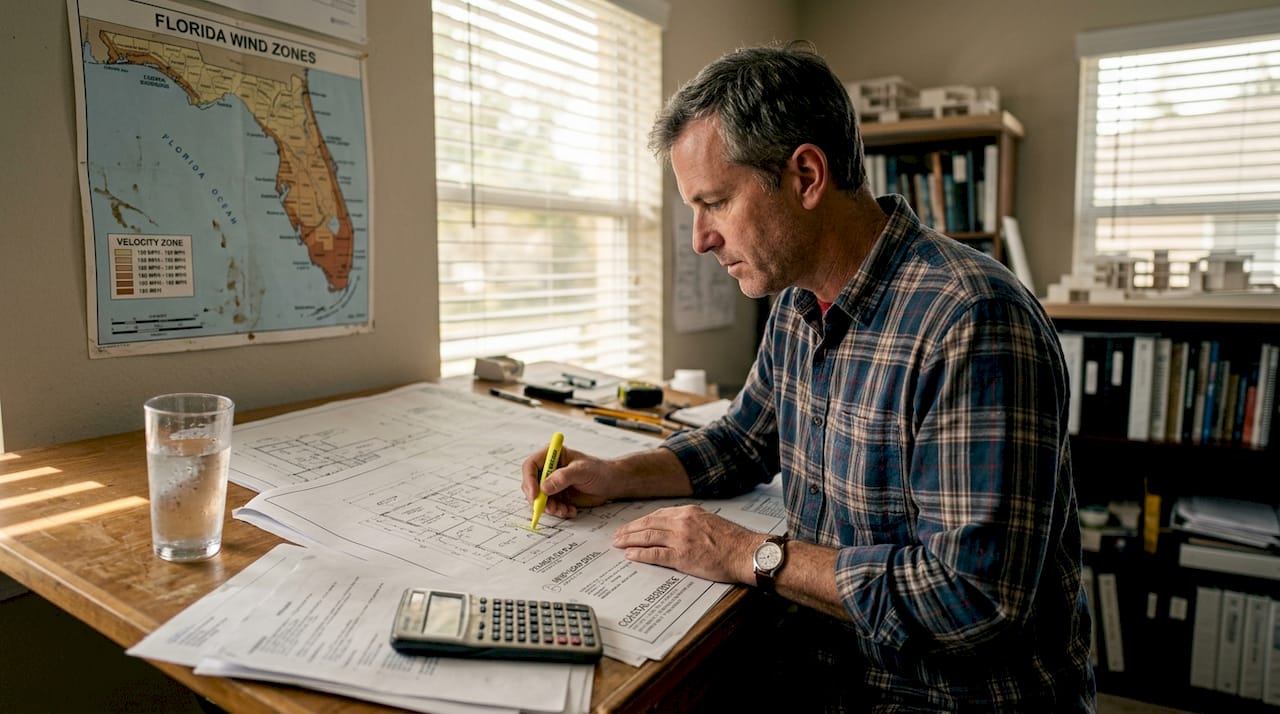
A solid Florida foundation plan is not just a formality. It is the document your contractor bids from, your inspector reviews, and your lender may require before releasing construction draws.
Pro Tip: If your site survey or soil report flags any unusual conditions, such as high water tables, organic soils, or proximity to a floodplain, your structural engineer must address those risks explicitly in the plans. Ignoring them at the design stage guarantees problems in the field.
Architectural vs structural plans: The key differences
With each plan’s purpose clear, it’s easiest to see the difference side by side.
| Feature | Architectural plans | Structural plans |
|---|---|---|
| Primary focus | Layout, aesthetics, function | Safety, loads, code compliance |
| Created by | Licensed architect | Licensed structural engineer |
| Key outputs | Floor plans, elevations, schedules | Framing, foundation, load calcs |
| Florida emphasis | ADA, zoning, hurricane impact zones | Wind resistance, flood, soil bearing |
| Permit role | Establishes design intent | Proves structural adequacy |
| Review sequence | Drafted first | Follows and adapts to architecture |
Both plan types are reviewed independently before being combined into a single permit submission package. Both are essential and complementary. Neither replaces the other.
Florida’s post-hurricane building codes place structural performance at the center of every permit review. Design alone does not get a project approved.
For a deeper breakdown, the detailed plan comparison covers how each document set interacts during review. If your project also involves site work, understanding civil vs structural plans adds another layer of clarity.
How architectural and structural plans work together in Florida projects
The two plan types are not created in isolation. They follow a sequence, and when that sequence breaks down, projects stall.
Here is how a typical Florida project flows:
- Architect drafts the design based on your program, site constraints, and local code requirements.
- Structural engineer reviews the design and identifies any elements that need reinforcement, resizing, or redesign to meet load and wind requirements.
- Both teams align on any changes before finalizing their respective drawing sets.
- Combined package is submitted to the local building department for permit review.
- Reviewers check both sets for internal consistency. Mismatches trigger correction requests that restart the clock.
Mismatches cause delays and costly corrections that could have been avoided with early coordination. Common field problems include windows placed where a shear wall is required, footings sized for a lighter structure than what was built, and roof framing that does not match the hurricane strap schedule.
Florida adds specific triggers that demand extra structural detail. Coastal proximity, FEMA floodplains, high-occupancy buildings, and wind exposure categories all require more documentation. Understanding the engineer’s role in permitting helps you set realistic timelines. For projects with mechanical, electrical, and plumbing systems, MEP planning must also coordinate with both architectural and structural documents. Proper structural waterproofing coordination is another area where architectural intent and structural detailing must align, especially in Florida’s wet climate.
Pro Tip: Schedule a joint architect and engineer meeting before either party finalizes their drawings. One hour of coordination at the design stage saves days of back-and-forth during permit review.
When do you need both architectural and structural plans?
The short answer: almost always, for any permitted work.
| Project type | Architectural plans | Structural plans |
|---|---|---|
| New single-family home | Required | Required |
| Major home renovation | Required | Required |
| Commercial building (any size) | Required | Required |
| Addition or room expansion | Required | Required |
| Accessory structure (large shed, garage) | Often required | Often required |
| Interior cosmetic work (paint, carpet) | Not required | Not required |
| Window or door replacement (same size) | Varies by county | Varies by county |
| Flood zone construction | Required | Required + extra |
Both plans are required for any permitted construction or major renovation in Florida. The exceptions are narrow. Painting a room, replacing carpet, or swapping out fixtures of the same size rarely triggers a plan submission. But the moment you touch structure, add square footage, or change occupancy, both plan types come into play.
Complex sites add more requirements. Slopes, coastal setback zones, and FEMA Special Flood Hazard Areas can trigger specialty reviews beyond the standard architectural and structural sets. Understanding the role of blueprints in the permitting process and the types of blueprints involved helps you prepare a complete submission the first time.
Summary: The importance of both plans for a successful Florida project
Skipping or confusing these plan types creates real problems. Here is what having both correct plan sets actually delivers:
- Fewer change orders because structural requirements are baked into the design from the start
- Faster permitting because reviewers find a consistent, complete package
- Fewer inspection failures because field work matches the approved drawings
- Better contractor bids because the scope is clearly defined in both sets
- Stronger safety outcomes for hurricane, flood, and fire scenarios
- Easier lender and insurer review because documentation is complete and professional
Florida’s codes prioritize safety, especially after recent hurricane seasons that exposed gaps in older construction standards. That scrutiny is not going away. Reviewing architectural plan essentials before your project starts puts you ahead of most applicants who learn these lessons the hard way.
The bottom line is simple. Architectural plans tell you what a building will look like and how it will function. Structural plans prove it can stand up safely. Florida requires both, and for good reason.
Get expert guidance for your Florida construction project
Ready to move forward with confidence? Whether you are planning a new home, a commercial build, or a major renovation, getting both plan types right from the start is the single biggest factor in a smooth permit process.

We provide Florida engineering services covering architectural, structural, mechanical, electrical, and plumbing plans, along with permitting expediter services that keep your project moving. Our team also handles civil engineering, flood mitigation, elevation certificates, and forensic investigations. If you want a clear picture of what your project needs before you commit to a design direction, our Florida blueprint guide is a strong starting point. When you are ready to talk specifics, start your Florida project with a team that handles both sides of the plan set under one roof.
Frequently asked questions
Can I submit a permit with just architectural plans in Florida?
No. Most permitted projects in Florida require both architectural and structural plans for approval. Submitting only one set will result in an incomplete application.
Who creates architectural and who creates structural plans?
Licensed architects design architectural plans. Licensed structural engineers prepare structural plans. The engineer ensures the architect’s design is buildable and safe under Florida’s code requirements.
What happens if architectural and structural plans don’t match?
Mismatches cause delays, inspection failures, and cost overruns that persist until the discrepancy is corrected and resubmitted for review.
Are there exceptions when only one plan type is required?
Yes, but they are limited. Minor work such as painting, replacing carpet, or swapping same-size fixtures typically does not require full plan submissions. Any structural change or addition requires both.
Why are structural plans especially strict in Florida?
Florida’s hurricane, wind, and flood risks make structural code compliance far stricter than most states. Post-hurricane codes emphasize structural performance over design aesthetics, and that standard applies to every permitted project statewide.


